Receive a presentation of services and expert advice
The best people in the industry oversee your brand development process
→ Need branding, design, or creative solutions? Call us at +48 505 648 022 or message us on WhatsApp.
 WeLoveBrands.pptx

The best people in the industry oversee your brand development process
The most popular carbonated beverage brand in the world and also the leader in consumer lawsuits. A brand that has influenced American culture and created the classic image of Santa Claus. A brand that innovates across all areas of production and creates traditions. We are talking about the famous Coca-Cola brand.
Read this article to learn about the origins of this popular drink, how simple syrup became one of the world's most valuable brands, and how the company's visual identity was created.
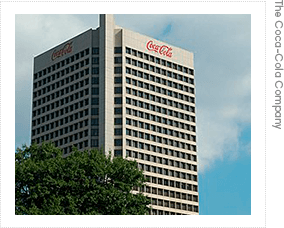
Coca-Cola is an American brand of carbonated soft drinks, the most popular and one of the most valuable in the world. It is owned by The Coca-Cola Company, headquartered in Atlanta, Georgia, USA, founded in 1893.
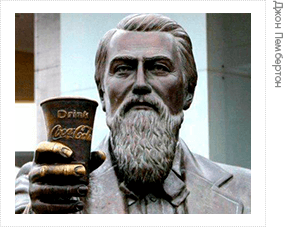
The brand was created in 1886, when a drink based on coca leaves was created. Its founder was pharmacist John Pemberton.
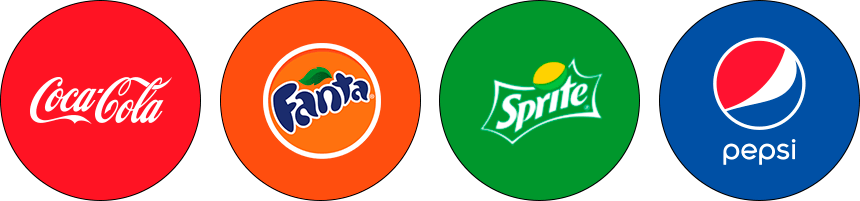
The company produces approximately 5,000 products under 500 different brands (sodas, tea, energy drinks, juices, etc.). Coca-Cola, Fanta, and Sprite account for 80% of all sales.
The main competitor is Pepsi. The company's official website: www.coca-colacompany.com
Coca-Cola is the most recognizable brand in the world (94% of the population has heard of it). Its beverages are sold throughout the world, except in Cuba and North Korea.
Factories and production lines are located in 200 countries. More than 1 billion of the company's products are sold daily, and approximately 8,000 glasses of beverages are consumed every second.
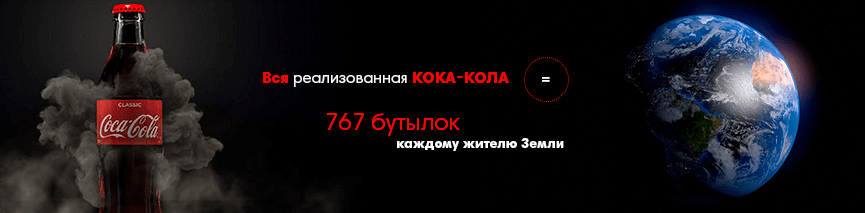
Fun fact: if all the bottled Coca-Cola sold on Earth were distributed among the inhabitants, each person would receive 767 units. If poured into a swimming pool, the resulting structure would be 1.8 meters deep, 33 kilometers long, and 15 kilometers wide. Such a pool could accommodate 512 million people at a time.
 The Coca-Cola Company's revenue:
 Company revenue by region:
The company employs approximately 70,000 people. Its primary region of operation is the United States. Mexico, Iceland, and China also have the highest per capita cola consumption.
Coca-Cola ranks 6th in Forbes' list of the most valuable brands, with a value of $59.2 billion. The company's shares are included in the list of stock exchange participants that form the well-known Dow Jones Industrial Average.
Coca-Cola also leads the way in consumer lawsuits. It receives the most complaints alleging that its drinks have caused poor health. A significant portion of these claims come from McDonald's fans, as Coca-Cola is the exclusive soda supplier to the fast food chain.
Coca-Cola: production and activities
The Coca-Cola Company has 12 major bottlers worldwide, which in turn have their own companies. Coca-Cola Amatil, based in Australia, supplies beverages to the Asia-Pacific region, while Coca-Cola Hellenic, headquartered in Athens, Greece, produces products for European countries, including Ukraine. One of its largest subsidiaries is the Ukrainian plant Coca-Cola Beverages Ukraine, which has been producing and selling beverages since 1992.
Another Coca-Cola company, Coca-Cola Ukraine, operates in Ukraine, representing the brand and promoting it. In total, the Ukrainian companies employ over 1,700 people.
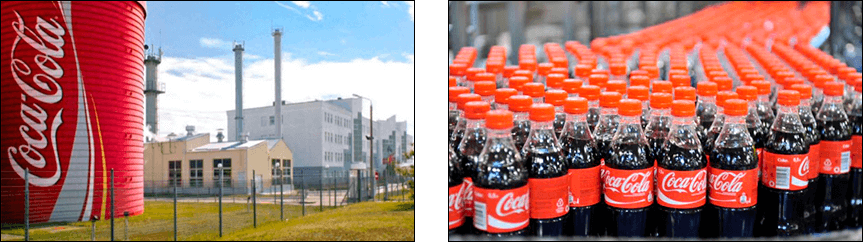
The company also owns Costa Limited (a coffee maker), Schweppes (a soft drink brand), Odwalla (an American maker of juices, smoothies, organic drinks and energy bars), Moxie (a brand of fizzy drinks) and Fairlife (a brand of high-protein milk drinks).
Currently, the product line includes Coca-Cola, Fanta, Sprite, Schweppes, Diet Coke, coconut water, iced teas, coffee, refreshing fruit water, cola with different flavors (vanilla, cherry, lime-ginger, mango, blood orange), etc.
Coca-Cola plans to launch production of energy drinks, low-alcohol beverages, and products containing CBD (a component of medical cannabis that does not cause hallucinations).
People and planet matter
This belief is at the core of the company's operations. The brand cares for its employees, strives to empower women, and invests in educational projects.
Coca-Cola is a participant in the World Without Waste program and plans to switch completely to recycled materials by 2025.
The company strives to be a leader in zero-waste production, so it is developing reusable packaging. However, it has no plans to phase out plastic beverage bottles.
Despite the fact that Coca-Cola is the largest plastic polluter (producing over 3 million tons of packaging annually), cola in plastic containers will continue to be available on shelves because consumers like these containers due to their lightness and convenience.
The Coca-Cola Foundation has been operating since 1984. During this time, the foundation has donated more than $1 billion to various charitable programs.
Priority areas for the company:
 women's empowerment (economic opportunities and business development);
 environmental protection (access to clean water, reduction of water and energy consumption);
 education (youth training, community and civic projects).
Specifically, $41 million was allocated to community development, $408 million to recycling initiatives, $216 million to water conservation, and $335 million to training projects.
In 2001, Coca-Cola joined the UN program to fight AIDS in Africa.
The company's foundation also donated $12 million to help eliminate the consequences of the September 11 terrorist attacks.
In 2010, Coca-Cola launched the Haiti Hope Project, which aimed to revive Haiti's economy after the earthquake through the development of mango plantations.
Today, Coca-Cola is a popular and beloved drink, and in the US, it's a cult classic. But few people know that, from its inception, it wasn't a profitable business, but rather a source of losses.
It cost $70 to produce, and since an average of nine people bought it per day, revenue only amounted to $50. But this didn't last long. Within a year, the drink's popularity had skyrocketed, sales soared, and so did profits.
But how did cola come about, and what's so special about it that so many people can't stop drinking it? We'll explain further.
Coca-Cola Recipe and Secret Ingredient
Initially, the drink was created as a cure for nervous disorders (at least that’s how it was patented).
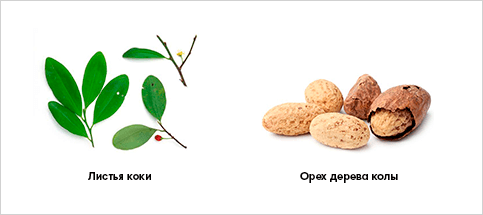
In 1886, pharmacist John Pemberton mixed coca leaves and kola nuts (a source of caffeine). The resulting syrup was sold through a vending machine at Jacob's Pharmacy in Atlanta. The price was 5 cents a glass.
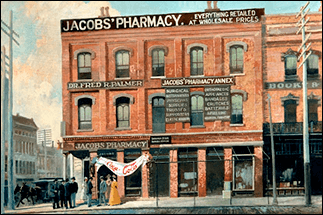
According to legend, the drink acquired its familiar flavor completely by accident. It happened when a drunk man walked into a pharmacy. The pharmacist, unwilling to go across the room to get water to dilute the syrup, suggested the customer add soda water. Everyone loved the taste, so they decided to change the recipe.
In the late 1890s, a campaign against cocaine began in the country. Coca-Cola also caught the eye. Many accused the company of producing a drink that had a detrimental effect on people's minds. In particular, it was noted that black people in the slums attacked white people under the influence of Coke.
It was then decided to slightly modify the drink's recipe and add pressed coca leaves instead of fresh ones, meaning no cocaine. This happened in 1903, and by the mid-20th century, the kola nut extract was also no longer added. By this time, cola had become a regular soft drink, and since it was no longer considered a medicine, the medical tax was no longer required.
The drink's recipe is a closely guarded secret. It is known that cola was once flavored with lemon, lime, nutmeg, vanilla, orange blossom extract, caffeine, and neroli oil. Today, its base ingredients are carbonated water, sugar syrup or fructose, caffeine, phosphoric acid, and flavorings.
But the world isn't as interested in the drink's overall composition as it is in its secret ingredient, 7X. The formula is securely hidden in a SunTrust Bank safe deposit box. It's noted that only two company employees at a time, usually from the production department, are allowed to know it. This means the secret ingredient likely won't be revealed anytime soon.
How Coke Sales in Pharmacies Became the Basis for a Famous Brand
With the advent of Prohibition in the United States, Coca-Cola quickly gained momentum. However, during this period, the drink's inventor's health deteriorated and he was no longer able to run his business, so he gradually sold it piecemeal.
It is noted that the drink's recipe sold for $2,300, and its creator died in poverty. The new owner of the formula was Irish immigrant Asa G. Candler. After Pemberton's death in 1888, he was able to gather all the sold partnership shares and start his own company. Thus, The Coca-Cola Company was born. It was officially incorporated in January 1893 with an initial capital of $100,000.
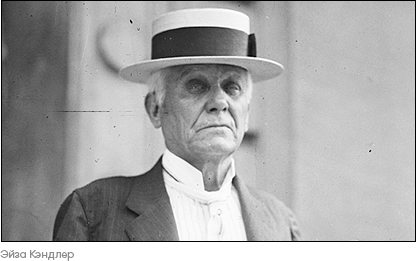
Candler believed in the drink's success, so he invested time, effort, and resources into its promotion. The entrepreneur improved the cola's taste, extended its shelf life, and actively expanded its customer base.
The drink was given away free of charge in pharmacies to allow as many people as possible to experience its taste. These tastings were successful: those who liked the cola began buying it more often and also recommended it to their friends. Consequently, syrup sales increased tenfold.
Buoyed by his success, Candler sold his pharmacy business and decided to focus solely on promoting Coca-Cola. He took on a partner, registered the company and trademark, launched his first advertisements, and transformed the drink into a brand.
In 1893, the first dividends were paid to the company's shareholders, and two years later the drink was already sold in all states of the country.
A new stage in the brand's history – bottled cola
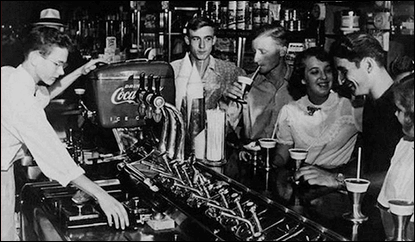
Initially, the drink was sold exclusively on tap, but in 1899 the idea was born to sell cola in bottles, as it was easier.
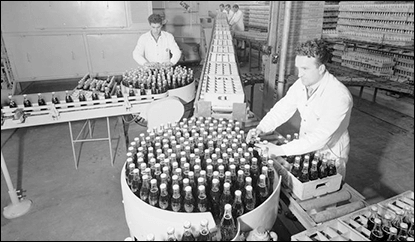
Entrepreneurs Benjamin Thomas and Joseph Whitehead opened the first Coca-Cola plant as a franchise. They reportedly paid the owner $1.
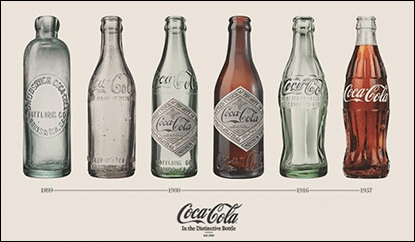
Ultimately, this business model became very popular in the 20th century. It also served as the basis for the development of the bottler system, which the company still operates under today.
In 1906, bottled cola began shipping outside the United States, to Panama and Cuba. By 1920, 1,000 bottling lines were operating in the United States.
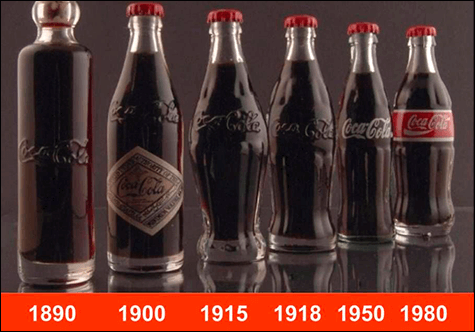
The legendary bottle with a waist is the brand's signature feature.
The drink's popularity and its expansion into foreign markets led to the emergence of imitators. Competitors (Coca-Nola, Ma Coca-Co, Toka-Cola) attempted to snatch a piece of Coca-Cola's fame for themselves, passing off their products as the famous drink and even counterfeiting the logo. Consequently, the company's owners decided to develop a unique bottle to protect the brand from counterfeits and unscrupulous competitors.
In 1912, Coca-Cola sent a letter to all its factories stating that the company's recognizable logo could not fully protect it, so everyone needed to join forces to develop special packaging.
The task also reached the glass company Root Glass. Shop foreman Alexander Samuelson sent two employees, Earl Dean and Clyde Edwards, to the library to explore design possibilities. There, they came across a picture of a cocoa bean, depicting an elongated, ribbed shape. That's when the idea for the famous rounded bottle, "with a skirt" or "waist," was born.
Dean made a sketch on linen paper, and several test containers were created in the workshop under Samuelson's direction.
After the patent was registered, a relief inscription was also added to the brand bottle: 1915 (the year of its development).
Coca-Cola's new ownership and a new beginning
Surprisingly, at the peak of its popularity, the company suddenly changed hands. Asa Candler decided to become mayor of Atlanta, meaning he could no longer run the business. He transferred his shares to his children, who sold them to businessman Ernest Woodruff in 1919. The deal was worth $25 million. At that time, the company changed its ownership and went public.
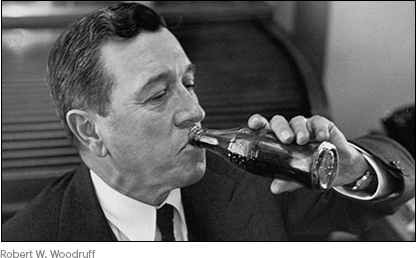
Four years later, Woodruff appointed his son Robert, who held the position for 60 years, as head of the company. It was thanks to his efforts that Coca-Cola conquered foreign markets and became the world's number one soft drink brand.
Robert Woodruff launched an active campaign to promote Coca-Cola outside the United States. To do this, he used advertising, creative slogans ("Good to the last drop," "Take a break and refresh yourself," "Thirst knows no season," etc.), and sponsorship of sporting events.
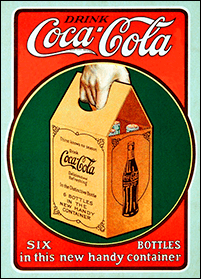
In 1923, Coca-Cola introduced the 6-bottle cardboard package, and in 1929, the signature bell-shaped cups and the first open refrigerators.
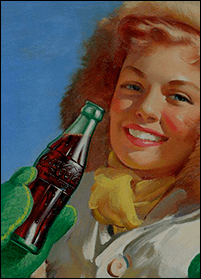
Before the start of World War II, Coca-Cola was already sold in 44 countries.
During the war, the company supplied the army with 5 million bottles of Coke. The price was 5 cents apiece. Woodruff personally ordered this price, noting that the production costs were irrelevant. The decision was made to boost the morale of American soldiers.
For ease of transportation, soda was first poured into tin cans.
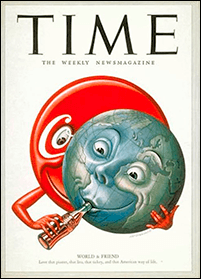
Coca-Cola is the first product in the world to appear on the cover of Time Magazine.
In 1950, Time magazine planned to feature Robert Woodruff on the cover, but decided against it, arguing that the product was more important than his personality. Thus, Coca-Cola became the first product in the world to be featured on a cover.
That same year, the first Coca-Cola commercial was shown on television.
From that moment on, the drink's popularity was unstoppable. Having won the hearts of consumers on every continent, the brand never stopped offering its fans a refreshing treat.
By the end of the 1950s, Coca-Cola was already being bottled at 1,700 plants in more than 100 countries.
Expansion of product range and sales growth
In August 1958, orange Fanta went on sale, followed by lemon-lime Sprite in 1961. The company then acquired Minute Maid and introduced vegetable and fruit juices.
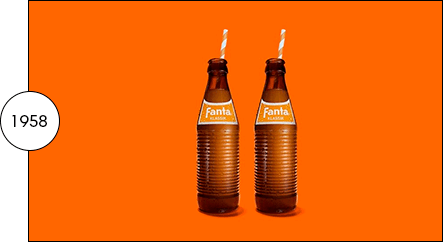
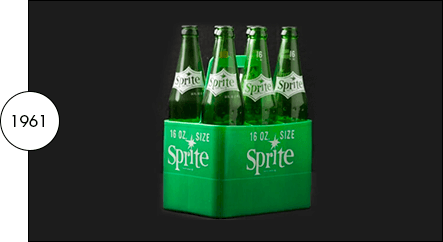
In 1955 new ones were developed types of packaging, in particular containers with a capacity of 0.3, 0.36 and 0.78 liters, and after 5 years the company introduces cola in cans.
Plastic packaging appeared in 1977, when cola began to be bottled in two-liter bottles.
The Coca-Cola Collectors Club was founded in 1975. Initially, it had only 27 members, but today it boasts over 4,000 members.
In 1981, Roberto Gozueta, recognized as the most talented manager of the 20th century, became chairman and CEO of The Coca-Cola Company. During his leadership, the brand's value increased by $15 billion.
In 1982, the company launched Diet Coke Light. The first Coca-Cola plant opened in China. By 2010, 40 plants would be operating in the country.
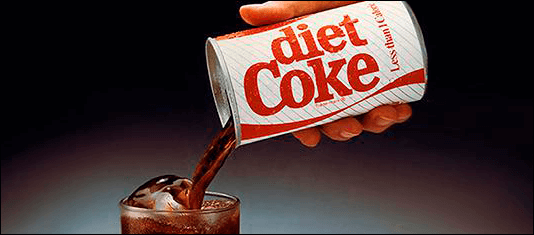
In 1985, residents of the USSR became acquainted with Coca-Cola.
Fun fact : in the Soviet Union, Coca-Cola faced competition from kvass. While people liked the refreshing taste of cola, they still preferred the familiar keg-based beverage in the summer heat.
In 1990, Coca-Cola sales reached $10 billion. Also that year, the World of Coca-Cola museum opened in Atlanta, attracting more than 1 million visitors annually.
In 1995, the company acquired the Barq beer brand, and in 1999 it became the owner of Schweppes.
Since 2017, Coca-Cola has embarked on a new course, the goal of which is to become a universal company, producing products for different categories of the population, regardless of age.
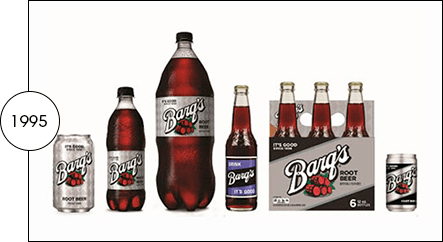
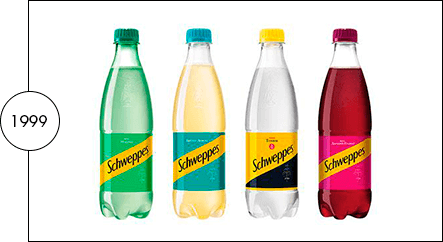
Therefore, low-sugar drinks with various flavors (cherry, lemon, vanilla, lime, raspberry, orange, citrus, cherry and vanilla, coffee, etc.) are appearing on the market. Some of these are no longer produced, but some are still available.
Thanks to Coca-Cola, six-packs (packs of 6 bottles), fridge packs (packs of 12 bottles), lidless refrigerators for cooling drinks in hot weather, and bottle vending machines appeared.
Coca-Cola vs. PepsiCo: A Century-Long Battle of Two Giants
Small competitors constantly attacked Coca-Cola, adapting its style, logo, and packaging, so the company was forced to constantly defend its name and product. This was achieved not only by introducing new ideas but also by filing lawsuits. In 1916 alone, the company won over 150 lawsuits against unscrupulous competitors.
That was until a new, strong player entered the market: Pepsi-Cola. A brand that had always been breathing down Coca-Cola's neck, keeping it on its toes, and which still keeps its main competitor on its toes.
Pepsi-Cola, like Coca-Cola, was created by a pharmacist. Caleb Bradham invented the tonic syrup Brad's Drink, which was later renamed Pepsi-Cola. The name stems from the drink's intended purpose. It contained pepsin, a substance used to treat indigestion (dyspepsia).
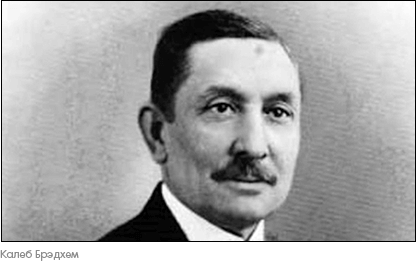
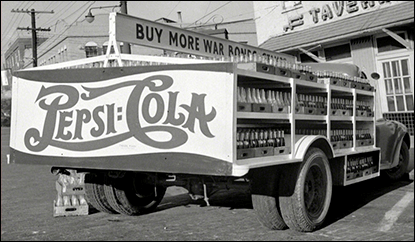
Pepsi-Cola quickly gained momentum, but rising sugar prices caused the company to suffer losses and soon declared bankruptcy. In the 1930s, it returned to the market and battled the already popular Coca-Cola brand.
Pepsi launched the drink in larger bottles than Coke, but at the same price, and launched an advertising campaign with the slogan "Twice the price." This allowed the company to increase sales and close in on its competitor.
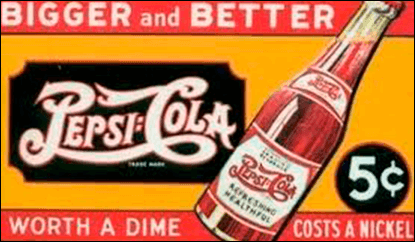
In 1938, Coca-Cola sued Pepsi over the prefix "Cola" in its name and lost. Pepsi's lawyer then convinced the court that "Cola" was a commonly accepted term.
Despite this, fans of the brands divided the drinks into Coke and Pepsi to differentiate them. This led Pepsi to eventually drop the "Cola" prefix from the product name.
This marked the end of direct confrontation between the two companies, and the beginning of a "cold war." Each company attempted to prove its superiority and win the hearts of consumers.
While Coca-Cola emphasized family values and marketed itself as a family-friendly product, Pepsi positioned itself as a youth brand, using the slogans "Pepsi—for those who feel young" and "The new generation chooses Pepsi." This advertising was so successful that it even made it into marketing manuals.
Despite Pepsi's growing sales, Coca-Cola still remained ahead, albeit by a smaller margin. The companies then clashed in a new battle – for foreign markets.
The struggle forced Coca-Cola to seek new solutions. In 1985, the brand released a drink called New Coke. Its distinctive feature was the creation of a taste as close as possible to Pepsi. This move was not appreciated by Coke fans. In fact, they sued the company, demanding the return of the original recipe.
The result of this mistake was a return to traditional cola and the firing of all the employees who had launched New Coke.
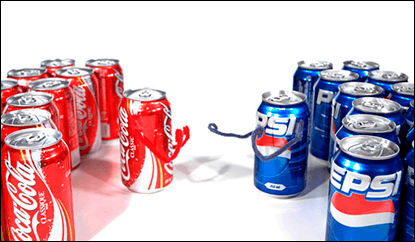
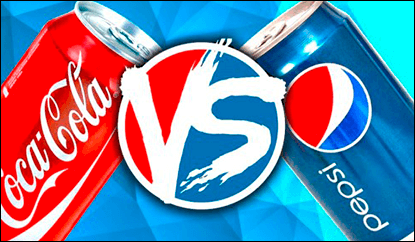
The scandal attracted public attention and increased interest in the brand. So, despite all the controversy, this experience played into Coca-Cola's hands.
The next clash occurred in 1996. While Coca-Cola, as usual, was preparing to advertise its drink at the Olympics, Pepsi organized a world tour of various capitals with celebrities representing Pepsi. Cindy Crawford, Claudia Schiffer, Andre Agassi, and others took part in this campaign.
At that time, the sales of drinks from the two companies were almost equal.
Each new marketing strategy brings Pepsi closer to its main competitor, but so far it hasn't managed to pull ahead. Currently, Coca-Cola accounts for almost 43% of beverage sales in the US, while Pepsi accounts for almost 31%.
So, Coca-Cola or Pepsi? The battle continues.
The company is committed to developing beverages that people enjoy, refresh their bodies and minds, and building a business for a better future.
The brand itself is also transforming itself to become a multi-drinks company. Its mission is to give consumers what they want. For this reason, a number of new projects are being implemented, aimed at reducing sugar content and developing more convenient packaging, particularly smaller sizes.
The Coca-Cola logo is one of the most recognizable in the world, and the distinctive red color the company uses is so ingrained in the minds of consumers that it is associated exclusively with the brand.
The company's name consists of two words that reflect the drink's composition: coca leaves and kola nut extract.
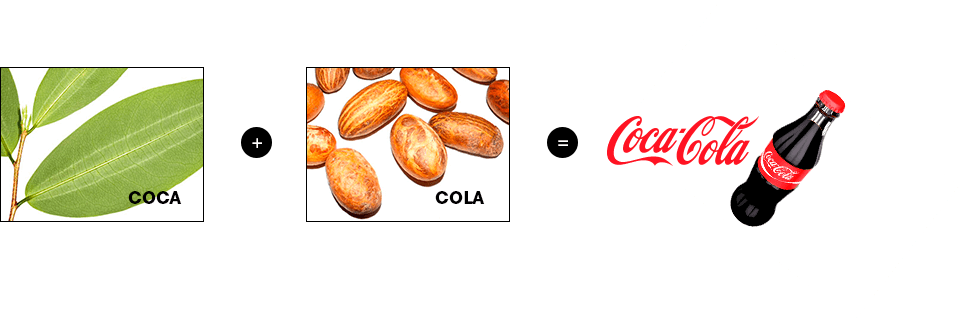
The first trademark was registered in 1893 and featured the name written in a black-on-white script (Spencerian). The logo was created by Pemberton's assistant, Frank Mason Robinson.
The brand was aimed at a young audience, so a simple design and neutral colours were used.
The logo, despite its age, has remained almost identical to its original form. Yes, it has been modified many times, but these changes have been minor. They primarily affected the color scheme and letterforms, and the overall style has been retained.
Today, the hallmarks of Coca-Cola's corporate identity include the name written in white on a red background, the interlocking letters that reflect the movement and fluidity of life, and the distinctive "skirted" bottle. However, the red we all know well isn't just any color. It's a unique shade developed specifically for the company, called Coke Red.
The red and white design tones appeared in 1969, when the company rebranded. A year later, they began using another feature in product advertising: the "dynamic ribbon." This white wave appeared between the outlines of two red Coke bottles and, of course, found its way into the logo. In 2017, the ribbon was removed from the design.
How the famous Coca-Cola logo has changed:
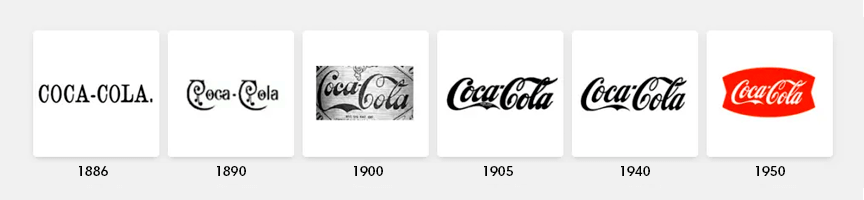
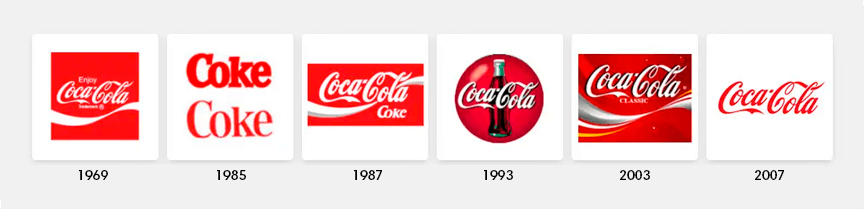
The Coca-Cola logo has remained unchanged since 2007. Today, it is the face of the brand and one of the most recognizable trademarks in the world.
Catchy Coca-Cola slogans
Throughout its history, the company has introduced dozens of striking and compelling slogans. They were featured in advertisements and urged consumers to try the refreshing drink.
The brand's owners understood that a tasty product alone wasn't enough. To achieve success and enter foreign markets, the drink needed advertising.
Coca-Cola's first advertising campaign launched in 1986 under the simple slogan "Drink Coke." Later, the phrase "Delicious and Refreshing" was added to this appeal.
In 1906, Coke producers began using the slogan "The Nation's Great Soft Drink." The goal was to attract consumers to the drink during Prohibition.
In 1919, to highlight the emergence of cola bottling plants in other countries (France, the Philippines, Puerto Rico, etc.), the following slogan was coined: "The best of nine countries, poured into one glass."
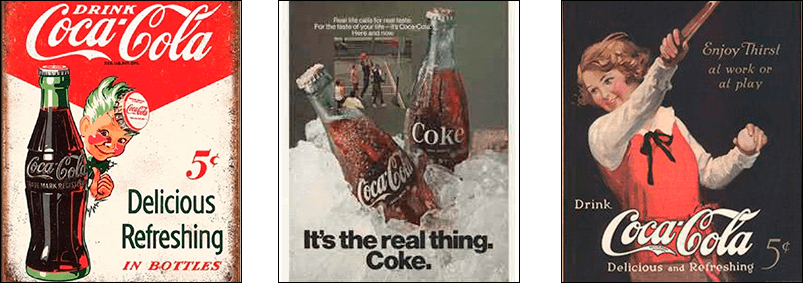
In 1925, Coke sales reached 6 million bottles a day. It was decided to incorporate this achievement into a new advertising slogan: "Six Million a Day."
Two years later, the slogan reflected another of the company's achievements: the drink's widespread availability. Coke could now be found in every shopping center, store, and kiosk, and the motto read, "Everywhere around the corner."
During World War II, when Coca-Cola supplied soda to soldiers for 5 cents, the slogan "Coca-Cola Belongs to You" was coined. In 1942, 64 factories were opened in Europe, Asia, and Africa to supply the army with the invigorating drink.
Following the rebranding, a new advertising campaign was launched with the slogan "She's the real deal." And in 1993, an ad appeared with the memorable slogan "Always Coca-Cola."
In 2013, when the company sponsored the Sochi Olympic Games, every fan heard the call, "Get involved!"
And in 2016, Coca-Cola launched a single advertising slogan for all of its products at once, and it sounded like “Try it… Feel it.”
The company's famous slogans help us trace its history. But this is far from a complete list.
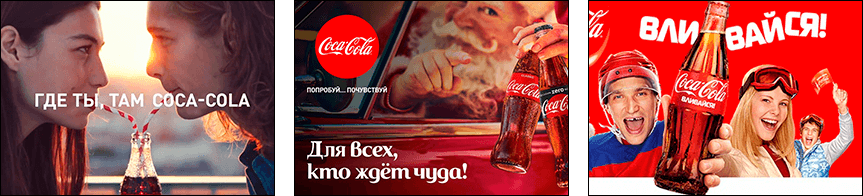
The brand's history has seen numerous other simple yet catchy slogans ("This is Coca-Cola," "A refreshing pause," "I wanted to buy the world of Coke," and others). Just look at the New Year's ad "The Holidays Are Coming!" with its Christmas-lit trucks rushing to bring us the holiday spirit.
A brand with a 130-year history has managed to maintain its recognizability, style, and fresh look. And this hasn't come easy. To stay ahead of the competition and easily reach its audience, Coca-Cola has invested its heart and soul in advertising and promotion since its founding.
The brand has influenced American culture and traditions and contributed to the drink's popularity. Santa Claus and the polar bear became its symbols, and the New Year and Christmas holidays are inconceivable without Coca-Cola and its iconic themed advertising.
Thanks to a clever marketing strategy, the company managed to introduce cola to the masses, forming a habit of drinking it daily, sometimes even instead of tea or coffee.
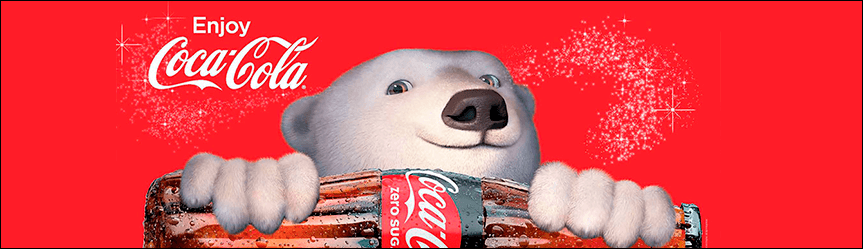
Coca-Cola used all forms of advertising: outdoor advertising, print advertising, radio and television advertising, online commercials, collaborations with celebrities, sponsorship of sporting events, the production of branded souvenirs, exclusive contracts with restaurants and cinemas, etc.
Fun fact : The first Coca-Cola billboard, erected in 1904 in Cartersville, Georgia, is still in place today.
In 1911, the brand's advertising budget exceeded $1 million for the first time, and by 2008, promotional spending had reached $2.7 billion. This allowed the company to rank sixth on the list of the world's top advertisers. In 2019, Coca-Cola spent $4.1 billion on advertising.
The classic image of Santa Claus is thanks to Coca-Cola
The image we are accustomed to seeing of Santa was commissioned by the Coca-Cola company.
In 1931, artist Haddon Sundblom created the character's red and white costume—matching the brand's signature colors—and also drew a kind and cheerful face (based on his own likeness). The new Santa Claus held a bottle of Coke, not a pipe.
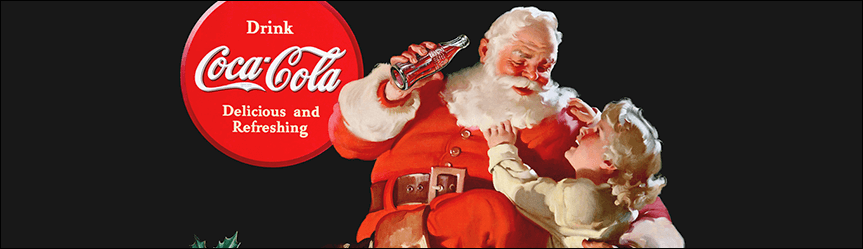
Until this point, Santa was depicted in any way anyone wanted (he was dressed in clothes of different colors, drawn as fat and thin).
Consumers loved the new look so much that they looked forward to its release every year. It gradually took hold in the minds of people around the world, and now we simply can't imagine Santa looking any different.
Sponsorship and collaboration with celebrities
Coca-Cola has long partnered with celebrities to promote the brand. For example, actors Jackie Cooper, Jean Harlow, Wallace Beery, Joan Crawford, artists Aretha Franklin, Ray Charles, Barbara McNair, Roy Orbison, Monatic, Vremya i Steklo, football player Joe Namath, designer Anne Klein, and many others have appeared in advertising campaigns.
Coca-Cola has also sponsored various competitions, sporting events, and music competitions. For example, the brand has represented the Olympic Games since 1928. It is also a partner of the Ice Hockey World Championship, the FIFA World Cup, the National Basketball Association, and world tennis tournaments.
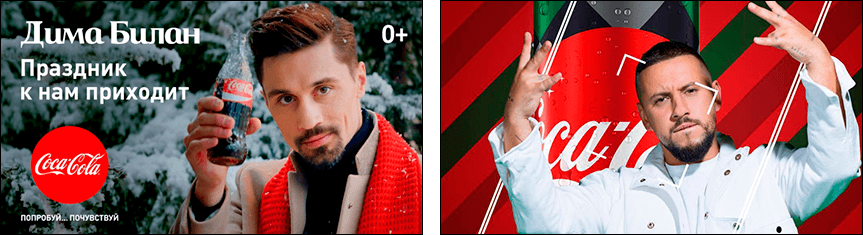
In 1983, Coca-Cola, in partnership with the Walt Disney Company, became the main sponsor of Tokyo Disneyland. And in 2002, the brand supported the first season of American Idol, which became one of the most popular programs in television history.
Coca-Cola is a brand that amazes and inspires. It inspires with its style, history, marketing strategy, and advertising ideas. Its simple yet striking visual image, fueled by fresh promotional campaigns, has firmly established itself in the minds and hearts of consumers.
To create an emotional and recognizable brand that sets you apart from your competitors, contact WeLoveBrands. Our team will develop a unique and stylish logo for your business, as well as a catchy, memorable name and slogan. For a consultation, call us or ask a question via online chat.