
Receive a presentation of services and expert advice
The best people in the industry oversee your brand development process
→ Need branding, design, or creative solutions? Call us at +48 505 648 022 or message us on WhatsApp.
 WeLoveBrands.pptx

The best people in the industry oversee your brand development process
In the age of modern technology, it's truly difficult to overestimate the importance and influence of social media on our lives. Not only do they help us express ourselves, but they can also instantly turn an unremarkable schoolboy into a billionaire. Three internet giants currently dominate Ukraine: Facebook, TikTok, and Instagram. We'll focus on the latter today and get to know it better.
Instagram (IG) is the largest photo and video platform today. Here you can promote a variety of services, your personal brand, a product, or simply preserve your most memorable moments. Instagram is making every effort to offer businesses a wide range of unique features each year.
Just imagine: according to recent Instagram statistics, 500 million users were using the Stories feature daily by January 2019, and this number has only increased by 2021. The data clearly shows that many people around the world access the platform daily. Needless to say, both marketers and businesses should do everything possible to understand how this network works.
In this article, we'll explain the platform's intentions, how it works, and how it's evolved over its 11 years of existence. Marketers looking to leverage Instagram's full potential will also find the statistics and facts provided in this article extremely helpful.
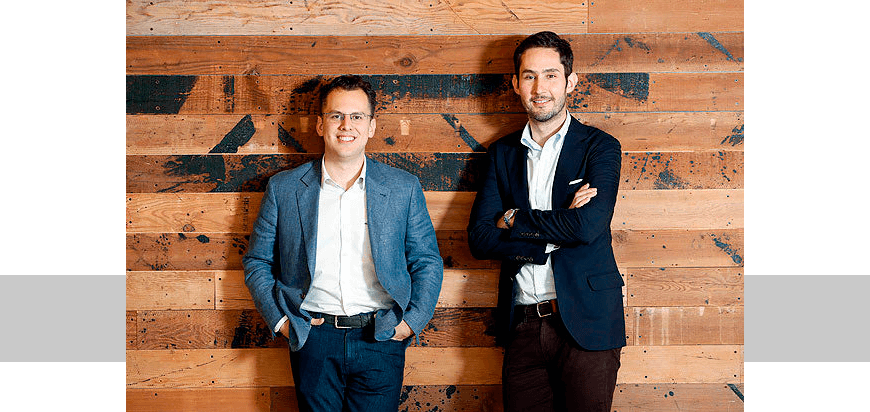
Instagram is a mobile app owned by Facebook Inc. that allows users to take photos, add effects, and share content online. It was developed and launched in 2010 by Mike Krieger and Kevin Systrom.
Instagram gained popularity almost immediately after its launch: one million registered users within two months, ten million within a year, and one billion as of May 2019. At the same time, over 98% of Facebook's revenue came from advertising. It collected $70.7 billion in advertising revenue in a year, and a significant portion of this revenue came directly from Instagram.

Instagram's main competitors include Facebook, Twitter, Snapchat, Pinterest, and TikTok.
Instagram thrives primarily due to its loyal and global user base. Their primary focus has always been on the younger generation.
Since its launch in 2010, the business model has remained the same—a free mobile app for sharing images—but the way it uses its algorithm to monetize user attention has evolved over time. Like Facebook, Instagram makes money through advertising.
As a visual social network, Instagram is a natural platform for branded advertising. Most brands use it to increase brand awareness and promote their message and content.
Instagram is one of the pioneers in this industry. Despite social media marketing being at least 23 years old, Instagram has cemented its status as one of the top advertising platforms. Models, celebrities, singers, and almost every famous person in the world have an Instagram account, making it increasingly valuable for investors and brands.
Advertising is a marketing strategy that uses a sponsored message to promote or sell a product, service, or concept. Its goal is to attract people to purchase and create a direct connection between the target customer and the product or service being offered.
Because Instagram has such a large user base, filled with everyday people and celebrities, high-end companies pay big bucks to advertise their brands. This accounts for most of Instagram's revenue.
Instagram's Main Competitors
Mark Zuckerberg and his roommates founded Facebook in 2004 as a continuation of a student project. The American social media company is headquartered in Menlo Park, California, USA. Facebook has over 44,000 employees and is considered one of the "Big Five" tech companies, along with Microsoft, Amazon, Apple, and Google.
Facebook ranked second on the 2018 Fortune 500 list of the largest US corporations. The American company earned over $70 billion in total revenue as of 2019, and it's still growing. The multi-billion-dollar platform continues to grow daily, and as of the first quarter of 2020, Facebook had over 2.6 billion monthly active users.
Facebook has been around longer than Instagram and therefore has a larger user base. However, Instagram has better statistics for audience engagement and content sharing. Furthermore, since Instagram is a visual platform, it maintains a compact yet interactive content, making scrolling easier.
Twitter is an American microblogging and social media service founded in 2006 that allows users to publish short messages called tweets, consisting of just 280 characters. The company, based in San Francisco, California, has over 25 offices worldwide and 4,900 employees.
Twitter continues to maintain its status as one of the most popular platforms, with 275 million active users. In 2019, the company's total revenue was $3.46 billion. Twitter divides its revenue into two categories: advertising sales, which account for the majority of the company's earnings, and data licensing.
Most users rely on Twitter to express their feelings, share ideas, and stay up-to-date with current events. But the downside is that the feed is filled with links to websites that take you away from the service. Instagram, on the other hand, keeps users focused while browsing, virtually free of distractions, and the app has the added bonus of engaging users.
Snapchat
Snapchat is a popular messaging app known for its unique "self-clearing" feature. It was founded by three students, Evan Spiegel, Bobby Murphy, and Reggie Brown. The American company was founded in 2011 and is based in Santa Monica, California. As of 2019, Snapchat currently employs over 2,700 people.
Like most social networks, Snapchat makes money by partnering with major brands and selling intrusive advertising. The company's total revenue as of 2019 was $1.7 billion. It also loses more than 229 million daily active users.
Snapchat and Instagram serve the same purpose: taking photos and videos for public or private sharing. However, comparing their engagement rates is difficult. Instagram's core features allow users to like, comment, and view stories, while Snapchat only offers the option to admire photos or reply privately. Therefore, Instagram has better engagement statistics.
Pinterest is an American image-sharing service best known for its boards. It was founded by Ben Silberman, Paul Sciarra, and Evan Sharp in 2009. The social platform has over 1,600 employees and is based in San Francisco, California, USA.
The visual bookmarking platform allows users to share, discuss, upload, promote, and explore each other's interests by pinning images and videos to virtual boards. In this regard, Pinterest is one of the largest image-sharing companies on the internet. Pinterest has 367 million monthly active users and generates $1 billion in revenue.
Instagram and Pinterest are both visual platforms, but they operate differently. Pinterest is primarily used for creating and saving images posted by other users, while Instagram is more about personal photos (excluding our favorite fakes, of course). Because Instagram has significantly more advertisers and promotional options, it far outperforms Pinterest.
TikTok
TikTok is a Chinese video-sharing app owned by ByteDance. It was founded by Zhang Yiming in 2012. Development began in 2016 and, after a merger with the well-known video-sharing company Musical.ly, it was released globally. TikTok is based in Culver City, California, and employs over 2,000 people.
The Chinese app gained worldwide popularity within a year, and in 2019, Tik Tok ranked seventh among the most downloaded mobile apps of the decade. That same year, Tik Tok earned over $170 million in revenue through ads and brand deals. As of June 2020, the Chinese company has over one billion users.
Having reached a billion users in just two years, TikTok's popularity is steadily growing. But how long will this continue? Instagram remains hugely influential and has been around for over a decade. Despite the widespread controversy over TikTok's data collection, Instagram remains the best platform.
Facebook, Twitter, Snapchat, Pinterest, and TikTok. These companies collectively employ 56,626 people worldwide, while Instagram employs only 450 people and ranks second among its top five competitors by revenue.
More than 1 billion people use Instagram monthly. Based on the number of active users, Instagram is the second-largest social network in the world, behind Facebook. However, among all existing platforms, Instagram ranks fifth in terms of active audience, behind Facebook, YouTube, WhatsApp, and Facebook Messenger.
But in which country is this social network most popular? Of course, in its homeland – the United States.
In Ukraine, the number of Instagram users in 2021 was 14 million, and this figure is steadily increasing.
Every year, Instagram tirelessly grows its audience, modernizes, and outperforms its competitors. After 11 years of steady growth, it's still beloved and considered one of the most effective marketing platforms. And it looks like little will change anytime soon.
It's clear to the naked eye that Instagram's fan base is growing at an ever-increasing rate. Couldn't the brand have been hoping to replicate its success, as often happens in app development? Indeed, Instagram's management was no exception.
In the fall of 2019, they announced that Instagram had launched a trial version of a new service and video feature known as "Reels." Development began in Brazil and later expanded to France and Germany. The functionality is very reminiscent of TikTok: focusing on recording 15-second videos with audio samples from other posts. But the key difference with Reels is that it can integrate with Instagram's existing filters and editor.
Then, in July 2020, Reels appeared in India after authorities blocked TikTok there. A month later, the service officially launched in 50 countries, including the US and UK.
But so far, Reels hasn't managed to surpass Instagram's stunning success.
This platform is loved not only by its users, but also by its developers, who have received numerous awards for their efforts.
Second place in the Best Mobile App category at the 2010 TechCrunch Crunchies.
CEO Kevin Systrom was ranked 66th on Fast Company magazine's list of the "100 Most Creative People in Business in 2011."
Founders Systrom and Krieger were included in Inc. magazine's "30 Under 30" list.
First place in the Best Local App category at the SF Weekly Web Awards.
Systrom and Krieger were featured on the cover of the September 2011 issue of 7x7 magazine.
In December of the same year, Instagram was chosen as the "iPhone App of the Year".
Surprisingly, not everyone is thrilled with Instagram. A 2017 survey of nearly 1,500 teenagers and young adults concluded that Instagram is one of the worst social media platforms for youth mental health. It's worth noting that the photo-centric platform did score highly for self-expression and self-identification. However, it's also often associated with high levels of anxiety, depression, bullying, and a "fear of missing out."
The authors wrote that social media posts can also foster unrealistic expectations and lead to feelings of inadequacy and low self-esteem. This may explain why Instagram, where personal photos take center stage, received the worst ratings for idealized body image and increased anxiety among users. As one survey respondent wrote, "Instagram easily makes girls and women feel like their bodies aren't good enough because people add filters and edit their photos to look 'perfect.'"
Over the past decade, Instagram has steadily gained momentum, amassing a billion active users and growing at the fastest rate of any major social platform.
And with people now spending an average of 53 minutes a day on the photo-sharing app, its impact on our daily lives has become very significant.
Instagram has both created new professions and destroyed entire industries. But it can't be that bad, right?
 Expanded concept of "beauty"
Instagram has deservedly received its share of criticism for its impact on young people's mental health. Some blame the overwhelming number of filtered, edited images that present unrealistic expectations. But there's a flip side: by providing consumers with such an accessible platform, they also have the opportunity to share a more diverse vision of beauty.
People no longer rely on traditional media outlets that convey a narrow definition of aesthetics. Instagram is now being used by almost everyone to break taboos: from users sharing their unfiltered pimples, stretch marks, and scars, to plus-size, transgender, and disabled people.
This diversity attracts a significant audience, forcing brands to take notice and adapt.
 The emergence of social brands
As brands have actively engaged in Instagram marketing, there have been several notable success stories.
Some of the platform's most savvy pioneers have managed to build a brand entirely on Instagram. Watch brand Daniel Wellington is a perfect example – they used the platform to promote their product, bypassing traditional advertising. Their strategy of using their advertising budget to gift watches to influencers resulted in a constant stream of inquiries and messages. This buzz then translated into sales, helping the company become the fastest-growing brand in Europe between 2013 and 2015.
Another example: Frank Body. The maker of ground coffee body scrubs strategically leveraged influencers to amplify their brand, creating buzz that transformed their product into a $20 million global beauty brand.
 Popularization of activism
Thanks to its free access to millions of users, Instagram has also helped to implement many charitable projects.
Images are incredibly powerful. Many activists now use Instagram as a storytelling tool to spread their message far and wide, inspiring others to get involved. It also gives influencers direct access to their followers to convey messages of support.
As we can see, Instagram significantly influences the culture of our communication, interaction, and positioning. Understanding these processes will not only help you improve your Instagram strategy but also understand how the growth of this social network affects the consumer habits and needs of your target audience.
How did developers manage to achieve such heights in such a short time? After all, many companies try, but only a few succeed.
The beginning of the journey
Initially, the founders decided to make the app available only for iPad, iPhone, and iPod. It quickly became apparent that it was a popular choice and was downloaded quite frequently, but it wasn't as popular as it is today.
Instagram was a tool that evolved over the years. More and more people began downloading and using the app. Its incredible growth began in 2012, when the Android version was released. On its first day, the app was downloaded over a million times.
In April 2012, Instagram reached 100 million active users for the first time. Facebook was already keen to take over Instagram. They finally succeeded in taking over in April 2012. For $1 billion, Facebook became the proud new owner of the social network. It soon became clear that this deal was an incredible coup for Facebook.
Instagram's new feature rollout timeline
 October 2013. Instagram introduces advertising options for select brands.
 September 2015: The advertising feature is now available to all users.
 June 2016. The transition to a non-chronological feed. Not all users were thrilled, but the developers were convinced it would help people stay up to date with posts from accounts they followed.
 August 2016. Instagram Stories finally launched! With them, users can upload photos and videos to their profiles, which then disappear after 24 hours. This feature increased Instagram's advertiser base to 2 million monthly.
 November 2017. The "Close Friends" list was added.
 May 2018.
Instagram has finally added a mute button. If you haven't heard about it yet, you can hide Instagram Stories by long-pressing them and then selecting "Hide." This also includes muting entire profiles.
Instagram stated that it implemented this feature to make accounts more personalized, but acknowledged that there was clear user demand. "We've also heard that this could be a useful tool for managing complex social dynamics," a company representative commented.
You can mute someone's profile by clicking on the three dots in the top left corner of the conversation and then selecting the mute option.
That same month, the "You All Caught Up" feature was added. Thanks to it, Instagram can now notify users when they've viewed all their posts for the day.
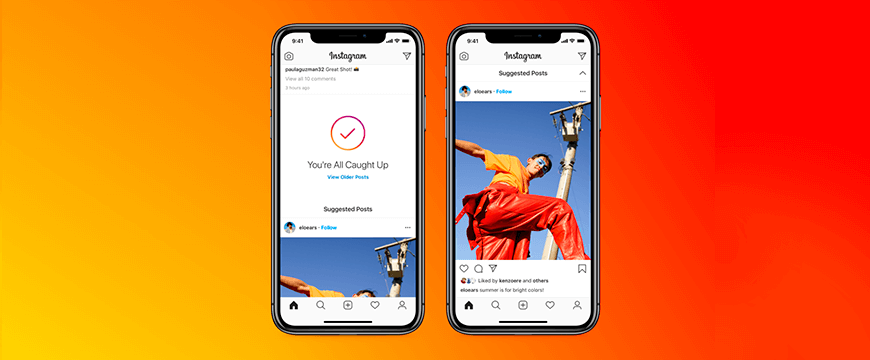
Ever since Instagram broke its timeline, it's become difficult to tell which posts you've already seen and which are new.
This is no longer a problem, as the app will use this new feature to help you understand when you've scrolled through your entire feed once.
Also in May 2018, the ability to share posts to personal Instagram Stories was introduced. The developers intended this feature to allow people to promote friends and brands they love in their own Stories, simplifying the personal recommendation process. After all, it's much easier than saving or screenshotting the image itself. Any post you share will still have the original username and a link to the post.
Instagram added video chat back in May. One of the best features of this feature is that You can scroll through your feed while chatting. It's also now possible to video chat with up to four friends at once.
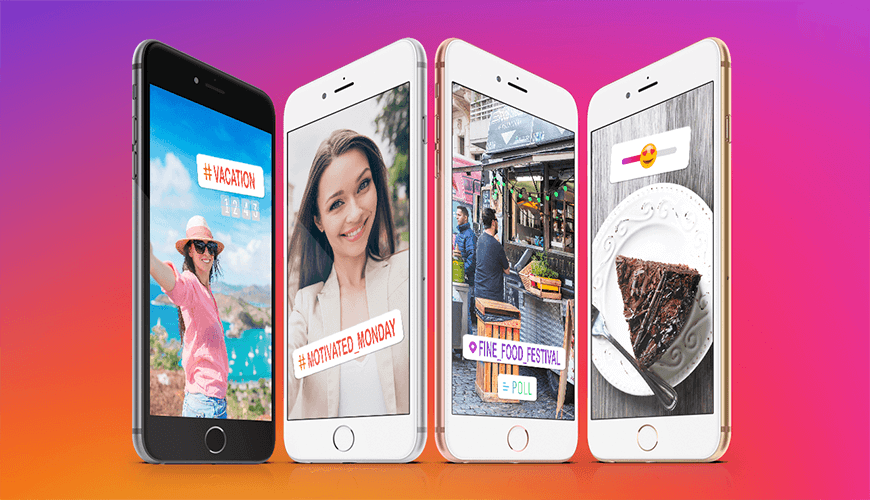
Emoji sliders were also introduced around that time. This feature works almost exactly like a poll. It helps users more easily express their likes and dislikes of something. The answer can be given using a slider between two emojis.
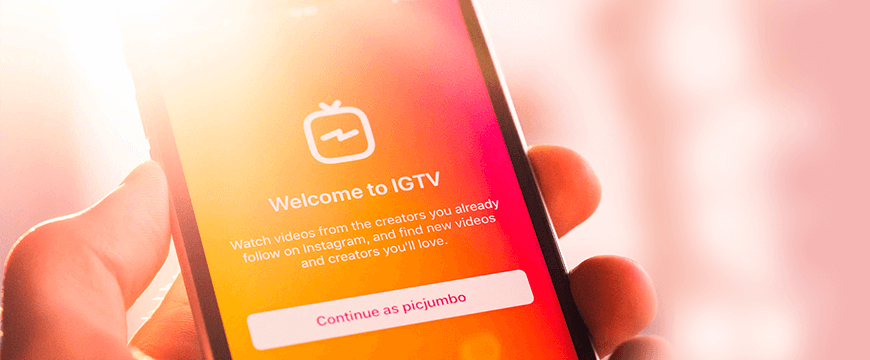
 June 2018. IGTV launched. This standalone app allows users to upload longer videos and broadcast in-depth video content.
 July 2018. The question feature was added to Stories. This has become a great tool for soliciting feedback from followers. Using a sticker with an emoji slider and a voting sticker, users can express their opinion on a particular question. This feature's success stems from the fact that it's easier for audiences to leave reactions than to comment, as it takes much less time. And yet, engagement still increases!
 September 2018. Instagram introduces video tags. This feature uses the same icon that users typically tap in the lower left corner of tagged photos. But instead of seeing a label with names, tapping the button takes you to a separate page with a list of all the people tagged in the video. This allows you to see everyone tagged in a window that opens on the right side of the screen.
 March 2019. Developers add Checkout to Instagram – a feature for online shopping directly within the app.
 November 2019. The "Following" tab, which allowed users to spy on other users' likes, comments, and subscriptions, was removed.
 March 2021. Developers announced the creation of a special version of Instagram for children.
Today, the app is increasingly spreading its reach across the globe. Constant innovation helps Instagram stay afloat and attract more and more new users. The company's ambitions remain undiminished, and we'll likely see many new features from its developers in the next few years.
What was the main purpose of creating Instagram?
It all started when Kevin Systrom and Mike Krieger encountered serious problems when sending photos to friends:
Sending photos to friends was too time-consuming and difficult.
Publishing photos across multiple platforms was difficult and time-consuming.
Photos taken on mobile phones at the time were of poor quality.
These principles formed the basis for the Instagram app's design. The platform has simplified photo sharing with friends. Now, you can post your photos to other social networks through Instagram. And, ultimately, Instagram filters can significantly improve image quality.
It soon became clear that these concerns weren't limited to the founders. Far more people were concerned about the inconvenience of sending photos to loved ones. Thus, Instagram became incredibly popular in its early years.
The developers have stated their mission: to make it possible for everyone to capture their best moments, share them with the world, and use them to build relationships with each other.
Instagram's concept was simpler than that of competing social networks. The app offered a stream of photos—and later videos—that were often pleasant or aesthetically pleasing. There were no heavy news or mood-damaging pop-up links to download new apps.
As smartphone cameras improved, so did users' desire to share their photos. Instagram has withstood the test of its new competitor, Snapchat, by partially mimicking Snapchat's popular Stories feature, which displays photos for 24 hours before they disappear.
Despite its inspiration, the app remains a primary way to keep in touch with friends and perhaps kill a minute or two in line. It even functions as a dating platform!
Name
When developing a new concept, choosing a name is a complex process. It must meet several requirements. It would also be helpful if it somehow related to the concept itself. In the case of Instagram, all these factors were taken into account.
The name "Instagram" is a combination of the words "instant" and "telegram." "Instant" refers to the ability to post photos directly. After all, you're almost always connected to the internet.
The founders also compared sending photos to friends to a telegram. At the time, a significant portion of communication took place via telegram. Today, communication often happens via Instagram. For this reason, "Instagram" is a perfectly logical name for this social network.
Some argue that "instant" also refers to the "instant" camera. In 1963, Kodak introduced the Instamatic cartridge. There was only one way to insert the cartridge into the camera, so learning how to do it wasn't a problem. This is also one of Instagram's goals. The app is designed to make it easier to use and share photos. So it's entirely possible that Instagram got its name in part for this reason.
Font
The Instagram logo is written in Billabong Regular. It resembles Bluestar Regular and Avangard Regular in that it also features rounded letters connected by smooth lines.
Logo
The Instagram logo was originally designed by Kevin Systrom himself. The design featured a camera accented with a rainbow stripe. This detail was added to highlight the app's core feature: the ability to take, edit, and share photos, applying different hues using a filter.
But Systrom later decided that the logo was too much of a challenge and decided to entrust it to Cole Reisz, who had a more advanced understanding of photography and design. Reisz, in turn, proposed a simpler camera design.
As Instagram's functionality has evolved over time, it's time to modernize its logo. The new logo hints that the app now offers not only photos, but also boomerangs, hyperlapses, and collages.
To maintain the logo's recognizability, the designers drew inspiration from the old design. Although it closely resembles the classic Polaroid, this emblem is still radically different from its predecessor.
Today, the Instagram trademark is a minimalist outline of an original Polaroid camera image in sunset colors, achieved with a trendy gradient.
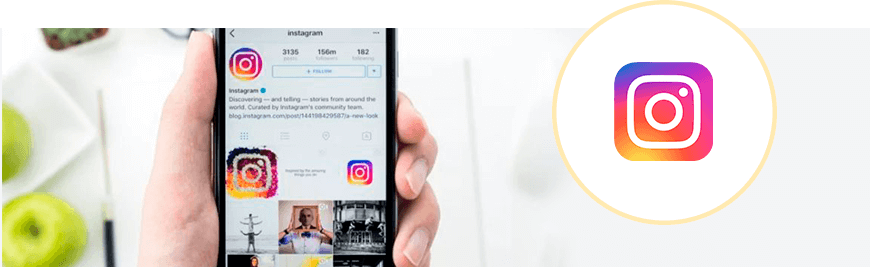
Its black-and-white version is similar to the official colorful version in terms of lines and style. However, it doesn't look as impressive without the riot of color.
The monochrome logo was created in two versions. The first is a solid black square with rounded corners and a thick white outline, echoing the shape of the icon, as well as a white circle outline in the center and a small solid circle in the upper right corner of the smaller square.
The second version is newer, created in 2020. It features a black outline of the Instagram logo on a white background.
The new symbol has a more minimalist and modern look. The designers achieved this effect by using white and fewer lines in the composition. The outlined square with rounded corners is now positioned directly on the backgrounds, which serve as the emblem's frame.
The monochrome version of the Instagram logo is used in the same way as the original: with or without the inscription.
The Instagram logo is instantly recognizable. The personalized cursive letters create a lasting association with bright moments and friendship.
The font used for the lettering was developed specifically for the app. Although it closely resembles Avangard Regular and Blue Vinyl Regular, it has been slightly modified and elongated. The logo's contours are clean and smooth. This technique gives the classic letterforms a gentle and friendly feel.
Despite its apparent simplicity, the Instagram logo appears confident and modern. Importantly, when used in monochrome, it appears even more striking. This is achieved through the strong contrast between black and white, giving the logo a truly iconic feel.
If you're planning to create your own brand, it's worth learning from Instagram's commitment to mission, goals, and original design. This principle has helped the app maintain its audience over its 11 years of existence, and even grow it.
The first test photo was of puppies.
The first photo posted by Instagram co-founder Kevin Systrom shows a golden retriever puppy and the right foot of Systrom's girlfriend. It was taken on July 16, 2010, in Mexico, near a taco stand. The photo bears the caption "test." At the time, the app had not yet been publicly launched.
The two inventors of Instagram, Kevin Systrom and Mike Krieger, initially had a completely different idea.
At the time, check-in apps like Foursquare were popular. They wanted to tap into this market with their Burbn offering. However, the two former Stanford students soon realized they were too late. So they focused on a different business idea: as technology and photography enthusiasts, they developed an app for photo editing and sharing.
The total number of monthly active Instagram users has exceeded 1 billion people.
Instagram users are renowned for spending a significant portion of their time using its features, such as Stories, video sharing, photo sharing, and more. Today, it has over a billion users. This demonstrates the remarkable level of engagement the network provides to maintain its users' interest, not to mention how beneficial it is for businesses and product promotion.
More than 4.2 billion likes are given on Instagram every day.
Likes are one of the most frequently used features on the platform, to the point that they number over 4.2 billion each day, according to the service's statistics on how people interact with the site.
Every second, approximately 995 photos are uploaded to Instagram.
Instagram was created to make photo sharing easier. It's no surprise that statistics now show that nearly a thousand images are uploaded and published every second.
Within the first 24 hours after Instagram announced its video feature in 2013, 5 million videos were uploaded.
Videos are one of the primary types of content you'll see on most Instagram users' accounts (after photos, of course). In just one day after the "Video" feature was introduced, the number of uploaded videos exceeded 5 million.
Pizza is the most popular food on Instagram.
Admit it, you thought it would be sushi or avocado toast?

80% of accounts are for personal use.
Business owners and brands use Instagram to promote their products and services. This process can be made more efficient by registering a business account.
Personal accounts, however, still predominate on Instagram, which can also be used for business. According to case studies based on Instagram usage statistics, 80% of its accounts are for personal and individual use, and the remaining 20% can be used to attract the attention of that 80%.
The latest blogging statistics show that 94% of bloggers believe that social media is the best way to promote their blog, and 73% of marketers are already using Instagram's advertising potential.
Instagram is used by 4.1% of Americans over 65.
Who said Instagram is only for young people? When you imagine the typical user of this app, it's hard not to picture a demographic made up entirely of young people. But that's not true. While they're not the majority, the fact remains: at least 4.1% of older Americans enjoy using the platform.
Women use Instagram more than men.
Taking into account the top statistics of Instagram users, 53.7% of women use this social network.
Most Instagram users are between 25 and 34 years old.
It's not surprising that the majority of Instagram users are 34 years old or younger, as this is typically the average age of marketers worldwide. According to Statista's Instagram demographics by age report, 31% of users are 25-34 years old. Those aged 18-24 aren't far behind (29.6%).
89% of all internet users use Instagram.
It's well known that internet users actively utilize available social media platforms. For example, research on Instagram indicates that over 89% of all internet users also use Instagram. With such astronomical numbers, it's difficult to imagine the business benefits this vast network offers.
Instagram influencers who don't even have 10,000 followers can earn an average of $88 per post.
Instagram is home to many influencers who drive followers to specific brands. Instagram statistics for 2020 showed that influencers with fewer than 10,000 followers can earn at least $88 per post. This means that a significant portion of their audience are potential customers. It goes without saying that the more followers they have, the higher their income. Those with fewer than 100,000 can easily earn $200 per post.
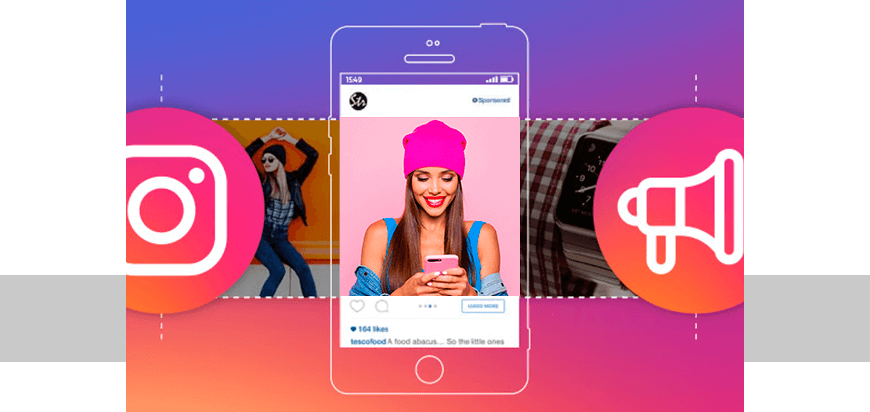
61% of brands plan to increase their Instagram advertising budgets in 2021.
It's hard to ignore the platform's growth in 2020, as Instagram statistics show that 61% of brands plan to increase their advertising budget there in 2021.
Surprisingly, Facebook ranks second with 46%, and YouTube third with 45%. What's even stranger is that, despite TikTok's popularity last year, only 14% of brands plan to increase their budgets for the channel.
60% of people on Instagram use it to discover new products.
Finding the perfect product on Instagram has become much easier, as statistics show. In fact, brand engagement on this social network is 10 times more effective than on Facebook, the leading social media giant: 60% of people use it to discover new products. When it comes to purchasing, mobile users often act impulsively. Recent mobile marketing statistics show that 90% of consumers are influenced to make impulse purchases by their smartphones.
90% of users follow at least one brand on Instagram.
Instagram has over 25 million accounts on its platform. This huge number demonstrates its high level of accessibility for a wide range of users. According to the latest Instagram follower statistics, 90% of the platform's users follow at least one brand online. Furthermore, they report that this helps them engage with brands.
The Stories feature has over 500 million daily users.
Since the introduction of the Stories feature, many people have been spending significant time on their Instagram accounts. Case studies based on Instagram Stories statistics show that the feature is now widely used by more than half of the social network's audience.
Time spent watching videos on Instagram has increased by 80%.
It's worth mentioning that videos are a truly great way to engage your audience, and Instagram is the ideal platform for publishing them. Instagram video statistics show that the time users spend watching videos has increased by 80%.
Instagram is visited by over 2 million advertisers monthly.
We can see sponsored ads in users' Instagram feeds. And story ads haven't disappeared either. It's clear that the number of advertisers on the network has reached an impressive level. Much has changed over the years, and most of these changes have been positive for the platform.
Instagram video content is twice as likely to attract attention as photo content.
Since their introduction, videos have attracted twice as much attention as photos alone.
In June 2018, Instagram reached its first billion users.
In 2013, Instagram had only 130 million monthly active users. Frankly, that's not so small. So, it's even more impressive that just five years later, that number skyrocketed to a whopping one billion. Today, those numbers continue to grow, making Instagram one of the largest social networks in the world.
Enterprise accounts now allow you to use several analytics features.
Unique updates Instagram offers its users now include business accounts with several additional analytics features, such as reach and many others. This allows you to see who is monitoring your account and for how long. Neither business nor personal accounts allow people to know exactly who is visiting their profile. The platform doesn't have built-in features for tracking this, although businesses can see the number of weekly visitors, how many people have seen your post in their feed, and similar data.
Between 2016 and 2020, Instagram gained 26.9 million new users.
According to an eMarketer forecast based on leading Instagram user statistics, the social media platform should continue to grow in the coming years. So far, at least, this prediction has come true. Moreover, according to the latest statistics, Instagram has shown stronger year-over-year growth in referral traffic than Facebook, Pinterest, and other social networks.
Instagram is the second most visited social network.
After Facebook, Instagram is the second most visited website in the world by number of active users.
The average number of followers on Instagram is 150.
Since Instagram's inception, gaining a certain number of followers has been the goal of almost every user. This is because the more followers you have, the more interactions you'll get—that's why everyone strives to build as large an audience as possible. But despite all these efforts, research shows that the average number of followers per user on Instagram is only about 150.
About 50-60% of a user's followers will see their posts.
Instagram has now become the second-largest social network in the world. And it doesn't look like it's slowing down anytime soon. Despite the platform's growing popularity, many people still don't realize how powerful a weapon Instagram really is.
Today, most statistics show that the platform provides exciting innovations and technologies to its active users, influencers, companies and brands.
If you want to grow on Instagram, you need a strong visual identity. After all, when the platform is photo-based, it's crucial to avoid mistakes in developing a visual concept. If you want to create an image that will stand out among the crowd of Instagram accounts, you need to develop a recognizable brand style. WeLoveBrands studio helps our clients with this.
You can always contact us via our hotline or chatbot. We'll help you create the most branded Instagram profile right away!


