
Receive a presentation of services and expert advice
The best people in the industry oversee your brand development process
→ Need branding, design, or creative solutions? Call us at +48 505 648 022 or message us on WhatsApp.
 WeLoveBrands.pptx

The best people in the industry oversee your brand development process
The popular women's brand Victoria's Secret, which annually transports consumers to a world of glamour and fairy tales, has seen a lot in its history. It was founded to help men choose sensual gifts for their wives, sought to popularize sexy lingerie, and dreamed of making luxury accessible to every woman. And it succeeded.
The brand changed the market, set the tone for fashion, and captured the hearts of millions, but it failed to keep up with the times and now stands on the brink. How did this happen? What is the secret to Victoria's Secret's success and the reason for its decline? What scandals and tragedies has the famous brand endured? We'll tell you in this article.
Victoria's Secret is an American brand of women's lingerie, swimwear, apparel, cosmetics, and accessories. Founded in 1977, it is one of the most popular brands in the world and stands alone, accounting for 40% of global lingerie sales. Since 2019, it has become the largest lingerie retailer in the United States. The company employs over 90,000 people.
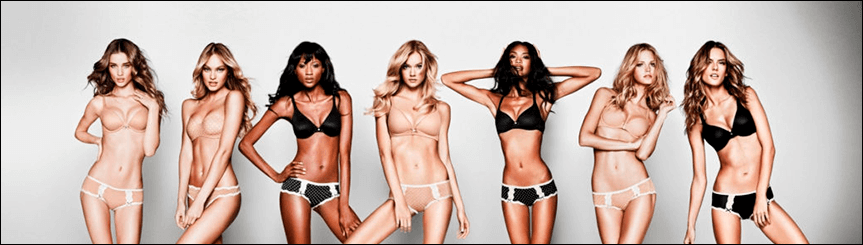
In 2010, there were over 1,000 Victoria's Secret stores in the US alone. The first international Victoria's Secret stores opened in Canada and the UK. The brand's sales geography subsequently expanded, and it is now represented in many countries, including the Maldives, Iran, Turkey, China, Israel, India, Australia, Singapore, Saudi Arabia, and others.
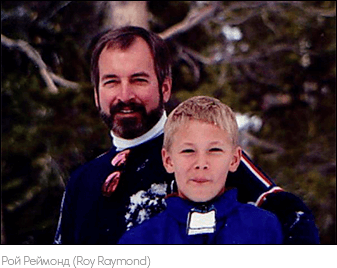
The brand's founder is Roy Raymond. The company is now run by US billionaire businessman Leslie H. "Les" Wexner, who is also the founder of the L Brands holding company, which includes Victoria's Secret.

The company's headquarters are in Columbus, Ohio, USA. Website: https://www.victoriassecret.com/
Since its inception, the company has quickly conquered the American market, gathered crowds of fans abroad, and even created something of a pop-culture phenomenon – a spectacular and lavish show featuring celebrities.
The Victoria's Secret Fashion Show is held annually and features lingerie fashion shows. Famous models—Victoria's Secret Angels—demonstrate the brand's newest creations.
For each show, an exquisite gem-studded lingerie set—the Fantasy Bra—is specially crafted. Adorned with diamonds, emeralds, rubies, and sapphires, it's the most expensive lingerie in the world, costing between $1 million and $15 million per set.

Victoria's Secret's annual sales previously reached $4-7 billion, but since 2016, financial performance has declined sharply (to $1-2 billion). In 2019, the company announced the closure of 53 branded stores in the US due to a 40% year-over-year sales decline.
The brand's position was also weakened by the arrival of brands like Adore Me and ThirdLove in the American market, as well as the creation of its own brand by the retail chain Target. The new products were characterized by simplicity and comfort, and the companies featured real women, not models, in their lingerie ads. Consumers appreciated this approach, and it inevitably impacted Victoria's Secret sales.
Also, in 2019, for the first time in the 25 years of the Victoria's Secret Fashion Show's existence, the brand canceled its annual fashion show, explaining that it would be revising its positioning.
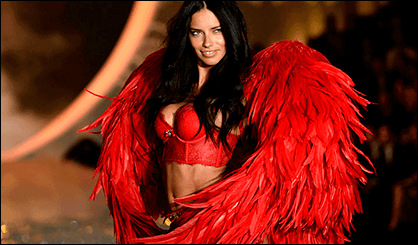
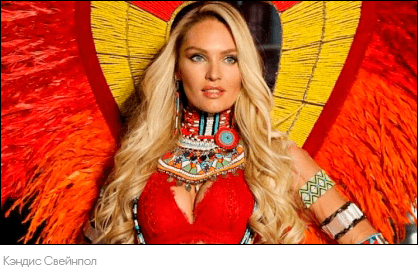
Many of the brand's models have appeared on Forbes lists, occupying high positions and appearing in the top 10 highest-paid models in the world. Specifically, in 2015, Adriana Lima, with earnings of $9 million, and Candice Swanepoel ($5 million) made the top ten.

In 2000, the brand unveiled the $15 million Fantasy Bra set at its fashion show. It's the most expensive lingerie set in the brand's history, and it even made it into the Guinness Book of World Records.
And in 2007, a star for Victoria's Secret Angels was lit on the Hollywood Walk of Fame.

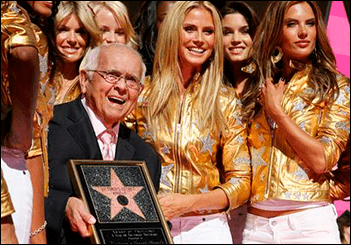
The brand's "Angels" regularly participate in various charitable events and projects. For example, in 2018, Victoria's Secret models attended a party held at the Cannes Film Festival to benefit amfAR, a foundation that raises funds to fight AIDS.
In 2019, model Helena Christensen, along with representatives of the UN Refugee Agency, traveled to Donbas on a charity mission.
The "angels" also helped raise money for cancer research.
As for the founder of the popular brand, Lexie Wexner, he is a renowned philanthropist. The businessman, who owns the L Brands holding company (Victoria's Secret, Pink, and Bath & Body Works) and has over 3,000 stores worldwide, is actively involved in charity work.
In 1989, Wexner was one of the first to donate $1 million to United Way Worldwide, a company that helps address community development issues. Its primary focus is education, health, and income.

The businessman, as the richest man in Ohio, was a major donor to the Wexner Center for the Arts at Ohio State University and helped Rabbi Herbert A. Friedman establish a training program for Jewish communal leaders.
Wexner served on the Ohio State University Board of Trustees from 1988 to 1997, and was elected chairman of the board in 2009.
In 2011, the businessman donated $100 million to the state. The funds went to the University Medical Center, the James Cancer Center, and the Solove Research Institute. A year later, the medical center changed its name to the Wexner Medical Center.
L Brands and Lexie Wexner also donated $163.4 million to the Columbus Foundation.
The history of this popular brand began with the idea of giving men comfort in the world of women's lingerie.
In the 1970s, a Stanford graduate named Roy Raymond was shopping for lingerie as a gift for his girlfriend. He was looking for a nice set, but to no avail.

At the time, women mostly wore plain cotton bras and panties, saving lace and silk sets for special occasions (weddings, honeymoons, etc.). Consequently, store selection was limited. Furthermore, saleswomen were unavailable to help (either with sizing or with prompt service).
Ultimately, Roy felt uneasy in the store and left empty-handed. However, he came up with an idea for how to make shopping for women's underwear more comfortable for men.
 A new and unusual approach to selling women's lingerie
In 1977, Raymond opened the first lingerie store for women in San Francisco and named it Victoria's Secret.
Since the businessman decided to sell sets that would appeal to men, the store and everything in it were specifically targeted at a male audience. The main distinguishing feature of the new brand was the combination of a wide selection, friendly staff, high-quality products, and a high level of service.
The sales staff greeted customers with joy, seating them on soft ottomans, offering champagne, and showing them various lingerie styles. The employees had undergone special training to discuss sizes and styles with customers freely and without embarrassment.
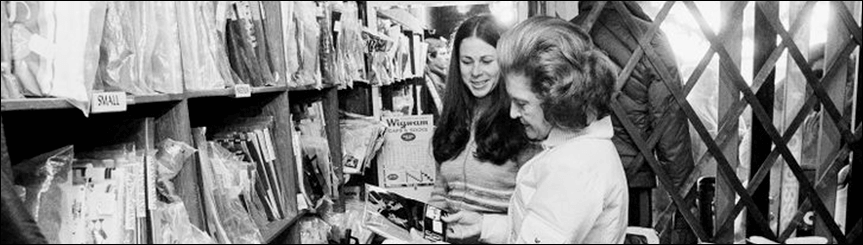
The brand convinced men that it was better to go to the store after work and buy a beautiful set for their wife than to sip beer in some bar.
Roy Raymond's innovative approach created a sensation not only in the United States but throughout the world, and thus changed the lingerie market.
To create the brand, Raymond borrowed $40,000 from his parents and secured another $40,000 in loans. In its first year, the brand generated $500,000 in revenue. This allowed the businessman to open three more stores, and within five years, he had six.
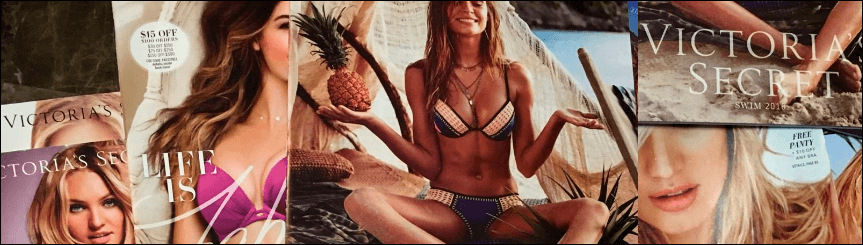
During this same period, Raymond launched lingerie sales through mail-order catalogs. This decision made the brand recognizable.
In 1982, the 12th Victoria's Secret catalog was published. Each copy then cost $3, and sales accounted for 55% of the company's annual revenue ($6 million).
 Victoria's Secret Sale, Repositioning, and the Brand's Rise
Despite the company's success, Raymond, for unknown reasons (some sources say financial problems), decided to sell it.
In 1982, the brand was acquired by American businessman Lexie Wexner, who remains at the helm today. The deal was valued at $4 million (other sources say $1 million).
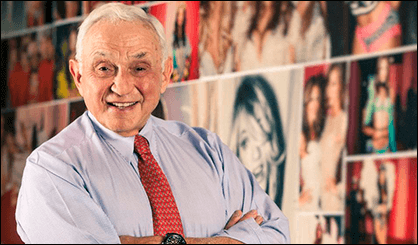
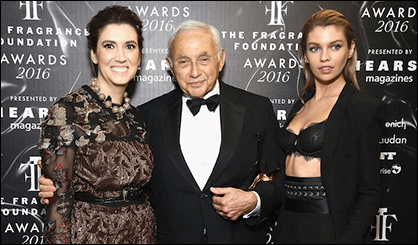
In a 2013 interview with Newsweek, Wexner recounted the first time he saw the windows of a Victoria's Secret store. He described it as a Victorian-inspired, debauched affair, featuring incredibly sexy lingerie, the likes of which he had never seen before in the United States.
The new owner decided to change the positioning and move away from the men's paradise.
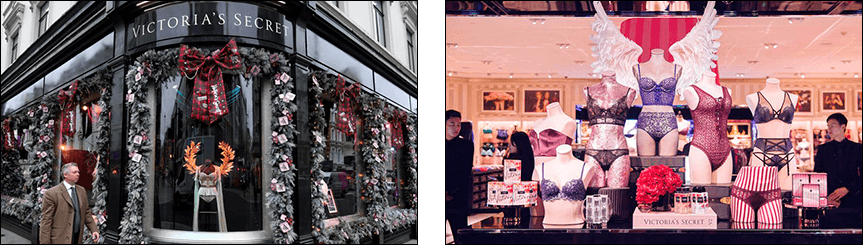
Since 1983, the brand has been targeting women, and the catalog has become attractive to both sexes, as it now looks more like a fashion magazine than an erotic publication for men.
The catalog also changed the company's head office to London (although it was actually located in Ohio) so that consumers would perceive the brand as European.
The new lingerie was less provocative, featuring new colors, styles, and patterns, including floral prints. The emphasis was on the sexiness, luxury, and glamour inherent to European goods.
Wexner wanted women to wear more than just bras and panties, but sets that would give them confidence and femininity. In other words, the brand's goal was to make what lay beneath the clothes pleasing to the eye.
It's no wonder, then, that Victoria's Secret soon began to be called affordable luxury.
 A tragic page in the history of a fashion brand
After selling the company, Roy Raymond tried opening a children's goods store, but it failed. In 1986, he declared bankruptcy and later divorced his wife.
In 1993, at the age of 47, he committed suicide by jumping from the Golden Gate Bridge in San Francisco. He was survived by two children.
 Victoria's Secret takes its brand to the next level and conquers the world.
Under new ownership, the company not only repositioned itself and focused on women, but also expanded its product range. Pajamas, clothing, swimwear, accessories, cosmetics, and other items were added to the line. And in 1992, the brand began producing its own line of fragrances.
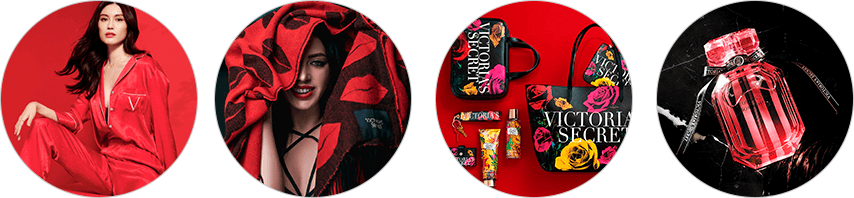
The stores' decor became feminine and sophisticated. Lingerie no longer sat on shelves; it was now displayed on mannequins, and catalogs featured seasonal collections and exclusive styles.
The brand promoted freedom of choice and the acceptance of one's own sexuality. Every woman was compared to a diamond and considered worthy of a beautiful cut.
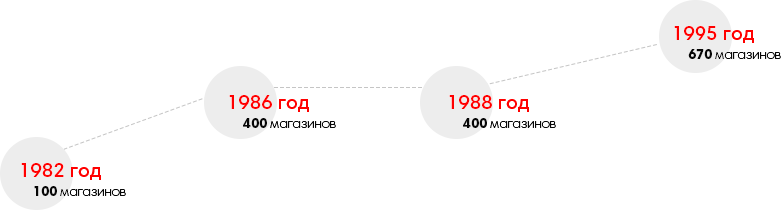
The number of stores increased rapidly: 100 in 1982, 400 in 1986, 400 in 1988, and 670 in 1995.
In 1986, Victoria's Secret became the best-selling lingerie brand in the United States.
By the early 1990s, the company's sales exceeded $1 billion for the first time. During this period, more than 300 million catalogs were published annually, which continued to be sent by mail, and an online store was launched.
The company was confidently moving forward and strengthening its position in the US, but capturing global markets required new solutions. Thus, the idea of holding fashion shows and spectacular shows was born.
In the mid-1990s, during the era of top models, the brand decided to stage a fashion show for women's underwear.
The first Victoria's Secret fashion show took place in New York City at the Plaza Hotel in 1995. Supermodels from around the world were invited to participate. Extensive preparation and organization were spent, but it was worth it. The show was lavish, and the brand soon became the talk of the town.
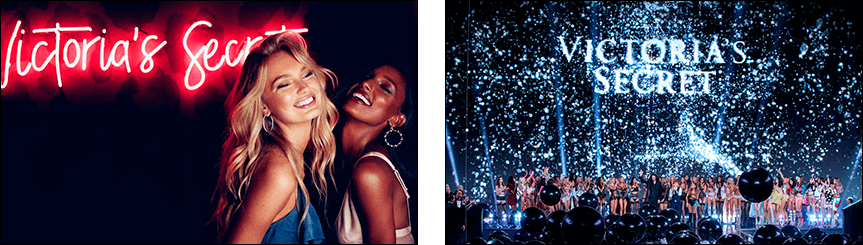
Victoria's Secret gained recognition and became the best brand of women's lingerie, and began holding grand shows annually.
 Victoria's Secret Angels are the face of the brand and a highlight of fashion shows.
The company invited popular models and international celebrities to participate in its shows, with the most famous of them showcasing the brand's new products.
In 1998, to dramatically present the best sets, models first wore butterfly, bird, fairy, and other impressive wings on the runway. This became a VS signature. The women began to be called "angels."
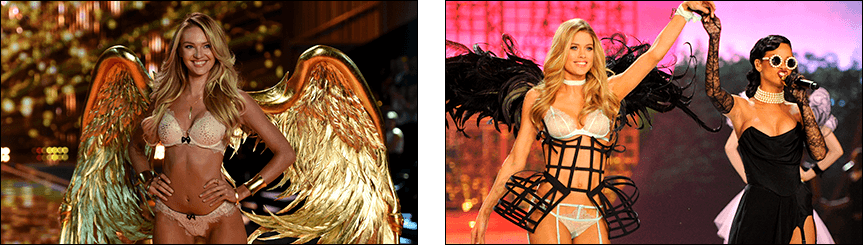
The first "flutter models" were Tyra Banks, Rebecca Romijn, Helena Christensen, Karen Mulder, Daniela Peštová, and Stephanie Seymour. It was their appearance that transformed the fashion show into a fantastic spectacle.
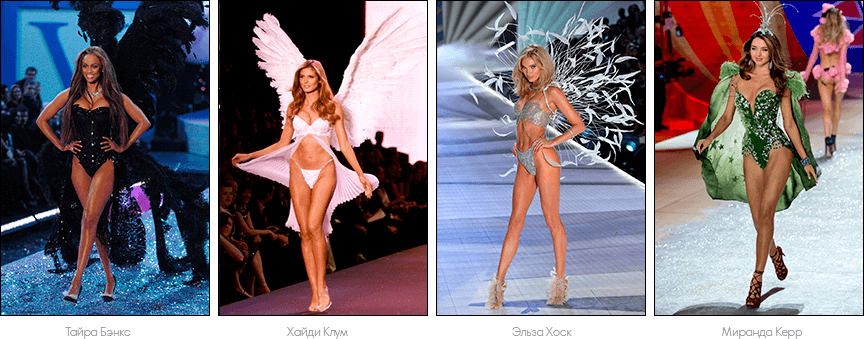
From then on, luxurious lingerie was specially crafted for each event, along with exclusive designs and captivating theatrical performances. The shows attracted the cream of society, including politicians, billionaires, and showbiz stars.
Participating in the Victoria's Secret Fashion Show has become a dream for many, and it is unlikely that there is a single model who would not strive to become one of the brand's "angels".
Famous fashion show participants include Claudia Schiffer, Naomi Campbell, Heidi Klum, Laetitia Casta, Karolina Kurkova, Adriana Lima and many others.
In 1999, the Fashion Show began streaming online, and by 2000, it had been watched by over 2 million viewers. In 2004, the top models embarked on a tour of US cities to present branded lingerie.
Victoria's Secret Angels are considered the most beautiful and highest-paid models in the world. Most are around 20 years old.
 The Very Sexy Fantasy Bra is a Million-Dollar Record-Breaker
Since the launch of its annual fashion shows, the company has been creating unique lingerie sets. Each show featured a new, luxurious set, embellished with precious stones. The exclusive series was called the Very Sexy Fantasy Bra.
These sets are studded with diamonds, emeralds, rubies and sapphires, making them the most expensive lingerie in the world.
The first set was shown to the audience by Claudia Schiffer, and the most expensive of them (priced at $15 million and included in the Guinness Book of Records) was shown by Gisele Bündchen (in 2000).
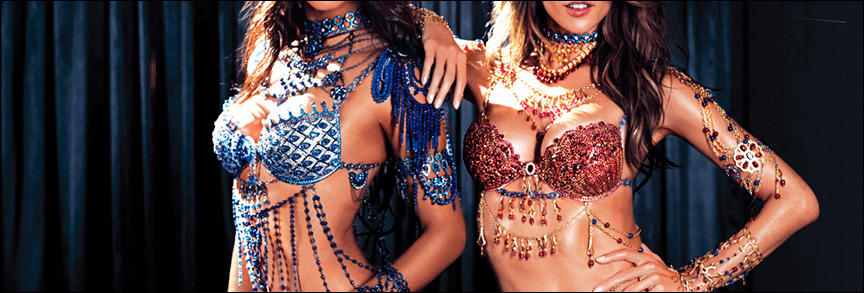
The cost of one set is $1-15 million, and all together – more than $100 million.
Fun fact: Not a single Fantasy Bra set was ever sold.
In the 2000s, the Victoria's Secret Fashion Show was one of the most important and anticipated fashion events. Tickets to the lavish and glamorous shows were not sold; invitations were handed out only to celebrities, journalists, and fashion industry representatives.
At the peak of its popularity, the company began actively promoting the brand outside the United States and opening stores around the world. The first international stores opened in Canada, the United Kingdom, and Latin America. At this time, there were 1,000 VS stores in the United States.
The company attributed its popularity to the show's portrayal of a dream. The brand offered more than just lingerie, but an alluring image and self-confidence.
Despite this, the brand soon began to lose ground. The company was accused of failing to keep up with changing fashion trends.
Women stopped choosing sexy, luxurious lingerie, opting for more comfortable, natural styles that flattered different body types. Meanwhile, Victoria's Secret lingerie remained elegant and not for everyday wear.

As a result, in 2016, demand declined, sales began to plummet, and the number of viewers of the Victoria's Secret Fashion Show online broadcasts dropped significantly (from 12 to 3 million people).
 Scandals, accusations and unsuccessful attempts to restore reputation
For many years, the brand remained unchanged, insisting that all models, including "angels," must look flawless and meet the usual standards of female beauty.
Therefore, during the period when famous glossy magazines began to attract plus-size models to their shoots, Victoria's Secret continued to bring long-legged beauties to the catwalk.
The company faced criticism for its refusal to include models of varying sizes in its shows, and the first calls for a boycott of the Victoria's Secret Fashion Show were heard.
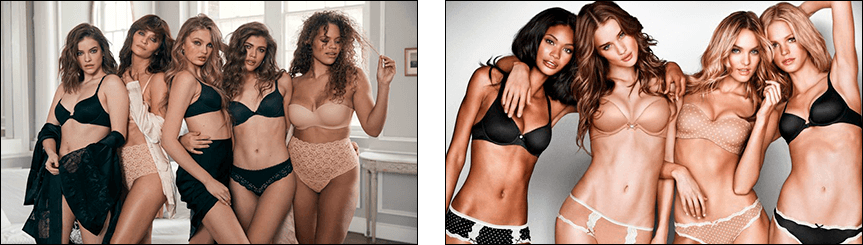
In 2018, responding to criticism and accusations, the company's head of marketing, Ed Razek, gave an interview to Vogue magazine in which he stated that the brand does not intend to invite models with different body types or transgender people to its shows.
According to the director, the company has its own image and its own point of view, and plus-size models do not fit into the overall concept, because Victoria's Secret is a fantasy, and its models are role models.
This statement only worsened the situation and pulled the brand towards the abyss.
Following accusations of transphobia, Razek officially apologized and promised to invite transgender models to the show. But it didn't help.
The company's sales fell from $7 billion to $2.5 billion annually, prompting the decision to close dozens of stores across America. Also, for the first time in its history, VS canceled its annual luxury fashion show.
 What's next for Victoria's Secret – failure or a new rise?
In August 2019, Ed Razek stepped down as head of marketing. The company decided to fulfill his final promise and hired 22-year-old transgender model Valentina Sampaio from Brazil to front the show.
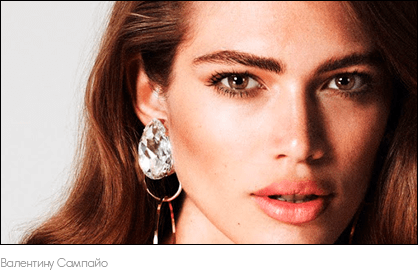

Victoria's Secret also collaborated with Bluebella to present a new lingerie collection and film a body-conscious ad featuring a plus-size model.
According to owner Lexi Wexner, the brand must reposition itself to move forward. The company's growth will be driven by a shift in style and communication methods. Specifically, the brand will redefine its view of women as masters of their own lives.
The decline in lingerie sales also worsened the financial position of its parent company, L Brands. The corporation's profits fell by 18.67%.
According to recent reports, Wexner is exploring options for the company's development and is considering a partial or complete sale of Victoria's Secret.
So, the brand that made a splash in the lingerie market and set the tone for fashion couldn't cope with these changes on its own. Now the company is facing a reboot, and what happens next, time will tell.
The company's initial goal was to make luxury accessible to every woman. Once this goal was achieved, the brand began to explore the combination of femininity and confidence. In other words, lingerie had to combine comfort and sexiness, creating an unrivaled look.
Thus, Victoria's Secret clients became beautiful, free, bold and modern representatives of the fair sex.
The name "Victoria's Secret" is associated with the Victorian era and refers to Queen Victoria of the British Empire.
Despite the period's preoccupations with prudishness, moderation, strict behavior, and ethical norms, the company decided to explore what lay beneath the women's clothing of the time. This is the secret behind the name.
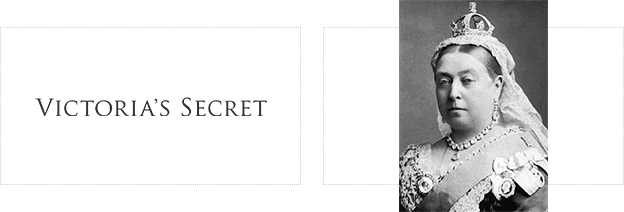
It was precisely because of the name's connection with the Victorian era that the original design of the shops was conceived in the style of boudoirs and royal chambers.
As for the Victoria's Secret logo , the sign has changed several times - from retro style to utilitarianism.
The first logo from 1977 contains many small vintage elements, but since the 1980s, the company has adopted simpler serif and sans-serif fonts. Experiments with styles and proportions continued until they achieved the symbol of the 1990s.
The Victoria's Secret logo is an acronym with the brand name underneath. Initially, a black and white color scheme was used. Pink was later added.

In addition to the brand name, the company uses other symbols and monograms, particularly for sub-brands such as Pink.
The logo was developed by Mucca, and the New York-based Studio 191 collaborated on its update. Victoria's Secret currently uses the Bell MT font.
Fashion shows and collaborations with renowned models and celebrities have always been at the core of the company's marketing strategy. Audiences eagerly awaited the annual spectacular shows, broadcast online and on television.
The first online fashion show was the largest event since the advent of the World Wide Web. In 1999, approximately 1.5 million viewers were able to see the new Victoria's Secret collection from their homes.
By 2011, the show's budget had reached $12 million, and the first show cost the creators $120,000.
Leading global models who became Victoria's Secret Angels played a special role in promoting the brand. They helped the brand become recognizable and desirable. Millions of women around the world desired sophisticated and feminine lingerie.
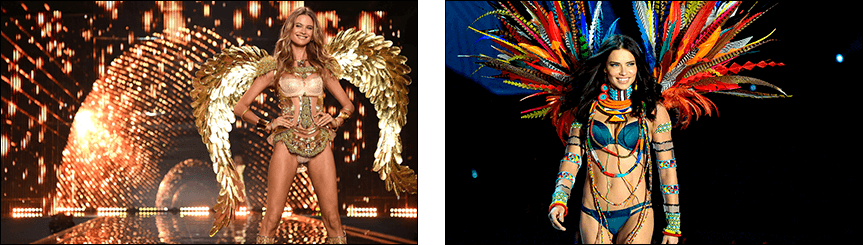
A sound strategy propelled the company to leadership and contributed to the brand's global popularity. However, its inability to adapt to market changes and meet audience needs proved its downfall.
This story shows that sometimes a high-quality product and an attractive image are not enough for development and promotion. A well-thought-out marketing strategy, flexibility, and the ability to change and adapt are essential.
Need a creative idea, a sound strategy, and a memorable image for your brand? Contact WeLoveBrands and get a unique name, logo, and corporate identity.