
Booklet Design
THE WELOVEBRANDS STUDIO TAKES THE FOLLOWING CRITERIA INTO ACCOUNT WHEN DEVELOPING BOOKLET DESIGNS
Uniqueness
We are constantly looking for new solutions to effectively convey your message to the audience!
Use of the corporate style
If the client has a corporate style, we will certainly incorporate it into the design of the brochure to ensure it is recognizable and memorable.
Target audience study
We carefully analyze the interests of the audience for whom the brochure is intended and determine the key elements that should be highlighted.
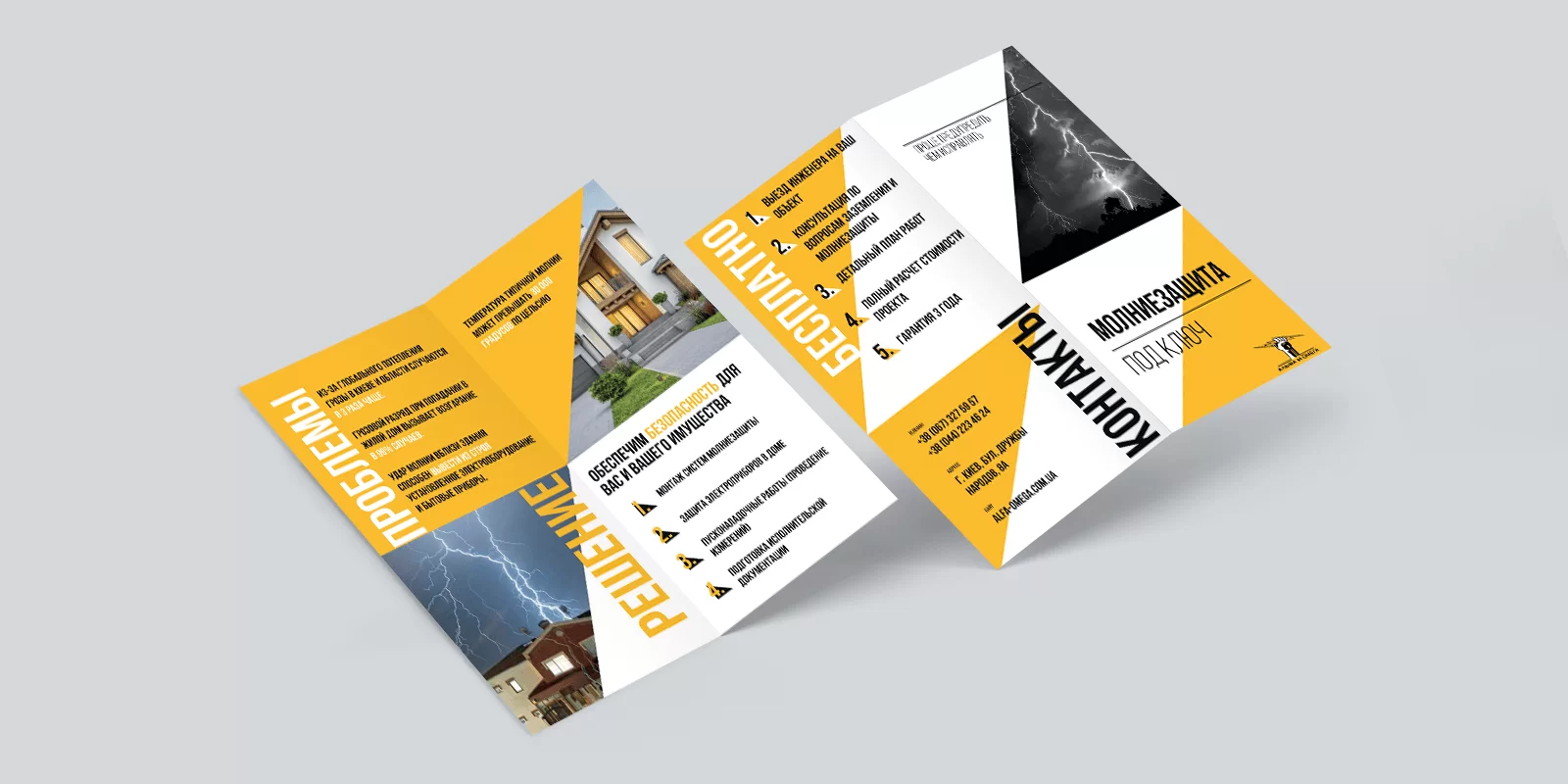
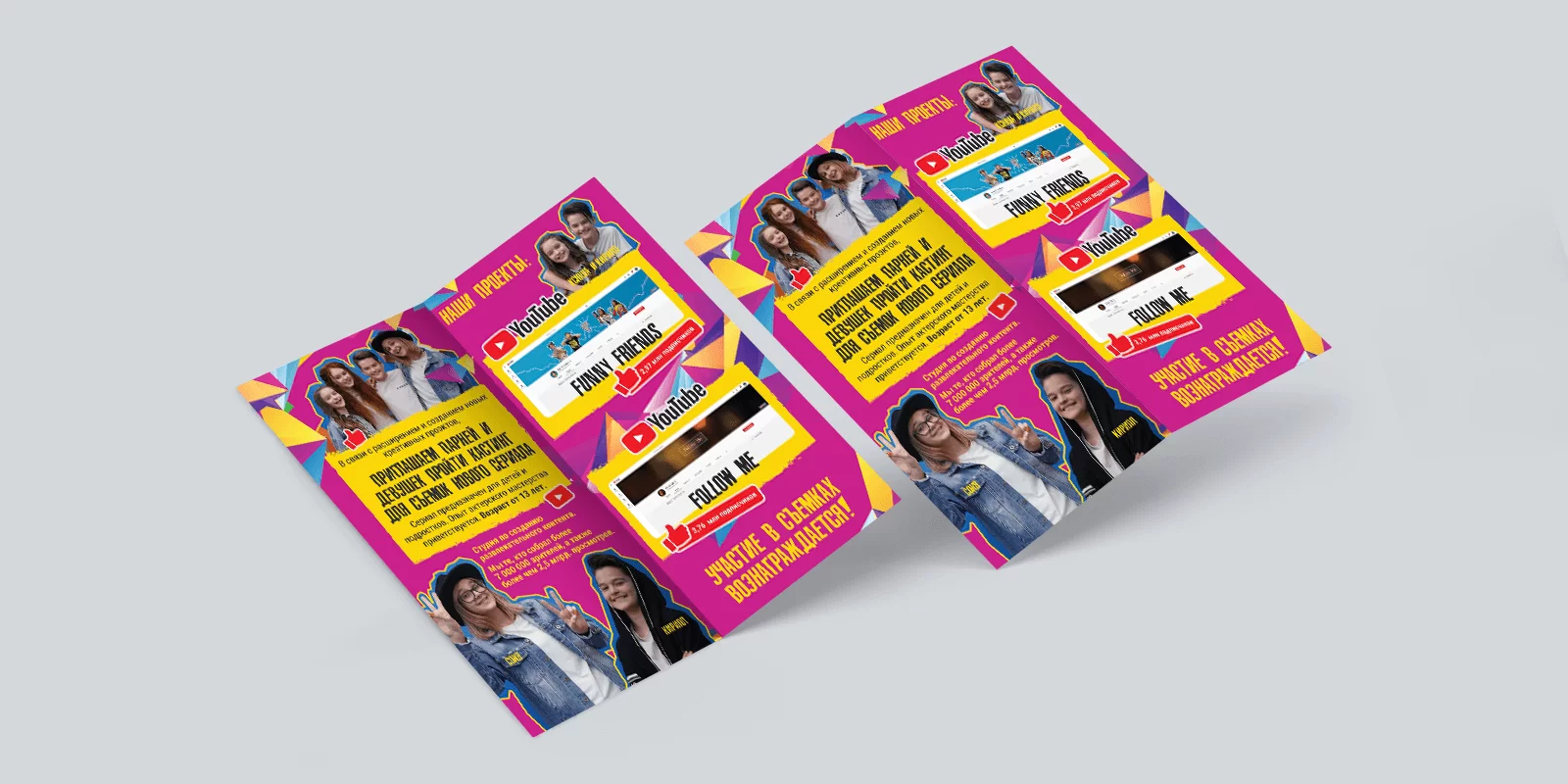
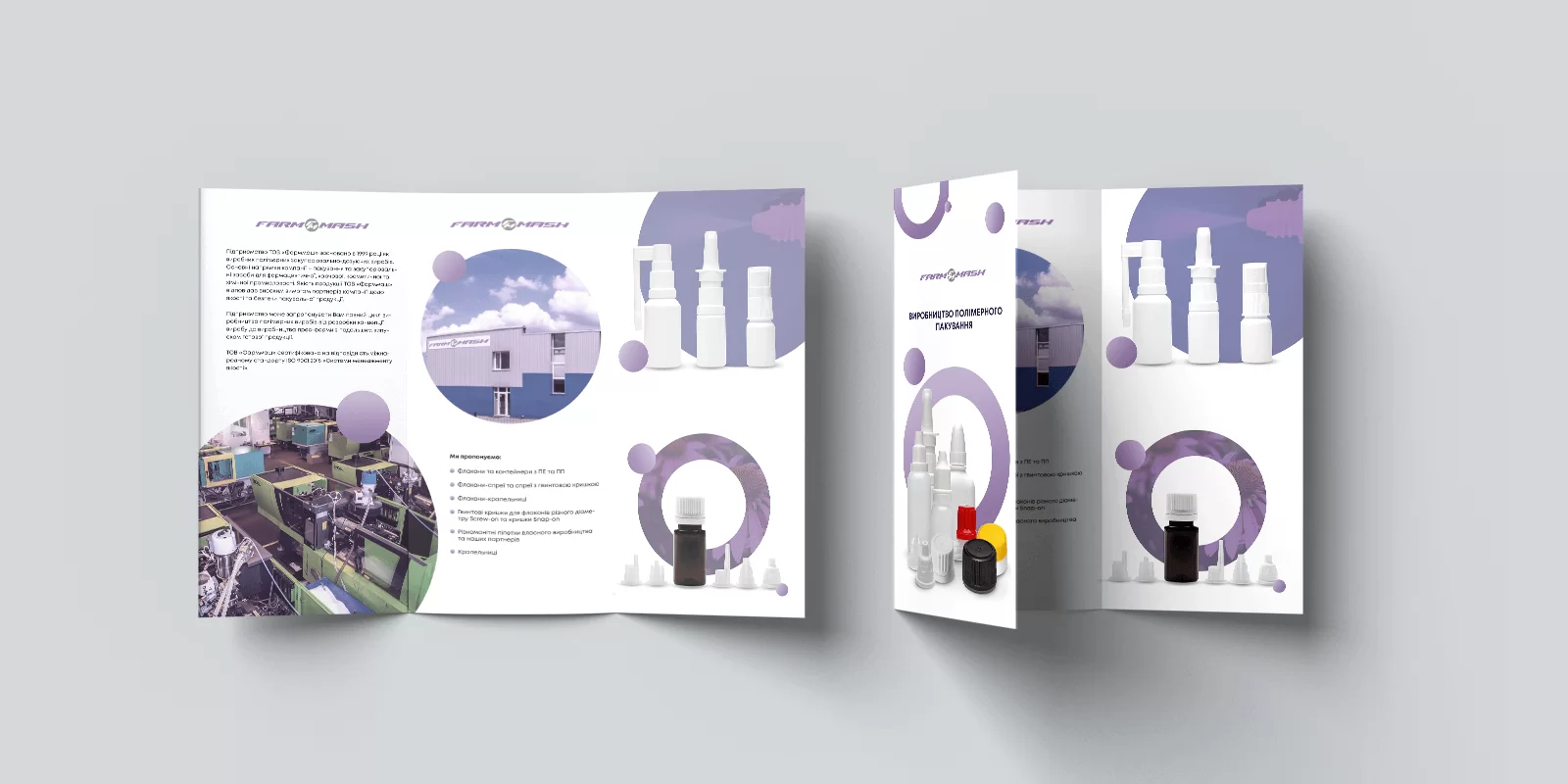
We will recommend a format. If you are unsure which format to choose for your brochure, we will help you make the right decision.

Let’s select some photos. Our designers will choose a high-quality image for the brochure or edit the photographic materials you provide.

Let’s prepare the text. If necessary, copywriters will draft the text for the booklet, following all the proper guidelines.
We are creating a brochure. The resulting design layout file, which will be provided to you, is fully print-ready.
We design brochures and booklets in both standard and non-standard formats for any purpose or task, ensuring the highest quality.
Question and Answer
What is a brochure? What types of brochures are there?
A brochure consists of one or more sheets of paper that are either accordion-folded or glued together. There are no springs or screws—unless you count the metaphorical ones. It is a true soldier on the front lines of advertising. In professional terminology, the creases are called “folds,” and their number can range from one or two to infinity.
In other words, a brochure is a type of printed material. It serves as an effective marketing tool, helping to build a positive corporate image and facilitating the sale of goods or services.
There is a wide variety of brochures, differing in their intended use, format, printing specifications, and folding style.
Depending on their purpose, they are categorized as follows:
-
Informational brochures – contain details about a company, product, or event intended to inform the audience, typically presented in a compact format;
-
Promotional brochures – provide comprehensive information about specific goods or services, including purchasing terms and key benefits; they may also contain tables, lists, etc.;
-
Image-building – full-color printed materials containing information about a company, its achievements, and its history, designed for business presentations and the creation of positive associations;
-
Educational – brochures containing useful information for the audience, distributed at educational institutions, courses, masterclasses, seminars, and other educational events;
-
Promotional – brochures that provide information about discounts, special offers, and bonus programs;
-
Invitations – a type of informational brochure used to invite recipients to various events;
-
Catalogs – documents that showcase products within a specific category, including descriptions, prices, and item numbers.
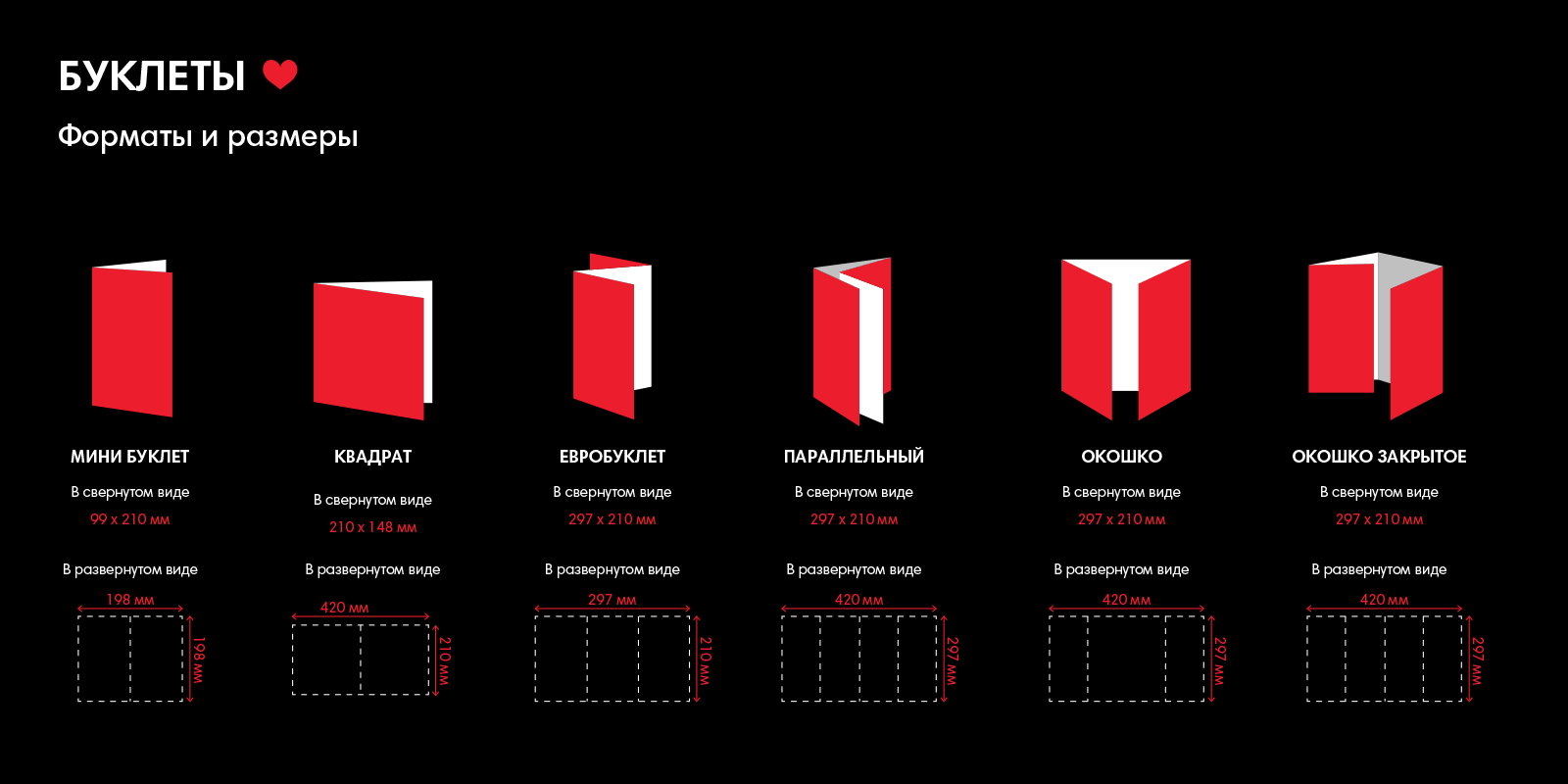
Popular formats:
-
A3 – with one or two folds (in an unfolded state);
-
A4 – with one fold (in an unfolded state);
-
Euro – same as A4, but with two folds;
-
Leaflet – a sheet with multiple folds.
Common folding patterns:
-
“Accordion” – each fold is made in the opposite direction to the previous one;
-
“Book” – a single fold creating two sides;
-
“Window” – two or more sections are folded toward the center;
-
“Snail” (roll fold) – three or more folds that roll inward;
-
“Map” – a vertical fold creating eight panels.
There are various other types of folded brochures—such as “tent,” “zipper,” vertical fold, “gate,” “spiral accordion,” or triangular folds. The complexity of the folding process depends on the paper weight, the number of folds, and the specific design features.
You don’t have to stick to a familiar, standard format. If your budget allows and the nature of your business calls for a creative approach, it is often better to opt for an unconventional brochure—one that stands out, leaves a lasting impression, and sparks genuine interest.
Our specialists can develop both standard brochures—designed to capture consumer attention and drive sales—and unique, high-impact designs that encourage people to study the material closely and take specific, desired actions. Get in touch with us to discuss the details and terms of a potential collaboration.
What is the difference between a booklet and a brochure: design, functions, content?
Booklets and brochures are among the most popular types of printed materials. They differ in terms of page count, purpose, structure, and design.
A booklet—also referred to as a leaflet—consists of a single, sturdy sheet of paper, in any desired format, that has been folded multiple times. It does not contain individual pages; instead, it is shaped through folding or by using a “crease” (an indented line along the fold) to facilitate various folding patterns—such as a simple half-fold, accordion fold, gate fold, or any other configuration that highlights the unique character of the promotional piece. A defining feature of such a booklet or leaflet is the complete absence of any binding elements, such as spiral coils, glue, or staples.
A brochure is a multi-page publication—resembling a magazine or a book—that lacks a formal binding; instead, its pages are held together by staples or a similar fastening mechanism. Essentially, a brochure consists of a single sheet folded two or more times in various ways. It is compact enough to be tucked into a folder, a bag, or even a jacket pocket, and can contain anywhere from four to several dozen pages. This is the primary difference in terms of design.
The intended purpose of these materials also differs. Brochures are most frequently printed for image-building or promotional reasons—such as showcasing products, highlighting special offers, or describing events—and are therefore designed for short-term use. In contrast, a brochure (or booklet) is used to present a company and inform an audience about its products and services; it typically includes detailed specifications and is intended for long-term use.
The booklet is compact and concise. Designed in a small format with a limited page count, it contains only essential information and features an attractive—often original—design, intended to capture attention and stand out from the competition. The brochure also includes further details; elements such as typography, a well-thought-out structure, and the logical sequence of the content (progressing from simple to complex) are key.
Regardless of the type of printed publication, it should be designed in line with the company’s corporate style. If no such style exists, the design should take into account the specific nature of the company’s activities, the purpose for which the material was created, and the intended method of distribution.
Why is it better to have the design for a leaflet or brochure developed in our studio rather than at a printing house?
Nowadays, the design of brochures and leaflets is handled by many different providers, including printing companies. At first glance, the idea of having a print shop handle the design—creating a layout and then immediately printing it—might seem attractive. However, this seemingly ideal model has its drawbacks—and they are quite significant.
- A print shop’s core specialty is printing, whereas our specialty is design. A company’s energy and resources are primarily focused on its main line of business, which inevitably affects the level of expertise applied to ancillary services.
- The quality of design provided by a print shop is often questionable; you might find a single full-time designer tasked with supporting ten active printing presses, churning out business cards, postcards, and brochures in a constant, hurried rush.
- When it comes to a creative approach, print shops are generally far off the mark. Designers in such environments often work impulsively, without a well-thought-out strategy for the task at hand. In contrast, the designers at our studio work under the guidance of an experienced art director to create truly exceptional results.
- While a print shop offers both the design and printing of a specific product, our studio does not handle printing. Instead, we provide a comprehensive range of design services—everything from logo development to the creation of a complete corporate identity.
What is the design development process for the WeLoveBrands promotional brochure—the booklet?
Stages of the brochure design process:
- Obtaining the technical requirements from the client.
- Discussing the details and agreeing on the design layout concept.
- Creating several design options for the client to choose from.
- Approving one of the layout options and preparing it for print.
What materials need to be prepared? How does one properly design a brochure?
To create a brochure that doesn’t end up in the trash the moment it reaches a consumer’s hands, you must set a clear objective, study your target audience, develop a concept, and choose an appropriate design style.
The brochure’s design should be anything but trivial. It needs to capture and hold attention, stand out from other printed materials, spark interest in your product or service, and encourage the reader to take a desired action—such as attending an event, purchasing a product, scheduling a consultation, or subscribing to a newsletter.
Because a brochure is compact and cannot accommodate a large volume of information, it should focus exclusively on essential details, key company characteristics, and core benefits. Special attention must also be paid to the cover; if the material doesn’t look engaging at first glance, no one will be motivated to explore it further.
What should the brochure contain:
-
specific information about the company, its products, services, and activities;
-
a memorable headline;
-
terms of cooperation/ordering;
-
high-quality, unique photos that convey the right mood;
-
simple and stylish infographics;
-
contact details;
-
a call to action
To “connect” with the consumer, the focus should be on imagery, as visual content is processed more effectively and evokes specific emotions. The text itself should be easy to read and can be made more engaging through the use of various effects—all of which helps to capture the audience’s attention.
Pay attention to the balance between images and text—that is, the amount of space used—to ensure you don’t overwhelm your audience with overly long sentences or an excessive number of images. It is generally better to avoid a clutter of small drawings; instead, opt for a few large, striking photographs that convey the core message effectively.
Regarding the color scheme, you should either adhere to your existing corporate style or—if one is not yet established—select a harmonious color palette (whether bold, high-contrast, or otherwise tailored to the specific nature of your business, its purpose, and your target audience).
To ensure a brochure is designed effectively—that is, professionally, engagingly, and compellingly—it is best to consult with experts. The designers at WeLoveBrands will develop a unique concept, curate high-quality photography and illustrations, choose a memorable color palette, and lay out the text with style. The result is an original brochure that stands out, leaves a lasting impression, and captures the audience’s attention. For more details, please give us a call or send us a message via our website.
How much does it cost to design a brochure?
The cost of developing a booklet design depends on the complexity of the chosen concept, whether the client has provided photographic material, and the quality of that material (if illustrations require adjustment, the cost of the service will increase). Furthermore, the price varies based on the number of design options requested by the client and specified in the contract.
PROMOTIONAL BROCHURES SPECIAL PRICE -15%
Dodger
Choose a plan
from 14€
- Single version
- 1 design option
- Design projection on a mockup (3D)
- Selection of style, color, and font
- Printable source files (.ai)
- Turnaround time: 2 days
Dodger 3
Choose a plan
from 49€
- 3 variations
- 1 design option
- Booklet design projection (3D)
- Selection of style, color, and font
- Printable source files (.ai)
- We will complete it in 4 days