
Menu Design
FOR A MENU DESIGN FOR A CAFÉ, RESTAURANT, OR BAR, CONTACT WELOVEBRANDS – AND YOU WILL RECEIVE
Cost calculation
Based on the number of menu pages, the availability of pre-existing photos, the project deadline, and other nuances, the manager will calculate a personalized price for you.
Range of services
Our professional services encompass not only menu design but also food photography and photo post-processing.
Advising the Art Director
Experienced staff will be happy to advise you on the specifics of various menu-printing methods, the choice of paper, and other related questions.


We take into account the specific characteristics of the establishment for which we are developing a menu design.

We observe current design trends and put them into practice.

We offer you a selection of different design concepts.

We will provide the print shop with a layout that is completely ready for printing.
The cool WeLoveBrands team will help increase your establishment's recognition and increase customer loyalty by developing a presentable and readable menu design.
Question and Answer
How does menu design increase restaurant profit?
A menu is more than just a list of dishes; it is an integral part of the culinary arts. A restaurant guest’s introduction to the cuisine begins the moment they look at the menu. To make a lasting impression—to whet the visitor’s appetite and leave them craving more—it is essential to develop an appetizing design.
“Delicious” imagery, intriguing names and descriptions, pleasing color palettes, legible typography, and unique presentation—all of these elements shape perception and ensure that a guest’s appetite only grows as they browse the menu.
A well-crafted menu does more than simply list food; it conveys a specific concept and highlights what makes an establishment unique. A distinctive design serves as a powerful promotional tool and an effective way to make a strong first impression.
A menu with a compelling, thoughtfully crafted design will capture a guest’s interest and encourage them to explore every page. This, in turn, drives demand, increases the number of orders, and ultimately boosts your revenue.
To captivate your audience at first glance, you should develop an engaging design—and don’t be afraid to experiment with colors, fonts, shapes, and materials. Color, for instance, plays a crucial role; it can be used to evoke specific emotions and associations in your guests.
Orange stimulates the appetite, red draws attention, green conveys the natural quality of the products, and yellow evokes a cheerful mood—while a black-and-white palette accented with touches of gold underscores a sense of status.
If you would like a creative menu or a clear, well-organized list of dishes featuring an appealing design, please get in touch with the WeLoveBrands studio by phone or via the chat function on our website.
What types of menus can be presented in a café, bar, or restaurant?
The menu serves as an indicator of an establishment’s caliber and a reflection of its concept; it should therefore align with the brand’s style and convey its core philosophy.
The following types of menus are distinguished:
-
À la carte – features a list of dishes and drinks (with prices) that are prepared to order for each guest.
-
Table d’hôte – offers a limited selection, with one or more options available in each category—such as appetizers, first courses, main courses, and desserts. The price for this set selection is fixed.
-
Prix fixe – a set meal consisting of several courses at a fixed price, with no options for substitution.
-
Tasting menu – consists of small portions of various dishes, curated by the chef.
-
Seasonal – features dishes made from seasonal ingredients and is therefore only relevant for a limited period.
-
Thematic – presents special dishes tailored for a specific holiday or event.
-
Morning or daytime – the former offers breakfast for those who prefer not to eat at home, while the latter is designed to cater to seminars, conferences, and other events.
-
A menu featuring standard, everyday items is designed for express service and consists of simple dishes.
…that can be prepared quickly.
The children’s restaurant offers a selection of dishes designed for children.
Banquet – the client creates a list of dishes to be prepared specifically for a chosen date and served at the event.
Cyclical – a series of dishes planned for a specific period of time. This is typically used in settings such as sanatoriums, factory canteens, on board aircraft, etc.
Each type of menu has its own design characteristics, which should be tailored to the target audience. For instance, a children’s menu might feature bright colors and playful images; a breakfast menu could be designed in a minimalist style; and a themed menu often includes illustrations or other elements related to a specific holiday or event.
In bars, the focus may be on the bar menu, while restaurants typically prepare a variety of menus (e.g., a main menu, a children’s menu, a bar or cocktail menu, etc.).
What should be on the menu?
The menu is an effective sales tool. To spark interest in specific items and maximize the number of dishes sold, it is essential to carefully consider both the content and the nuances of the design.
Every menu follows a specific structure, with groups of dishes arranged in a particular sequence. When developing the menu layout, keep in mind that it should not be too long; otherwise, guests may become confused, and the selection process will take longer. Furthermore, you should highlight items for which you wish to increase demand—for instance, by placing them in a separate, dedicated section.
(Use a different font, add a photo, illustrate the composition, etc.)
Menu contents:
-
Appetizers;
-
First courses;
-
Salads;
-
Cold dishes;
-
Hot dishes;
-
Desserts;
-
Bar menu (alcoholic and non-alcoholic beverages);
-
Cigar or shisha menu (optional).
In restaurants and cafés, specialties or the dish of the day can be listed separately—ranging from snacks to desserts.
Every menu must include headings (categories of dishes), the names of the dishes, a brief description (usually the ingredients), and prices. If the name of a dish or drink is unusual or elaborate, it should be accompanied by an explanation of what it is and what it contains. It is also recommended to indicate the portion size in grams or the volume of the drink.
To capture guests’ attention and spark their interest in a particular dish, you can share its history or describe the unique aspects of its preparation. And to whet their appetite, consider adding appetizing photos to the menu.
For images like these, it is best to turn to a professional photo studio, where a food shoot can be conducted—selecting the perfect background, perspective, and lighting—to ensure that visitors start drooling the moment they see the picture.
What types of menus are there, categorized by printing method, production format, and binding/fastening style?
Every detail of a menu matters—from its structure and the way dishes are listed to its format and how it is presented. Its appearance evokes specific associations in guests and shapes their overall impression of the establishment. For instance, if you wish to highlight a restaurant’s upscale status, you might opt for premium materials and unique formats; conversely, for a small café, a simple menu held together by a clip may be perfectly appropriate.
Menus can be produced using various printing methods (digital, offset, or screen printing) and may feature finishes such as lamination, varnishing, or embossing. They can also be presented in electronic format or displayed on a chalkboard.
Available formats include:

Leaflets – printed on paper of varying weights, these can serve as the primary menu or be used exclusively for promotional offers and new menu items;

Menu napkins – sheets placed on the table beneath tableware and cutlery, containing all essential information without unnecessary details, and designed in the establishment’s signature style;

Booklets – folded sheets (folded once or multiple times), well-suited for establishments that offer delivery services;

Brochures – this type of menu consists of several pages, allowing for the inclusion of a maximum amount of information, effective visual presentation, and unique, creative design;

Table tents – a menu display placed on tables that allows guests to learn about new products, promotions, and special offers.
Before developing a menu, it is necessary to determine not only its format but also its size and method of binding, as these factors influence printing costs.
Menu types based on binding/assembly method:

Single sheet – typically contains text without photographs and is printed on high-quality designer cardstock. The advantages of this option include fast production and ease of use; a potential drawback is its lack of durability.

In a folder/binder – the most durable and practical format, as it protects the menu from moisture, grease, and damage. Folders can be made from materials such as cardboard, leather, wood, or plastic, with the menu sheets secured using binding posts, rings, cords, or similar fasteners.

Bolted binding – the pages are held together by bolts. This is an affordable and practical style for menus; however, a drawback is that they tend to wear out quickly, and individual pages cannot be replaced.

Spiral/spring binding – one of the most popular and practical methods of fastening.

Stapled/fastener binding – the most budget-friendly option. It can be used with various types and sizes of paper.
The choice of format and binding method depends on the type of establishment, its status, its corporate style, and the nuances of its interior design.
What are the options for menu design?
Since a menu serves as a sales tool, it should be practical, contain error-free text, and feature an engaging design. Through thoughtful design, even the simplest dishes can be presented effectively, sparking interest and encouraging customers to give them a try.
A well-executed menu design evokes pleasant emotions in the guest, enhances their mood, and influences their choices. To boost the sales of specific dishes, it is therefore essential to carefully consider the design—including the layout of text and photographs.
Design options for the main menu:
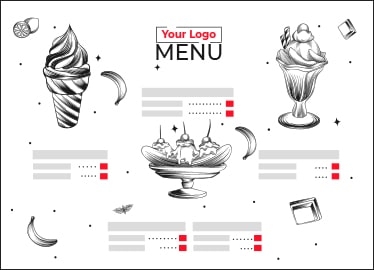
Classic with text – the names and descriptions are placed alongside the photographs, giving guests a clear idea of what the dish looks like.
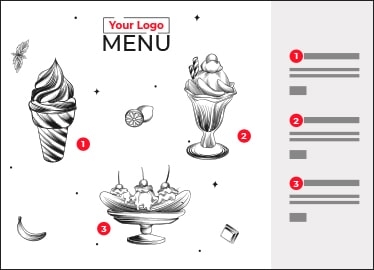
With numbers – here, one side of the menu features images labeled with numbers, while the other side lists the names of the dishes corresponding to those numbers. This option is more aesthetic and sophisticated.
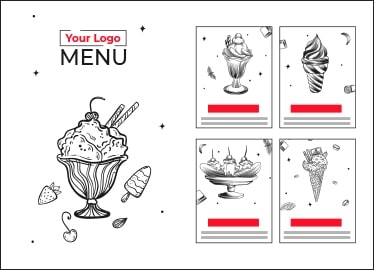
Tiled menu – each dish, along with its description, is placed in a separate cell on the page. This layout allows you to showcase dishes in an appealing way and include more items on the menu.
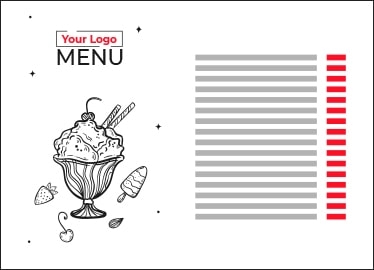
50/50 – this menu format features a photo on the left side and a block of text on the right. Such a simple presentation is highly effective.
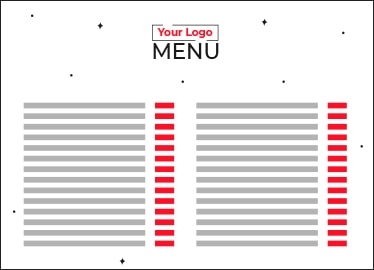
Text-based menu – consists solely of names and descriptions. This is an effective way to highlight specific items and allows for quick browsing through the menu.
Whichever option you choose, the designers at the WeLoveBrands studio will create a spectacular menu design for your café, restaurant, or bar, employing a variety of techniques and implementing unique, creative ideas. To receive a consultation, please contact us by phone or via the chat feature on our website.
How much does menu design cost, and what does the price depend on?
On the Ukrainian market, menu design costs an average of 600–900 UAH per page. Working with a freelancer is generally cheaper than hiring a design studio, but there is a risk that you might end up with a template-based design or a low-quality result.
Design studios, by contrast, begin by analyzing the market, the specific characteristics of your establishment, your competitors, and your target audience. They then develop a concept before moving on to the actual design phase. The result is an original menu design that captures attention and whets the appetite.
The cost of the design is influenced by factors such as project deadlines, the complexity of the work (e.g., developing a layout based on a brief, selecting brand-specific fonts, or creating a layout from scratch), the need to refine illustrations provided by the client, and the number of menu versions to be produced.
At WeLoveBrands, you can choose from three different service packages, which vary in cost and scope. This ensures you have a clear understanding of exactly what you will receive for your investment. To clarify the details and discuss the specifics of your order, please give us a call or send us a message via our website.
MENU DESIGN AWARD
Menu
Choose a plan
from 30+6€/sheet
- Design concept for the text-based version of the menu.
- The client is responsible for the grammar of the text file.
- Photos of the dishes are to be provided by the client and will not require any editing.
- The client shall provide examples of styles they prefer.
- The concept is subject to one round of revisions.
- Any changes to menu items will be billed separately on an hourly basis.
Menu +
Choose a plan
from 50+6€/sheet
- Design concept for the text-based version of the menu.
- The client is responsible for the grammar of the text file.
- Includes a photograph of the dish, provided by the client.
- The client shall provide examples of their preferred style.
- Up to 3 rounds of revisions to the concept are included.
- Changes to specific menu items are billed separately on an hourly basis.
- Post-processing and retouching of the photograph are included.
Menu ++
Choose a plan
from 80+6€/sheet
- Design concept for the text-based version of the menu.
- Incorporation of the client’s preferences (if any).
- Use of a photograph of the dish provided by the client.
- Number of options tailored to your requirements.
- Unlimited revisions.
- Post-processing and retouching of the photograph included.
- Professional editing of the text included.