
Receive a presentation of services and expert advice
The best people in the industry oversee your brand development process
→ Need branding, design, or creative solutions? Call us at +48 505 648 022 or message us on WhatsApp.
 WeLoveBrands.pptx

The best people in the industry oversee your brand development process
The essence of the fast-paced 21st century is perfectly characterized by a phrase from Lewis Carroll's immortal work "Through the Looking-Glass", written in the second half of the 19th century: "It takes all the running you can do to stay in one place, but to get somewhere else you must run twice as fast!"
These words can be interpreted as meaning that today, simply being a master of your craft isn't enough. To get people to come to your restaurant just because of your creativity, you need to create a vibrant image that generates interest in you and increases customer loyalty.
If you want to truly succeed and get people talking about you, you'll need a personal chef brand. This is your reputation, your image in the eyes of your guests and partners, what they think and say when they hear your name.
Important! It's impossible to create a recognizable name from scratch, but you can increase demand for your product by developing a strong personal brand.
Let's start with a definition of the key term: personal brand—the sum total of what your competitors, clients, and partners think of you, along with the emotions your activities evoke. In other words, it's your image, formed in the minds of those with whom you interact. With your personal brand, you can control others' thoughts, influence their feelings, showcase your strengths, and present them effectively.
Image is part of a personal brand, specifically how a chef presents themselves. It is formed by dominant character traits, archetypes, predominant physical attributes, and social and cultural aspects. Style and fashion also play a role in shaping one's image.
A chef's personal brand triggers a psychological mechanism that is activated every time a potential client considers whether to order, return to the restaurant, or try a new dish. It makes you recognizable; people feel they've known you for a long time, and therefore trust your opinion and talent. And trust is 50% of success, as people are willing to pay more for it.
Many famous people—actors, singers, politicians—have achieved success thanks to a vibrant personal brand that is thought out down to the smallest detail.
Of course, you shouldn't expect immediate results; you're using this marketing tool for the long term. Since the professional niche you occupy is highly competitive, highlighting your strengths and advantages will allow you to present yourself to guests, partners, and employers as a top-notch professional, reliable, and creative.
Now let's consider the main question: why does a chef need a personal brand? Let's try to answer this from the perspective of a restaurant guest.
While browsing social media ads for various establishments, you've probably caught yourself thinking that you're seeing the same thing, or that many cafes look similar. This happens because most restaurants focus on the menu and interior design. But as a guest, you need trust; that's what will motivate you to visit and order. And trust can only be built with a specific person, because no matter how cool the design, we buy our food from the chef, so we won't want to return if the food isn't tasty.
And another psychological nuance: the guest should understand that in any unforeseen situation, he can turn to a specific person - this gives confidence, a sense of stability and calm.
Thus, a strong personal brand of a chef helps attract customers, increase trust and loyalty among the audience.
A personal brand allows you to solve a range of problems :
develop your business and expand your customer base;
improve reputation;
leave competitors behind;
increase guest trust and, as a result, recognition;
demonstrate your expertise;
use different channels to promote services.
Interesting fact! The restaurant business is, first and foremost, about hospitality, because guests come not to some abstract establishment, but to a specific person.
First and foremost, a personal brand is an opportunity to express yourself in an unconventional way, attract as many guests as possible to your establishment, share your talents, and establish connections that can be beneficial for your career and business development.
By developing a personal brand, you achieve the following goals :
 you create a certain image and promote it;
 you gain recognition and, accordingly, increase the value of your services;
 take your career to the next level;
 reduce brand promotion costs.
A chef's personal brand is a ticket to a better life for both newcomers to the world of haute cuisine and seasoned cooks. It's a comprehensive marketing tool: on the one hand, it demonstrates your expertise, convincing guests to pay more for their dishes, and on the other, it helps you establish yourself and cultivate an impeccable image.
But it would be unfair to only highlight the advantages of a personal brand. Creating one also has certain disadvantages, as it requires:
 constant control over one’s reputation, image, and actions;
stress resistance - your publications and works will be commented on, and not always with pleasant words;
specific knowledge in the field of marketing.
You'll agree that every job should be done by a professional. Just because you're great at creating delicious dishes and presenting them doesn't mean you'll be equally adept at brand development. To achieve excellent results, entrust your brand identity to WeLoveBrands, and we'll ensure your talent attracts attention and gets you noticed by as many people as possible.
Psychologists note that first impressions, formed within 30 seconds, are the most accurate and typically last. This means your brand should evoke both vivid and positive emotions, showcase your strengths, and reflect your values, both professional and personal.
First impressions are formed emotionally. That's why it's so important to evoke feelings in your audience and demonstrate that your communication isn't just about profit, but also about pleasing your guests.
Communication with consumers occurs on social networks through content, and with its help, it is possible to influence people's emotions and impressions.
How to engage your audience :
1. Show yourself . Talk about what attracts you in life, what you like and dislike, and share your experiences. You can do this in short videos or live broadcasts. This format will clearly demonstrate that there's a real person behind every dish. The main thing is to clearly think through the script, text, and purpose of the video.
2. Publish concise, accessible content . This could be a flash interview, during which the chef answers five short questions, for example, naming their favorite dish, their most interesting book, or sharing an unusual recipe. Short stories are a modern, effective format that will increase audience engagement with your project.
3. Engage guests with interactive experiences . Involve your audience in your work. The most delicious steak is great, but such ads are common in every restaurant. Why should a customer choose you? Involve your guests in the common cause – conduct a survey to find your establishment's best dish, and let the audience shape the menu. Try to include comments from the chef and high-quality photos in the survey.
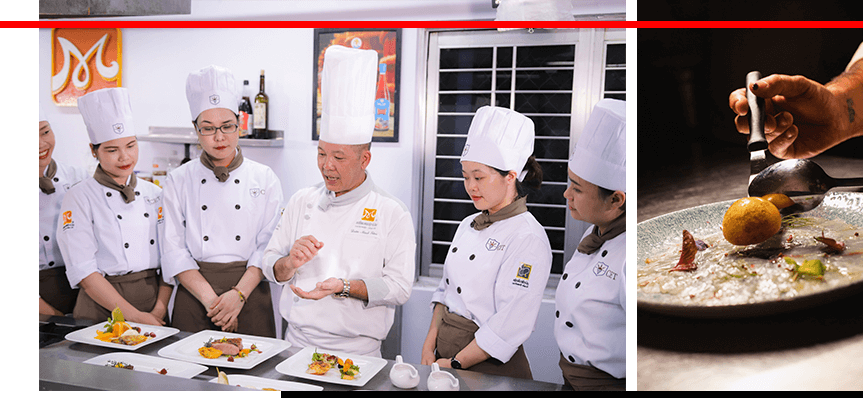
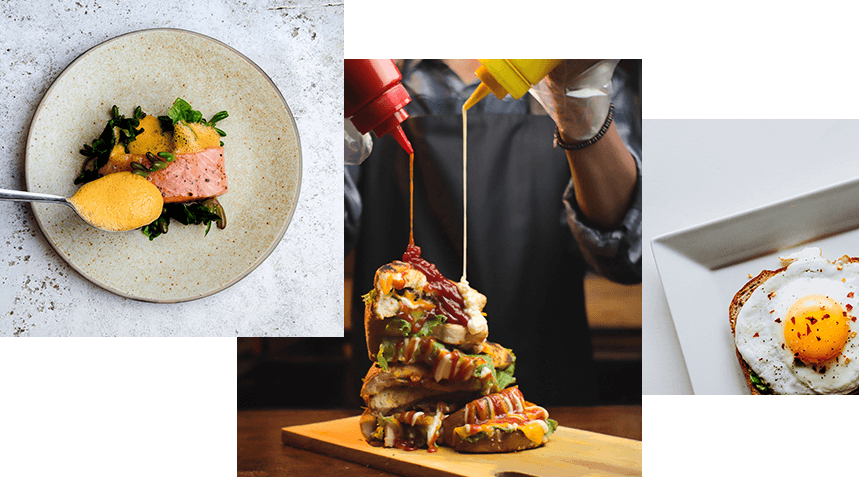
4. Prepare unique photos . The photos should be original and, as cliché as it may sound, high-quality. Forget about stock photo archives. These days, it's not hard to find a photographer willing to do a food shoot without breaking the bank. Brand each photo so social media readers know who created the dishes and where they can try them. This can be done by using the restaurant logo or a decorative element in the photo. Be sure to use specialized photo editing apps and filters. A photographer's help will come in handy to save time.
5. Run giveaways, promotions, and contests . People love winning prizes and feeling like winners. This format creates excellent engagement, and the number of participants will increase exponentially from event to event.
The main goal of gamification is to personalize attention, highlight specific individuals, show respect and care, and demonstrate that every guest is important to you.
Tip! Consider a certificate system or a bonus program for regular guests.
Don't be afraid of criticism; view it as constructive feedback that can truly help your business grow. Try to promptly respond to all messages on social media. Thank them for positive feedback, and if there's negative feedback, find out the reason and resolve the situation if possible.
Also, actively build personal connections. Remember that your network is a powerful channel for brand promotion.
And, of course, talk about your achievements, showcase your work, awards, and inform about your participation in competitions.
A personal brand is a harmonious combination of personal input and external resources that can be used as supporting tools in strategy development.
Five components of a successful personal brand :
 expertise or mastery - a set of skills and professional abilities that your target audience particularly values. You should determine what will be your "trump card" and what is worth mastering;
 Individuality – this is about your personal qualities, among which you need to find the most striking ones and make them your calling card, for example, provocativeness, innovation – this way you will not become one of many chefs, but will stand out from the crowd;
 reputation – the opinion of clients and partners, for whom it is important to manage and monitor any changes, responding to them;
 popularity – your fame among culinary experts and whether the establishment’s guests associate your name with your activities;
 Collaboration skills – supporting colleagues and allies, and how well you can attract and engage people in solving your business problems.
Working through these points will allow you to identify your strengths and weaknesses, highlight your advantages, and present yourself as a creative, skilled chef. Your uniqueness will not only help you stand out from the competition but will also attract consumers.
Every person has a unique trait, something that sets them apart from others. This is the brand code that helps shape Develop a development strategy, find your own signature style, figure out how to present yourself, sell your services, attract your target audience, and actively develop in the digital space.
Brand code is a complex concept consisting of :
the benefits you can bring with your activities;
positioning – your unique strengths;
image – manner of behavior, personal style in clothing, speech, and serving food;
missions – the purpose of a personal brand;
visions – brand development strategies;
values – rules of life that should be in tune with the values of the target audience.
Once you've defined all these elements, you'll find your path. Thus, a brand code is the building block for a truly strong and vibrant image with distinctive, memorable features.
Throughout life, each person, depending on their situation, environment, and external factors, uses certain behavioral patterns—archetypes. When developing a personal brand, behavioral programs are also used. This ensures your image is alive and relatable to your target audience.
What does knowledge of archetypes give us? First of all, it helps us better understand our actions, identify barriers that hinder further development, and communicate more easily with others.
Using archetypes helps achieve the primary goal of a personalized strategy—engaging the target audience emotionally. After all, a person's primary behavioral program is built on fears, desires, logic, values, social principles, and values.
To form a brand, a dominant model of behavior is selected and, if necessary, supplemented with others.
In total, there are 4 groups of archetypes :
 Individualism . Characteristic qualities include self-improvement, curiosity, and self-discovery. Chefs in this category demonstrate their experience, talent, expertise, and innovative approach, emphasizing unique, signature dishes and family values.
 Change . Chefs in this group embrace risk, freedom, and spontaneity. These professionals emphasize their creativity and unconventional thinking, excelling in challenging work, and place a particular emphasis on comfort, empathy, and the ability to empathize with their guests.
 Stability . Characteristic qualities include impeccable order, adherence to tradition, precision, and sustainability. Chefs in this category often offer signature techniques, generate interesting ideas, and care about others.
 Connection with others . These cooks are loyal, sociable, energetic, and open. They emphasize experiences, feelings, romance, relationships, and accessible, everyday objects and things.
A striking, memorable chef image can only be achieved by blending several archetypes. It's important to consider the target audience's values to attract customers, engage them, and build long-term, trusting relationships. Then, a corporate identity and design are selected for the chef's uniform, dish presentation, business cards, website, and logo.
A personal brand is based on meanings and values. This means that before highlighting your uniqueness and strengths, you need to determine how you can benefit others.
You should set clear goals, that is, answer the question of why you need a personal brand (increasing awareness, attracting new clients, increasing the value of the product, expanding the boundaries of your work, etc.), and also conduct an audit, which means studying your competitors, your target audience with their needs and desires, and understanding what you already have and what else you need to achieve your goal.
What will help you build a strong personal brand :
 Strategy development .
At this stage, determine where you're going, why, and what you can offer consumers. What's your mission and what's your value? This isn't so much about profit as it is about the intangible side of business.
Data gathered from studying trends, competitors, and target audiences will help you define your mission and refine your positioning. Understanding archetypes will also help you create a compelling, engaging image.
 Thinking about the design .
To make a strong impression on people, you need to think about your packaging—both internal and external. You need to write a brand story, create a field of associations that your activities will evoke, prepare a clear and understandable message for your audience, and also create a nickname, slogan, and work on your voice, facial expressions, and gestures.
 Building communication with the audience .
You can promote your brand through a variety of platforms, including social media, YouTube, instant messaging, blogging, as well as by conducting master classes and participating in industry events.

To be interesting to consumers, you should publish unique, useful, and engaging content. For example, stories from life, work-related moments, funny anecdotes and oddities, achievements and failures, expert articles, advice and life hacks, motivational posts, and various interactive activities (contests, quizzes, surveys, riddles, etc.).
Building a chef's personal brand is no easy task. It requires not only time and resources, but also specific knowledge and skills. This includes creating engaging content, preparing unique, professional photos, launching ads, and developing positioning. If you want to pursue your passion and create culinary masterpieces without wasting time on promotion, entrust this to the professionals. The specialists at WeLoveBrands will create an engaging chef's personal brand that will set you apart from the competition and convey your uniqueness.
 Pretending to be someone you are not
What this means is that you shouldn't tell everyone what a great chef you are and what amazing dishes you make if that's not really the case and you don't have much experience yet.
Don't pay attention to the visual component
People love looking at photographs, so it's important that they're not only high-quality and clear, but also atmospheric. After all, to whet consumers' appetites and make them want to try a dish, it needs to be deliciously presented.
Increasing the number of subscribers for the sake of a nice figure
Having a lot of followers is great. But if you recruit bots in pursuit of numbers, don't expect any activity on your page. And a lack of comments, likes, and reposts certainly won't help you gain visibility and recognition.
Publish boring, non-unique content
Stock photos, repetitive recipe posts, other people's thoughts on the benefits and harms of certain foods, and blatant posts about how great you are as a chef—all of this can backfire. To engage your audience, you need to show off a variety of sides of yourself (what you love, what you're passionate about, what's important to you, and, of course, what kind of professional you are), post helpful posts with life hacks, reviews, and recommendations, showcase both great and bad work, and entertain with stories and interactive features.
Underestimating the complexity of brand promotion work
It's not enough to showcase your strengths, develop a website, and create social media pages. It's also important to demonstrate your values, be helpful to others, and stay visible. And all of this takes time and effort.

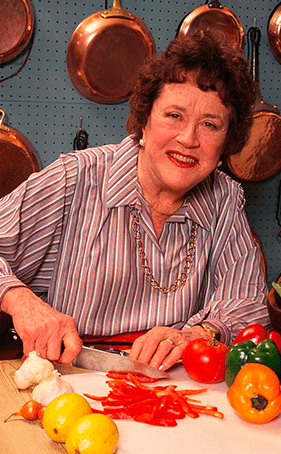
Julia Child was the first famous chef in the United States. She entered culinary school at 37 and became famous at 52. She was always herself, had a good sense of humor, and lived life to the fullest. She wrote several books, hosted various television shows, and her sayings were widely quoted.
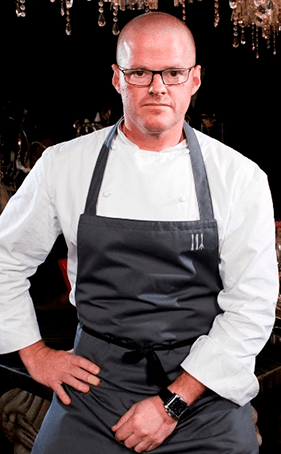
Heston Blumenthal is a self-taught British celebrity chef. He gained popularity thanks to his scientific approach to cooking and his experimentation with flavors. He has created bacon-and-egg-flavored ice cream, parsnip flakes, and more. He writes articles, publishes books, and appears on various science and cooking shows.
Gordon Ramsay is a titled chef and a well-known figure. He's known as a fiery, outspoken man with a unique sense of humor. Despite his image, he holds 16 Michelin stars, has appeared on various cooking shows, and even appeared on the game DASH. He's active on social media and regularly critiques newcomers who ask him to rate their dishes.

Guy Fieri is a restaurateur, self-taught chef, and one of the wealthiest chefs in the world. He owns several restaurants, a vineyard, stars in television series, and has even dabbled in the jewelry business.
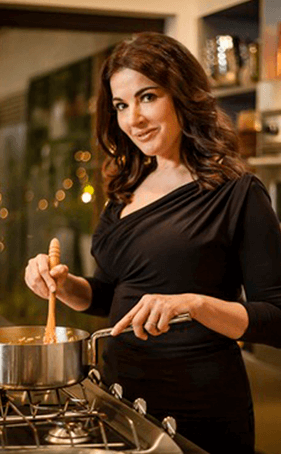
Nigella Lawson is a journalist, philologist, presenter, and food critic in the UK. She has written 11 books, the first of which, "How to Eat Well," sold 6 million copies, and the second, "How to Become a Domestic Goddess," won the 2015 Book of the Year Award. Lawson also runs the Living Kitchen cookware brand, valued at £7 million.
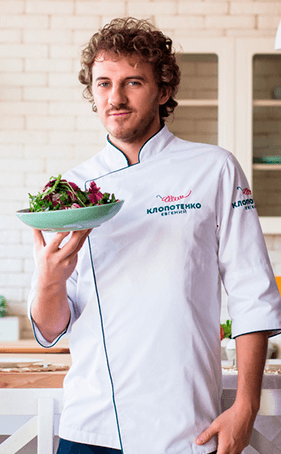
Evgeniy Klopotenko is a popular Ukrainian chef, co-founder of the restaurant "Storykiv tomu vpered" (One Hundred Years Ahead) and founder of the gastronomic workshop Confiture. He is known for his unconventional approach to cooking and is the creator of a project to change school nutrition.

Any professional who strives for growth, recognition, and expansion of their client base needs a personal brand. To create the right positioning and effective promotion, we recommend reading the branding series.
Books on personal branding :
Jurgen Salenbacher "Create a Personal Brand".
David Ogilvy "Confessions of an Advertising Man".
Daria Dmitrieva. "Building a Personal Brand: A System for Unleashing Individuality and Creative Potential."
Ekaterina Kononova. "Personal Branding from Scratch."
Kristin Beckwith, Harry Beckwith. "Be Your Own Brand: The Art of Self-Presentation."
A personal brand is a powerful marketing tool that allows you to stand out from the competition, making you recognizable and in-demand. To attract people and interest them in your product, use your charisma and strengths.
To build effective communication with your audience, improve your reputation, and increase your value, contact WeLoveBrands . We'll help you create a vibrant personal brand and become a recognizable chef.
Before creating a brand, our specialists study competitors, target audience needs, and analyze trends, strengths, and weaknesses of the business. They then develop a strategy, positioning, visual components of the brand image (logo, website design, social media profile design, corporate identity, etc.), a slogan, and, if necessary, a brand legend. They then create a promotion plan.
To receive a consultation and clarify the cost of the service, call us or leave a request on the website.
Create a personal chef brand and show the world your skills!