Receive a presentation of services and expert advice
The best people in the industry oversee your brand development process
→ Need branding, design, or creative solutions? Call us at +48 505 648 022 or message us on WhatsApp.
 WeLoveBrands.pptx

The best people in the industry oversee your brand development process
The beauty industry is rapidly growing and is one of the most competitive. This is due to increased demand for services and women's desire to always look well-groomed and attractive. To stand out from the competition and turn your nail salon into a profitable business, it's important to use a variety of promotional tools. The simplest and most convenient are business cards for manicurists and pedicurists.
Business cards in the nail industry help attract new customers and build a loyal client base. They allow you to promote yourself as a specialist and your nail salon as a destination for professional nail services.
A business card for a manicurist and pedicurist is more than just a pretty picture with information about the salon, the specialist's name, and contact information. It helps the business grow and expand its client base.

Firstly , it allows you to show that you are interested in continuing to work with the client after the manicure is completed.

Secondly , it reflects the individuality and values of the nail studio, as well as the manner of service.
Thirdly , it helps remind existing clients about yourself or make a mini-presentation for new ones.
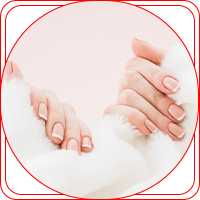
Fourth , it explains what you do and what services you provide.
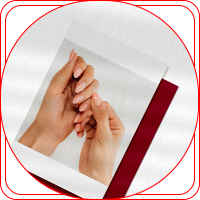
Fifthly , due to their compact size, they are easy to distribute (you can leave them at the reception, throw them in a mailbox, hand them out to people on the street or in a shopping center).
A business card is a cost-effective advertising method, unlike other types of printed marketing materials. It can be used to highlight the salon's presence and status, the professionalism of the manicurist, and convey the brand's core message.
Another advantage of business cards is that you don't have to hand them out to your target audience. You can, for example, hand them out to your regular clients and ask them to pass them on to friends or family. Another great option is to arrange for fitness centers, dance studios, and hair salons to display business cards as manicure invitations.
A good manicurist business card combines catchy, short copy with stylish design. You don't have to list all your services; simply highlight your main areas of expertise and the benefits they offer your audience. You can also add a memorable slogan. If you want to add more interesting information, include a QR code on the card that links to your website, blog, or social media pages.
 name of the nail studio or name of the specialist;
 all contacts through which you can contact the master;
 services;
 area of activity (if it is not clear from the name);
 logo and slogan (if any);
 directions map;
 studio advantages;
 links to social networks or a website where you can view the work;
 background image in corporate colors.
Also, if you're running a promotion, offering discounts on certain services, or special occasions (birthdays, every 10th session free, 10% off a pedicure if you bring a friend, etc.), you should include this information on your business card. This information can be placed on the back or encrypted in a QR code.
A business card can be single-sided or double-sided. The first option, of course, will fit less information, but it will look concise, to the point, and free of clutter. However, if you need to include more information, use both sides, but remember that they should be designed harmoniously and in a unified style.
To create a business card, you can use ready-made templates available on specialized services. This solution is simple and accessible, as you can choose the most suitable layout and customize it to suit your needs (change the text, color, and individual graphic elements). However, you won't see any originality. This means such a business card could easily end up being just one of thousands, unremarkable and unattractive.
A custom manicurist business card is a great alternative to ready-made templates. Our designers research the market, evaluate the card designs of key competitors, develop a concept, select a style that reflects the specifics of the business, and create several layouts to choose from (as per the contract). The business card will be designed in accordance with the company's corporate style or, if none exists, taking into account the needs of the target audience and the client's preferences.
 The standard business card size is 90 x 50 mm. There's also a Euro format, 86 x 54 cm.
 The company name and/or the name of the master must be present on the business card.
 Avoid posting other people's photos. However, if it's your work or your salon, you can include an image on the business card. A simple, discreet design without photos is also acceptable.
 In addition to phone numbers, include your address, links to messaging apps, social media, and any other contact information. This information can be encoded in a QR code.
 One side of the card can be left blank so that the client can make notes there for themselves.
 It is better to use no more than three shades and 1-2 fonts to avoid the feeling of pressure.
 It is necessary to leave 2-5 mm of the cut unfilled and not place important information along the edges, since the print may shift by 0.05-1.5 mm.
 It is recommended to use images with a resolution of at least 300 dpi.
 Before printing, you need to check the business card to ensure that the elements are displayed correctly and the text is legible.
Business cards are produced using modern technologies and a variety of materials (paper, cardboard, plastic, leather, wood). To achieve the desired effect, it's important to choose the right material and employ interesting techniques. For example, standard digital or offset printing is suitable for simple business cards; screen printing can be used to create volume and a pleasant texture; embossing can be used to highlight specific elements or text; and for unusual business cards with interactive components, die-cutting is worth trying.
With the right combination of design, materials, and technology, you'll create an effective nail technician business card that will attract attention, stand out from the competition, and reflect the nature of your business.

The design of a manicurist's business card plays a crucial role in creating a lasting impression and promoting services. Since people are more likely to pay attention to visuals than to text when first encountering a company, it's important to develop a design that will attract attention, evoke positive emotions, and generate interest.
A business card can be a single color, a contrasting color, or a multicolored one, as long as it highlights the nature and specifics of the business. The design itself can be successful whether it's simple and understated, or complex, with playful text, unusual elements, or a design.
The main thing in design is to adhere to the rule of harmony or achieve the set goal.
That is, if the goal is to surprise or provoke, you need to forget about the usual techniques, using a creative approach instead (humor, unexpected characters and plots, poisonous colors, etc.).
When developing a design, special attention is paid to styles, colors, fonts, and shapes. These are the keys to reaching your audience, reflecting your business's specifics, and creating the desired image.
Classic – emphasizes clarity, contrast, and rich colors. Business cards designed in this style look formal and elegant. However, it's not suitable for all salons, only those that want to emphasize high status or a commitment to tradition.
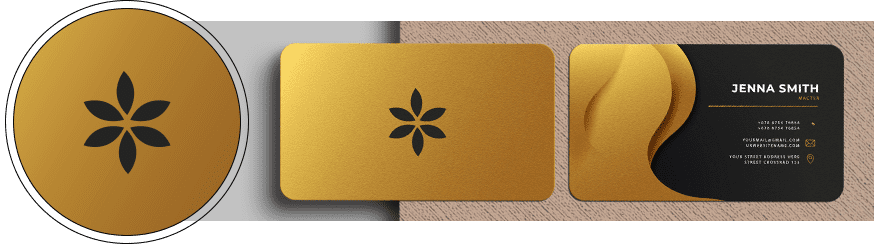
Minimalism is a timeless style. It allows you to create a simple, attractive design using few details and minimal embellishments. The key elements are simple shapes, soft or contrasting colors, and sans-serif fonts.
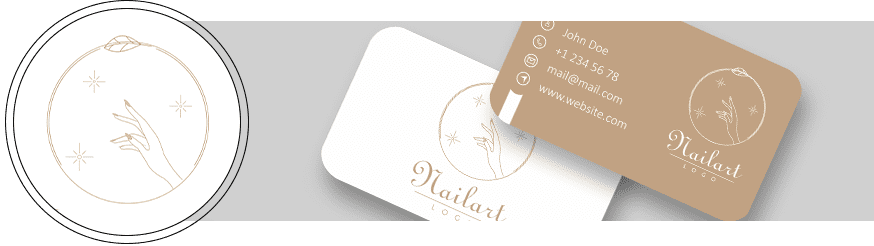
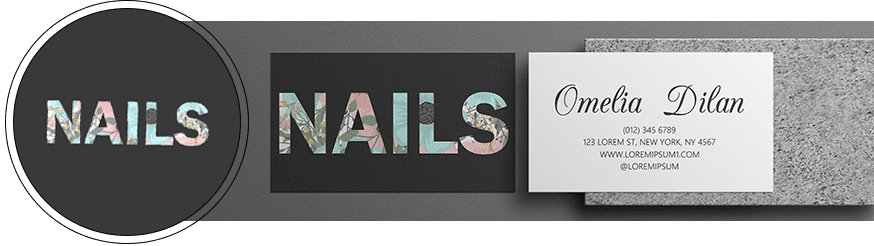
Typography – the emphasis is on the text. Shapes, fonts, and colors enhance the meaning and improve the perception of information. Large, bold fonts are a good choice.
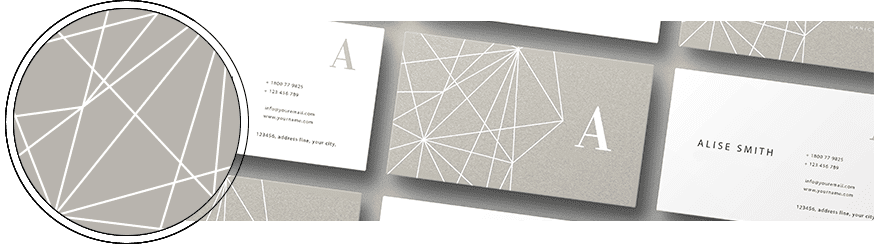
Geometry is a variety of abstract geometric shapes, simple lines that convey the main message and are associated with clarity and professionalism.
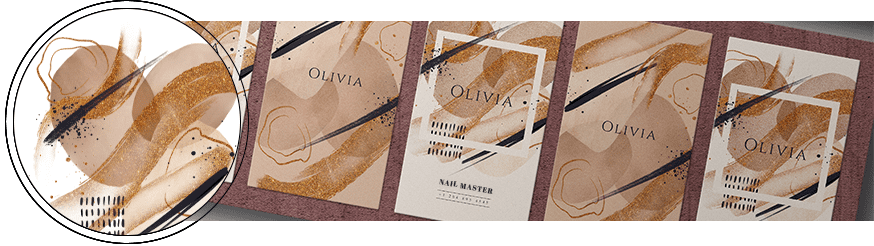
Grunge – allows you to create a special mood with the help of blots, blurry strokes, spreading drops, abrasions, and careless letters.
Kitsch is a style that balances on the edge of emotionality, irony, and vulgarity. Designed for a female audience, its main goal is to attract attention and provoke a reaction.
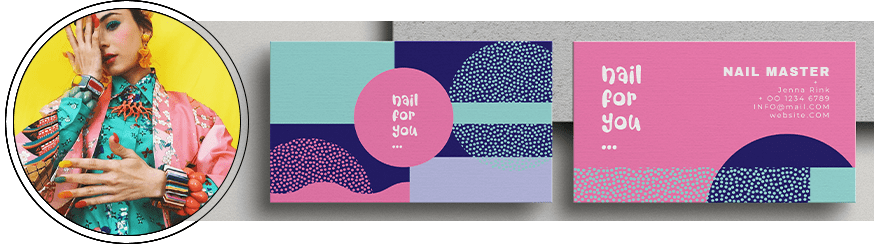
Modernism welcomes multicolor, simple shapes, and figures. Photos and images are absent, and color plays a central role.
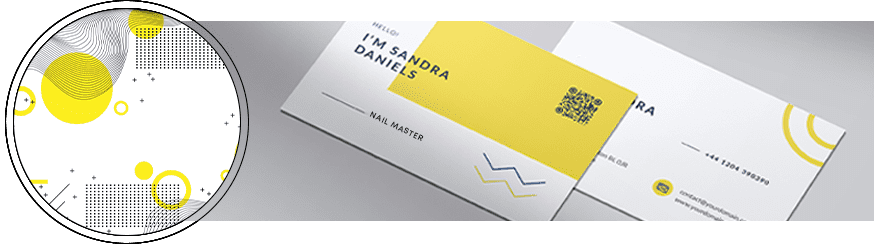
You can add smart elements to your business card, such as a QR code, which saves space on the card, provides more information about services, and allows you to quickly save your contacts, or interactive details to arouse consumer curiosity (e.g., a puzzle, construction set, sliding piece, or transformer).
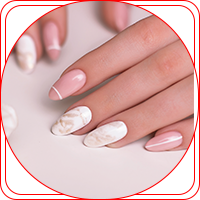
As for images, photos of nails or a salon are standard. To break away from the mold, consider using various business card design trends that suit your theme and concept (a conversational card with a greeting/address to the audience instead of service information, colored edges to create contrast, an autograph, negative space, etc.).
The design of a business card should contain elements of corporate style to create a recognizable image.
You can also use an image from your website's homepage as your background or create a business card that matches your social media account style. This will evoke associations with you as a stylist or your salon and increase your audience's trust. The image should be blurred to avoid overpowering the image.
When choosing colors, if you don't have a corporate identity, consider the needs and expectations of your target audience and the impression you want to make. Each shade is perceived differently and has its own meaning. For example, white is associated with purity, gold symbolizes luxury, black reflects restraint and nobility, red speaks of passion, fire, and a desire to grow, and green evokes freshness, youth, and naturalness.
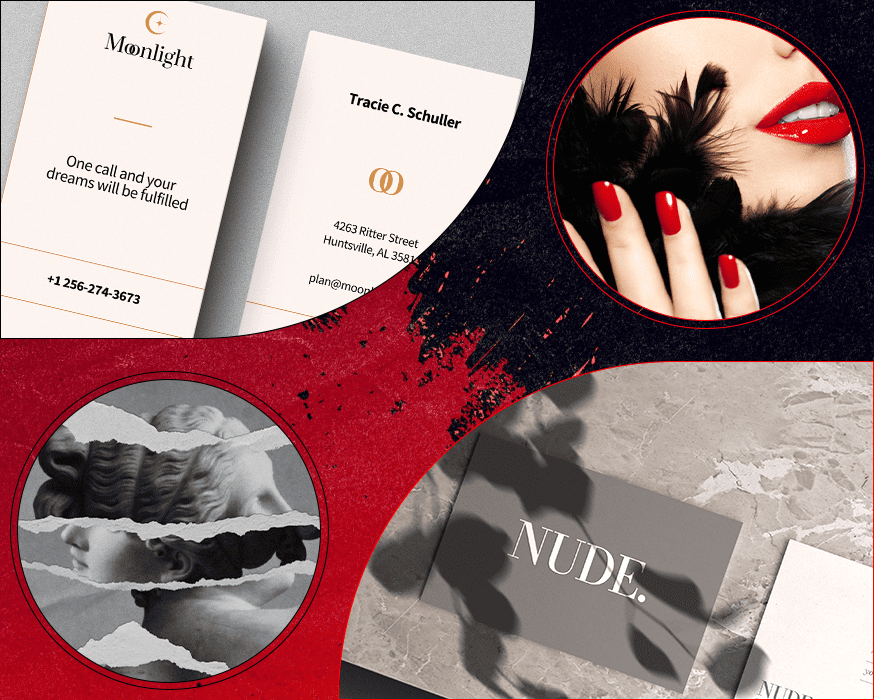
When choosing a shape, keep in mind that a rectangle is the standard. Most business cards are rectangular. But if you want to stand out and be remembered, and aren't afraid to experiment, let your imagination run wild and create cards in an unusual format. This could be a business card shaped like a nail polish bottle, a transformable one that turns into a file or buffing pad, a card with interactive elements, cutouts for nails, or other geometric shapes like a square or triangle, or one with "bitten off" edges, etc.
When creating a business card for a nail technician, remember that a quality design always has a unique concept, idea, and story behind it. Without this, the design will be either simple and banal, or chaotic and unattractive. Therefore, when designing a business card, it's important not just to combine two colors, choose a font, and include a photo of nails, but to consider whether it will reflect the salon's status and special features, and what impression it will make on your audience.
Printing technologies and materials used in business cards are also crucial, as they influence their tactile and visual appeal, as well as their overall impression and emotional impact.
 Digital printing is carried out on rigid but smooth cardboard with a density of up to 300 g/m2 from graphic files;
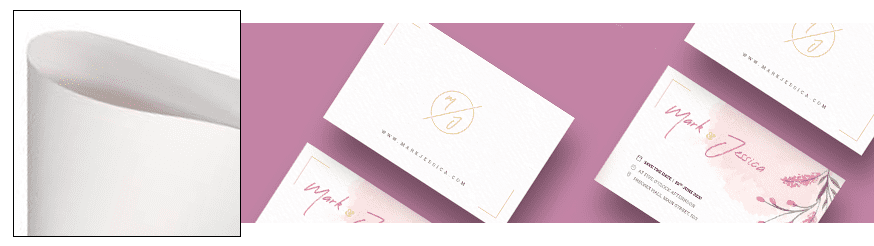
 Offset printing is applied to paper using a special printing plate and is suitable if you plan to quickly print more than 2,000 copies;
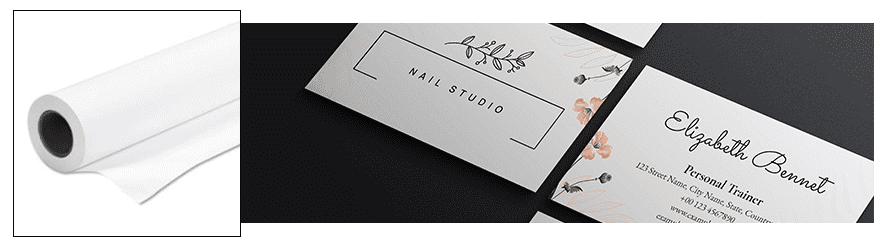
 Silk-screen printing or screen printing allows you to apply a design not only to cardboard, but also to fabric and heat-treated plastic to obtain a three-dimensional, texture-pleasing and visually expensive image;
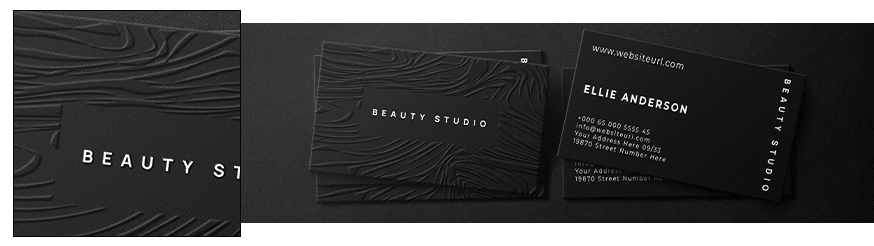
 Embossing is used to create three-dimensional letters and designs;
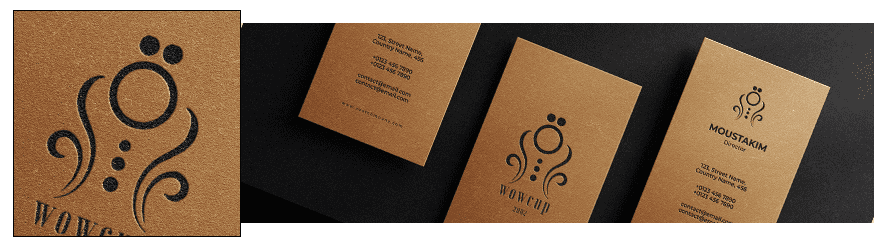
 embossing – pressing various business card elements onto cardboard using a complex stamp, which is combined with other methods – foil stamping and silk-screen printing;
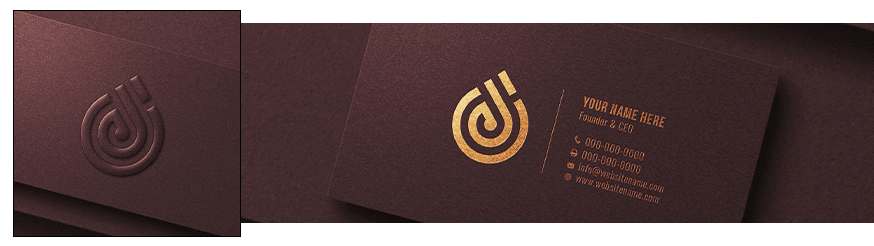
 Lamination makes ordinary paper resistant to external damage;
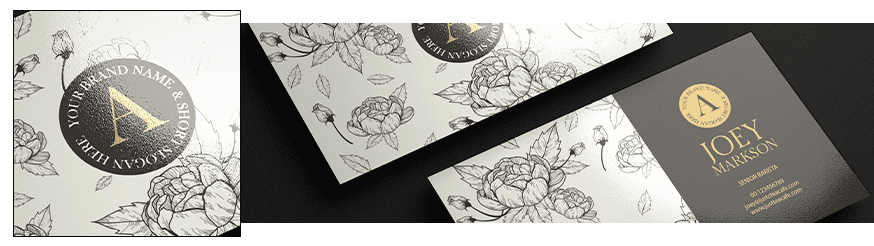
 Selective UV varnishing is applied to specific areas of a business card, such as a logo or name, and is a bright accent that makes the card interesting and memorable;
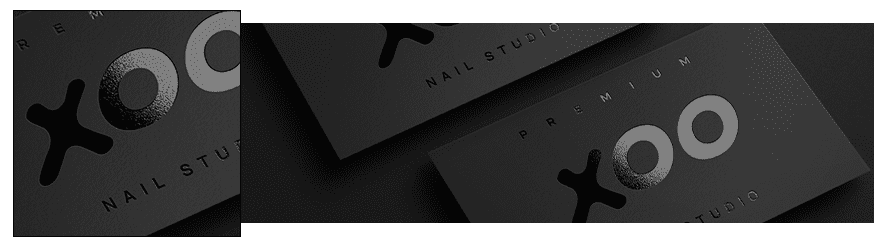
 3D varnish allows you to create three-dimensional and glossy letters or image elements that are pleasant to the touch and attract the eye;
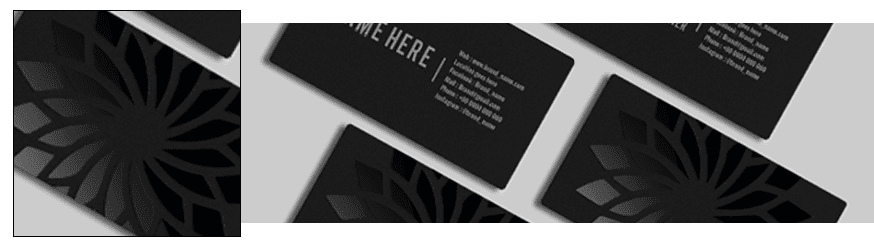
 soft touch is a laminated business card covered with a special film that tactilely resembles velvet, rose petal or latex;
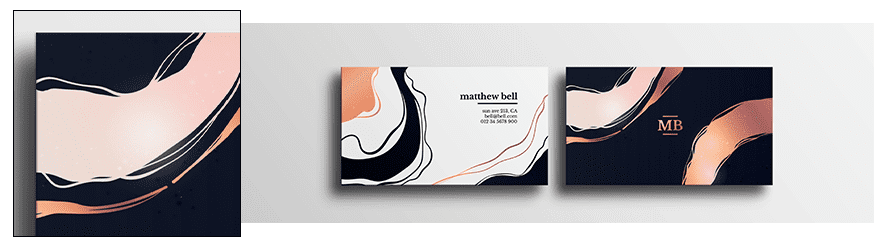
 Foiling is suitable for coated paper to highlight lettering on a business card or a design using different shades and gloss levels;
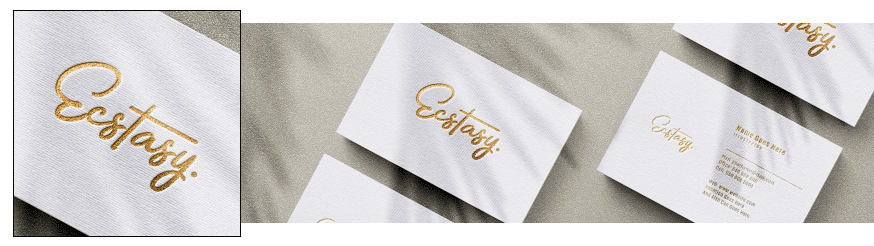
 Twin-spot varnishing is a hybrid printing method that uses both glossy and matte varnish to highlight fine design elements, such as orange peel, sand, or tangyrature.
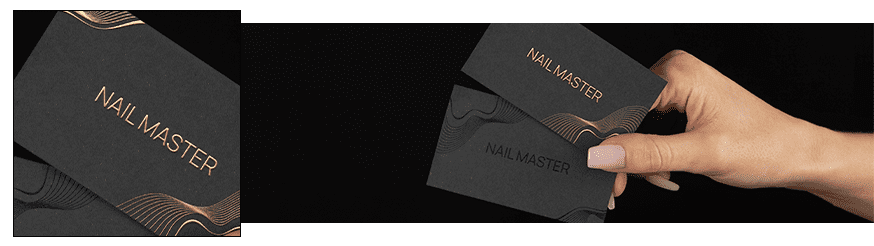
There are various materials for nail technician business cards, besides coated cardboard. For example, plastic cards are moisture- and abrasion-resistant, allowing for the use of transparent material; wooden cards offer a unique, textured look; leather cards convey durability and status; and fabric cards impart a soft, warm feel. While metal business cards are suitable for certain types of businesses, they're unlikely to be suitable for promoting a nail salon or nail technician.
For your business card to perform its intended purpose, it needs to attract attention. Find inspiration in the work of different designers and study your competitors to identify their strengths and weaknesses.
A business card with a discount system . You can place circles on the back of the card for clients to mark the number of sessions. For 10, 15, or 20 sessions, you can offer a discount of 15%, 30%, 50%, or any other special offer. This will encourage clients to use only your services.
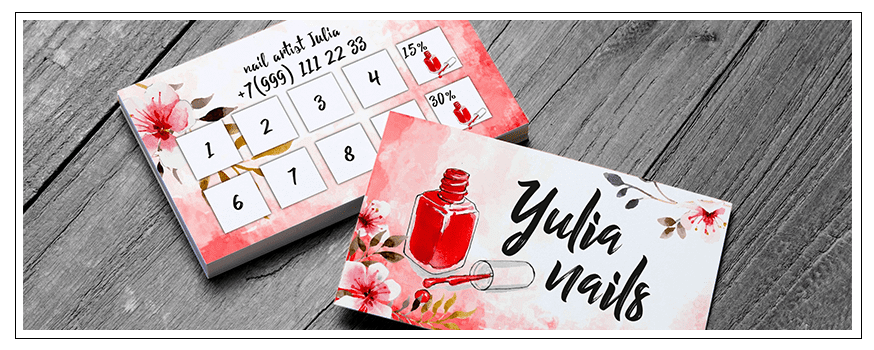
A play of color . A black and white business card featuring well-groomed hands with a bright manicure, such as red polish, will attract attention and be remembered.
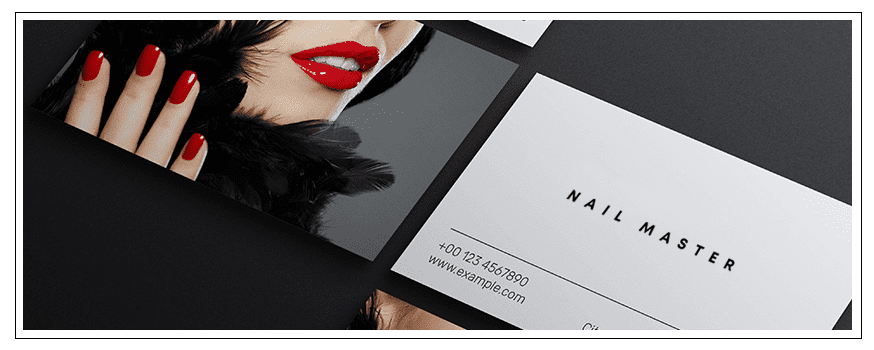
Additional elements in the composition . Images of well-groomed hands and feet pair beautifully with floral arrangements, butterflies, birds, and intricate lace and botanical designs. Images of hands also look great against a background of a face, particularly lips with lipstick matching the color of the nail polish.
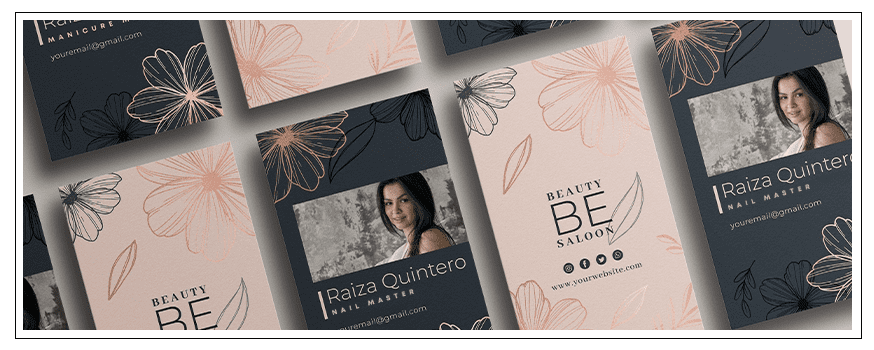
Targeting your audience's temperament . It makes sense to create business card variations for clients who prefer a subtle, more neutral manicure, and for those seeking artistic nail designs. You can up the ante by featuring sharp nails piercing fabric, paper, or leather on your business card.
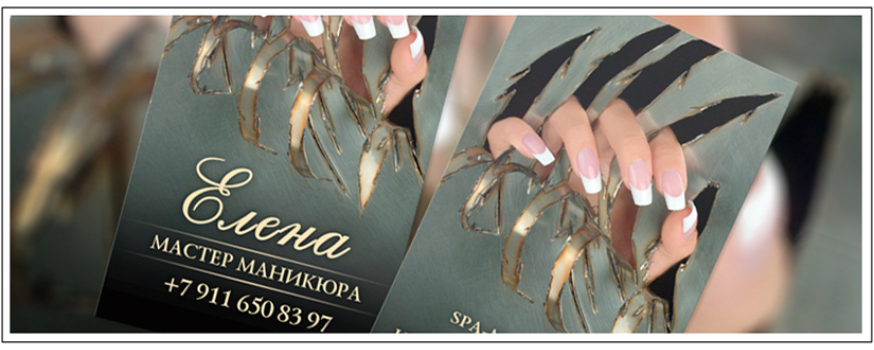
A useful business card . To increase your chances of getting repeat business, make it useful. You can use the back side and display a calendar or a nail polish palette, or show different nail shapes with an indentation for the client to place their finger on.
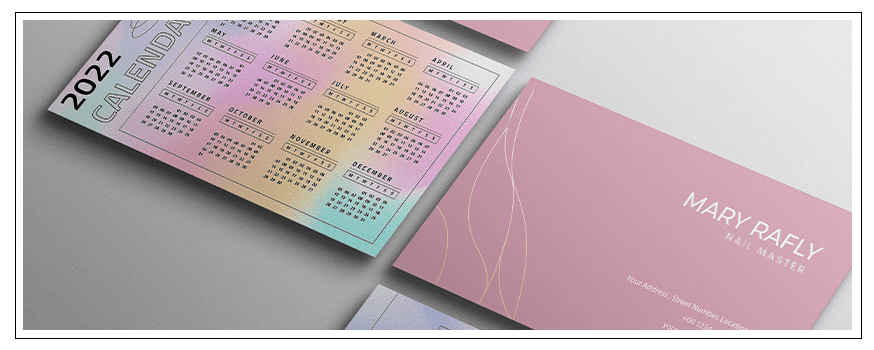
Another key feature of a manicurist and pedicurist's business card is individuality. Reflect your character, values, or a unique aspect of your nail salon that your competitors lack. This will help you stand out, become more memorable, attract new clients, and retain existing ones.
If you need a business card for a manicurist or nail salon to showcase your services in a bold and original way, enlist the help of the qualified designers at WeLoveBrands. Our specialists will create a business card that will showcase your unique personality, attract attention, and build a positive image.
A WeLoveBrands business card is one of the most important and essential elements of your brand image, helping you attract clients. To schedule a consultation, find out the design cost, and order a manicurist business card, please call us , contact us via messaging app, or fill out the callback form on our website.