Receive a presentation of services and expert advice
The best experts in the industry will oversee your brand development process.
→ Need branding, design, or creative solutions? Call us at +48 505 648 022 or message us on WhatsApp.
 WeLoveBrands.pptx

The best experts in the industry will oversee your brand development process.
Fierce competition in the retail market forces entrepreneurs to use emotional hooks to attract and retain customers. One such tool is a retail company logo. It helps differentiate itself from competitors, intrigues, and communicates the specifics of the business.
For a logo to be recognizable and memorable, it's not enough to be simple and clear. It must be interesting, that is, contain some kind of special feature.
A brand mark can convey advantages, reveal character, tell a story, or reflect the brand's core idea. No matter what the logo is based on, the key is to showcase the interplay of form and meaning.
No matter what products a company produces or sells, it must convince customers of its reliability and integrity, inspire trust, and generate interest in the product. All this can be achieved by developing the right logo.
A brand name performs 3 main functions:
 Builds brand image . An original and attractive logo increases brand interest, evokes positive associations, and enhances the company's reputation.
 Identifies the product . A logo distinguishes a company from competitors, makes it easier to find the product, and helps customers navigate the product flow. A recognizable trademark connects the product with a specific company and encourages people to make a purchase.
 Increases customer trust and loyalty . A good logo creates the right mood and influences consumers' subconscious. By evoking pleasant emotions, it also generates interest in the product.
A successful logo attracts attention, shows what the company does, and highlights its competitive advantages.
In Ukraine, the largest trading companies are those that deal with food products, fuel, household appliances, and electronics, as well as distributors, agricultural enterprises, and producers of alcohol, cigarettes, beverages, and medicines.
Logo design depends largely on a company's line of business and the product group it sells. To create a compelling brand identity, these nuances shouldn't be overlooked.
The following factors may influence the creation of a logo:
company size and sales volumes (one store or a large retail chain);
wholesale or retail trade;
offline or online stores;
domestic market or international sales;
manufacturer (own production and sale of goods), distributor or retailer.
If the product range is limited, the logo may be based on a distinctive feature of the product (plants for organic products, a silhouette of a girl for a lingerie line, a pen, notepad, or other images for stationery sales, etc.).
Large suppliers and distributors are a different matter, as they offer a wide variety of products. In this case, the logo may use the company name or an abstract symbol that emphasizes reliability and authority.
Companies that operate exclusively for the domestic market may choose national motifs and regional symbols, while those engaged in international trade often use dynamic symbols, images of the globe, maps, etc.

Before you begin designing a logo, you need to understand the idea you want it to convey and the associations it should evoke. This is important because a brand mark creates the first impression of your company and influences consumers' decisions to buy your product or switch to a competitor.
The desired effect can be achieved using various stylistic techniques, colors, fonts, and symbols. These elements transform an idea into an original and memorable visual image that conveys the company's individuality and character.
A good logo reflects the specifics of a business and meets the expectations and needs of its audience. Various design solutions and stylistic techniques are used to create such a logo.
To ensure a retail company's logo resonates with consumers, it's important to choose the right colors, fonts, and imagery. By "right," we mean those that convey the core message and evoke emotions.
We select the main elements of the logo:
 Image . Statistics show that in more than 90% of cases, a logo is created to differentiate itself from competitors.
Font logos (company names or abbreviations) and combinations of symbols and text are most often used in this field. But to stand out and be remembered, it's necessary to break away from the usual solutions and choose a unique and striking image.
 Color. Designers recommend using one, maximum two colors in a logo. The choice of shade typically depends on the product group. For example, gray and white are suitable for technological products, green for eco-friendly products, and brown for wood products.
But when choosing a color, you don't necessarily have to base it on a product group. You can focus on the feeling you want to evoke in your customers.
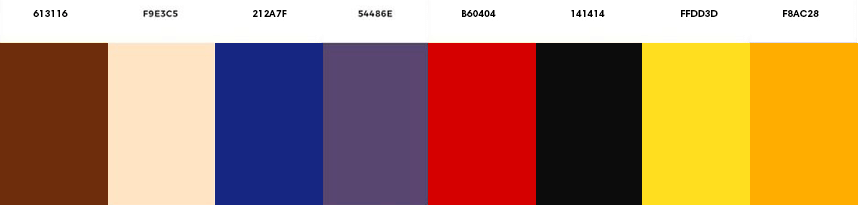
For example, blue and brown shades are associated with reliability and stability, red with confidence and strength, black with status and high style, yellow with optimism and friendliness, and orange with cheerfulness and happiness (this color also stimulates the appetite, so it can be safely used for retail chains selling food products).
 Font. Retail companies prefer simple and familiar fonts, but you can choose a different style. The main thing is that it harmonizes with the concept, matches the specifics of the business, and showcases the brand's identity.
If your business is aimed at a male audience or you want to emphasize masculinity and modernity, choose strict and heavy fonts. If you want to convey reliability, choose bold fonts and straight lines. For children's and youth themes, light fonts with soft, flowing lines are ideal.
Remember that any logo should have meaning, so don't just randomly select elements. If you don't have a clear vision, contact WeLoveBrands for help. Our designers will study your work, identify the core idea, and create a unique and memorable logo.
To avoid a logo failure, don't overload it with too many details, invest it with meaning, and don't follow trends, as such a logo will become irrelevant in a couple of years. If you don't know where to start, contact WLB Studio. Our designers know how to impress with their work.
If you look at the logos of well-known Ukrainian companies, you'll notice that fonts and combinations are most often used. Popular shades include blue, orange, and green.
As for symbols, the most common ones are thematic images (suitable for the product group) and geometric figures.
American companies use all types of logos, but font-based and combination logos are most common. They are distinguished by interesting and unusual imagery, conciseness, and a variety of colors.

The favorite colors of retail companies in the United States are orange, green, blue, red and black.
European logos are highly creative and original, making extensive use of interesting fonts and unusual imagery.

Two-color logos, combining text and a symbol, are more common in Europe. Popular shades include red, blue, yellow, black, and white.
Logos for Asian trading companies emphasize the font, making extensive use of fresh and interesting typefaces. If a combination logo is chosen, the font can be simple, and the symbol can reflect the company's line of business. Geometric shapes, various forms, and abstract elements are also common.

Asian companies choose black, white, orange, blue, red, and green. They often go beyond just one or two colors and use more than three shades, creating vibrant and positive logos.
To create a logo , you can use one of three methods. These are:
WeLoveBrands designers take your wishes into account, review all the information provided, and create logos that reflect your company's uniqueness. For any design questions, please call us or send us a message via online chat.