Receive a presentation of services and expert advice
The best experts in the industry will oversee your brand development process.
→ Need branding, design, or creative solutions? Call us at +48 505 648 022 or message us on WhatsApp.
 WeLoveBrands.pptx

The best experts in the industry will oversee your brand development process.
A combination of sophistication and linearity, beauty and luxury, geometry and contrasting colors—all this is hidden in the popular international style known as Art Deco. It's a style that teaches us to enjoy life in the present moment, without looking to the future or dwelling on the past.
Thanks to its originality and expressiveness, Art Deco quickly gained worldwide recognition and spread across various design fields. Considered "the last chic style," it has its own distinctive features, making it easily recognizable.
The signature style is a combination of geometric shapes, natural materials, ethnic patterns, and images of exotic plants.
Interest in Art Deco has remained strong for many years, and even today, many designers return to it when they need to emphasize status and reflect the extravagance and charm of a brand.
Art Deco (French: art déco – translates as decorative art) is a movement in art in the USA and Western European countries that existed in the 1920s–1950s.
The style is a combination of Art Nouveau and neoclassicism with hints of Cubism, Constructivism, and Futurism. Initially reflected in architecture, fashion, and art, it soon spread to other areas of life.
The movement received its official name from the International Exhibition of Decorative Arts and Industries, which took place in Paris in 1925 and showed the world luxury goods made in France.
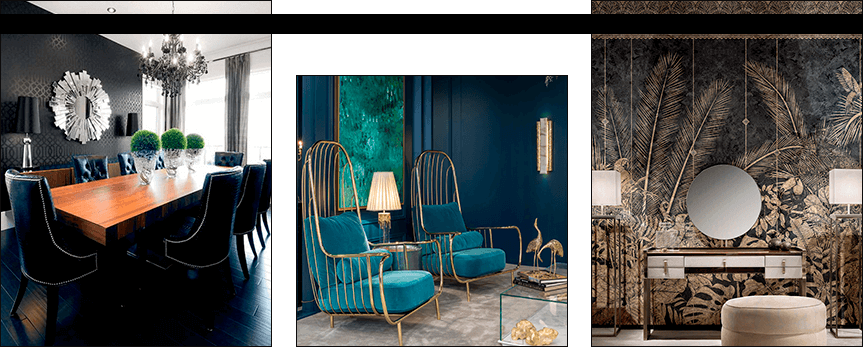
The style appeared in the United States in 1928 and immediately captured the hearts of millions. It became a hallmark of architecture and interior design. Art Deco then gradually evolved toward functionalism. A similar trend occurred in several European countries, particularly France and the Netherlands.
The style faded into obscurity, and by the late 1950s, it was completely forgotten. With the rise of mass production and the end of World War II, this style was viewed as tasteless and garish, and it quickly lost its appeal.
Although Art Deco was replaced by modernism and minimalism, the style didn't disappear completely. In the 1980s, with the rise of graphic design, it experienced a resurgence. Today, designers regularly return to this style to emphasize individuality and status, as well as convey energy and luxury.
Characteristic features of Art Deco:
Art Deco is considered one of the most attractive and elegant styles in art. It conveys a unique atmosphere, creates a mood, and reflects the way of life that emerged in Europe and the United States after World War I.
Advantages of the Art Deco style:
 creates the image of a luxury company;
 helps to emphasize the status and reveal the individuality of the business;
 allows you to create an exquisite and original design;
 increases brand awareness;
 creates a special atmosphere and conveys certain emotions.
This style is most often found in fashion, architecture, and interior design, but is now also actively used in graphic design, identity, and printing. It's suitable for any business that wants to emphasize its high status and a sophisticated and luxurious design.
Art Deco is characterized by the predominance of beauty over practicality, so the first priority is the decoration, ornaments and patterns, and only then – functionality.
To create a unique design, you need to choose the right shapes, shades and fonts.
To convey the dynamism, speed, and progress characteristic of the style, parallel lines, geometric shapes, and various effects and compositions are used, while ethnic motifs and stylized patterns are chosen to create a special mood.
The main elements of the Art Deco style:
 Geometry and lines. The design makes extensive use of squares, rectangles, triangles, and straight and curved lines. These elements help emphasize the company's reliability, dynamism, and energy. The overall design has a lofty and impressive appearance.




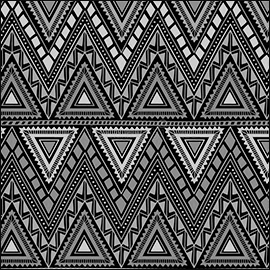
Ethnic motifs. The style has features of classical antiquity and incorporates elements of Egyptian, Native American, and Aztec culture. Therefore, the design utilizes stylized patterns, ethnic ornaments, and images of exotic plants. These elements create an interesting and original look.
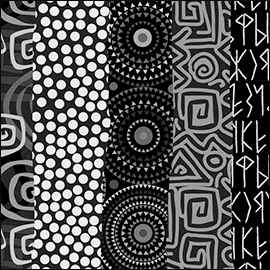
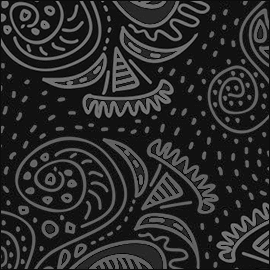
Color. Characteristic shades of this style include black, gold, silver, brown, olive, and red. Color can convey luxury and add a touch of class (gold, metallic, silver, copper, etc.), convey modernity and sophistication (neutral tones: beige, gray, and brown), or create a clean and striking design (black and white).
Fonts. The style's distinctive features also left their mark on the typeface. Sharp angles and straight, bold, and semi-bold lines replaced curlicues, italics, and handwritten fonts. Art Deco typefaces have a strict and dignified appearance.
Art Deco is a style that unites various, sometimes even contradictory, trends. Rather than a single style, it represents a mosaic of movements and trends. And this is its key characteristic and appeal.
The designers at WeLoveBrands studio can help you create a unique and striking design tailored to your business needs. If you need logos, packaging, business cards, promotional items, or souvenirs in Art Deco style, give us a call or send us a message in the chat.
The distinctive feature of this movement is the combination of natural forms and geometry. The graphic design widely utilizes smooth and curvy lines, right angles, circles, and images of animals and birds, which harmonize with geometric shapes.
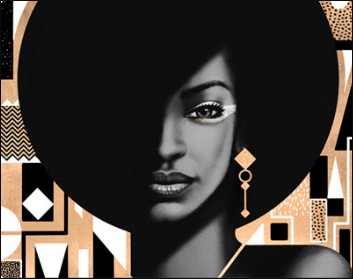
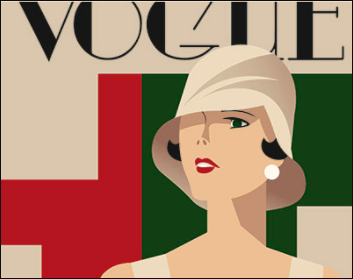
The primary colors are black and gold. Depending on the theme, shades of red, blue, green, and brown may be added.
When creating illustrations and advertising posters, they choose display fonts, large images, and geometric patterns. These images often reflect a luxurious lifestyle and glamour.
Posters of the 1920s and 1930s actively used images of cars, mechanisms, animals and women.
To create prestigious logos and reflect a brand's individuality within a corporate identity, designers can use Art Deco. Logos created in this style are distinctive, eye-catching, and memorable.
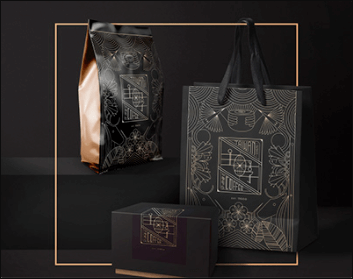
The design utilizes geometric patterns, a multitude of small details, and decorative elements. The predominant colors are black, white, gold, and red.
Art Deco logos are often presented in the form of an emblem.
When a customer chooses a product, the first thing they see is the packaging. An engaging design not only helps attract attention to the product but also shapes the brand's image.
Art Deco style allows you to emphasize the status of a company, stand out from the competition, and encourage consumers to purchase the product.
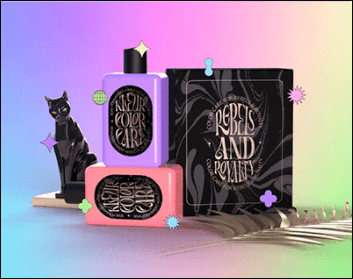
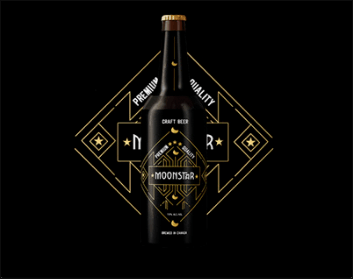
The design often uses geometric shapes, solid lines, strict and heavy fonts, as well as traditional Art Deco shades (gold, black, red).
Packaging and labeling designed in this style will attract attention and generate interest.
Art Deco has only recently entered web design, with the advancement of technology and the increasing speed of information transfer. Previously, it was particularly popular in architecture, art, interior design, and clothing.
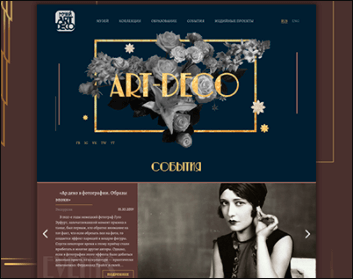
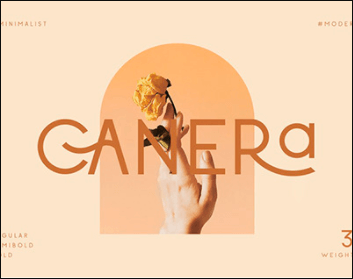
Contrasts are used in website design, both in shapes and forms and in color palettes. They can combine smooth and sharp lines, circles and triangles, ethnic patterns and zigzags.
Web and SMM design in this style is perfect for those who use it in their work (for example, interior designers, architectural companies, furniture manufacturers, artists, etc.).
The development of this trend in Ukraine began with packaging. The first steps toward adopting the principles of a style popular in Europe and the United States in our country began in the 1930s. At that time, Art Deco was gradually replacing Art Nouveau, so artists and designers sought new ways to create attractive packaging.
The designs of that time feature stylized female images (slender and energetic), curved lines, zigzags, geometric shapes, luxurious ornaments, strict fonts and rich colors.
These characteristics have survived to this day, and despite the style's demise, designers regularly return to it when they need to differentiate themselves from competitors, emphasize individuality, and enhance a company's image. Its use has been particularly active with the development of marketing, graphic, and web design in Ukraine.
The style was trending in 2017 and 2019, but now only some of its features are relevant, such as geometry, thin lines and rich colors.
Art Deco originated in France but later spread to other European countries and the United States. Paris, however, has always been the center of the style.
The trend was so popular that it found its way into various fields – the production of automobiles, furniture, tableware, textiles and clothing, architecture and interior design, printing, advertising, the film industry and graphic design.
In the 1930s, the style was even used in the design of train stations, amusement parks and ships.
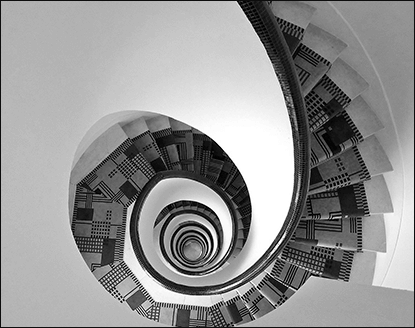
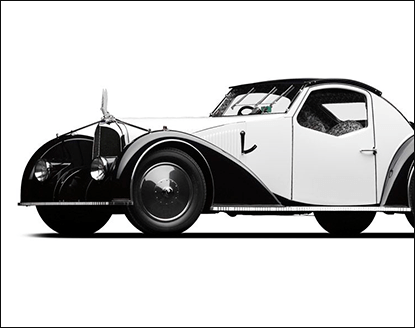
In France, the most famous architect working in the Art Deco style was Robert Mallet-Stevens. In Paris, there is a street designed by him and named after him.
In the United States, Art Deco quickly gained popularity and even achieved the status of an official style. It was used in the manufacture of various goods, skyscrapers, and hotels.
Among the most famous American designers working in this style were Elie Jacques Kahn and Joseph Urban. The former designed residential lobbies, and the latter, exhibition pavilions.
Art Deco was popular in Europe and around the world for about 20 years. After World War II, it was perceived as too pretentious, and interest in it quickly waned. Only in India did the style continue to be used in some places until 1960.
Art Deco experienced a revival in the 1980s, when graphic design began to flourish. Advertising posters, illustrations, and product packaging, all designed in accordance with the style's principles, began to reappear in European countries and the United States. Later, Art Deco's distinctive features began to be used in the design of websites, logos, and corporate identities.
Currently, this trend is primarily used by artists, interior designers, furniture and architectural companies. However, the style is also occasionally used in identity and printing.
The Art Deco style is distinguished by its grandeur and allure. It allows a company to stand out from the competition and attract consumers. To achieve a high-quality and unique design, it's best to consult with an experienced designer.
You can order the design:
Freelancing. This option allows you to save money, but it also carries a certain amount of risk. If you find a talented and experienced designer, you'll get a good result, but if you choose an unscrupulous freelancer, you risk wasting your time and money (they might miss the deadline or deliver a basic design).
Freelance service prices vary depending on the complexity and specifics of the work, the specialist's experience, and their location. On average, they start at 30 $ for a logo, 10 $ for packaging, and 60 $ for a website.
At a design studio . The price will be higher, but there are no risks. These companies employ experienced and responsible designers who thoroughly research the market, the specifics of a particular business, its competitors, and its target audience, to deliver a result that best meets the objectives.
As for pricing, customers typically have several pricing plans to choose from. By choosing one, you'll have a clear understanding of how many options you'll receive and how quickly. The cost of the service depends on the scope and complexity of the work: graphic design starts at $20, logo design starts at $150, and corporate identity design starts at $130.
Which option you choose is entirely up to you. But if you're looking for a unique Art Deco design that will be memorable and enhance your company's image, book a service with WeLoveBrands. For more information and pricing, please call or leave a message in the online chat.