Receive a presentation of services and expert advice
The best people in the industry oversee your brand development process
→ Need branding, design, or creative solutions? Call us at +48 505 648 022 or message us on WhatsApp.
 WeLoveBrands.pptx

The best people in the industry oversee your brand development process
A personal brand isn't just a recognizable name, a unique style, and a million followers on social media. It's primarily about the associations and emotions a professional evokes in people—both online and offline.
Are your services designed for people? Do you want to develop a personal project but lack the financial resources? Is your business tied to your name? Do you want to freelance, set your own schedule, and choose who you work with? Do you dream of traveling year-round without being tied to an office? Perhaps the prospect of popularity and fame appeals to you?
If you answered yes to at least one of these questions, then you're reading the right article. With advice from WeLoveBrands experts, you can start building your professional brand. We've shared why building one is so important in 2021 and what promotional tools to use right from the start.
The most accurate definition of a personal brand comes from Amazon founder Jeff Bezos: "A personal brand is what people say about you when you're not in the room." The key to personal branding is the ability to influence these conversations. When you post on social media or interact with people at an offline event, ask yourself frequently: "What do I want people to say about me when I leave the room?"
What is Louis Armstrong known for? Ninety-nine percent of the time, people will answer that he's a renowned jazz performer. Kanye West is a musician, producer, fashion designer, and Kim Kardashian's ex-husband. Incidentally, it's the latter that brings him perhaps his greatest fame: the musician releases at most one new album a year, while the couple's personal life was followed daily.

Thanks to the development of social media, the world has become much more transparent: information about any specialist can be found in a few clicks. It's just as easy to publish a story about yourself, share photos of your work, or share the results of your collaborations with companies. Personal brand management is becoming more important than ever: it's crucial to choose where, how, and what to communicate to potential clients.
A personal brand is a universal answer to self-realization. A brand can be anything: political views, reputation, social connections. To exert influence online or offline, you don't necessarily need to appear on dubious TV shows or sacrifice your reputation by getting involved in scandals. And we know for sure: a personal brand isn't just for SMM specialists and bloggers. With it, anyone can:
 find a new job;
 make useful contacts;
 sell your services;
 differentiate oneself from competitors;
 Strengthen the brand of the company you founded or where you work.
Personal branding is especially effective when you're just starting out in your career, planning to open your own business, or want to quickly advance your career.
The three pillars of personal branding are professionalism, popularity, and reputation. The former comes with experience and is directly dependent on your investment in personal development. Popularity and reputation can be achieved by carefully formulating a personal brand positioning and promotion strategy, and adhering to all the plan's elements.

A personal brand is built on your desire to share knowledge, ideas, and insights with people. You don't have to be a generalist. You can become an expert in one or two topics, but explore them more deeply in your blog and social media profiles than others.
It comes with achievements and when your name evokes associations with IT development. In this case, people may not know you personally, but that won't stop them from recommending your services to their friends and acquaintances.
Reputation is something hard to gain but easy to lose. A professional's public missteps will be remembered for a long time, but building a positive reputation from the start requires effort. If your goal is to gain notoriety without embarrassment and scandal, then reputation and image are the first things to work on.
Why do some professionals and brands become stars, while others are forgotten? How can you become a brand and still remain authentic? Apply the archetype method! It's used by business owners, independent professionals, small startups, and industry giants alike. For example, Bounty is associated with islands, Nesquik with its signature bunny, and the Coca-Cola brand is linked to Santa, holiday spirit, and family values.
Archetypes are behavioral patterns that people develop throughout their lives. They are formed based on strategies, goals, values, fears, behavior patterns, and the way they interact with others. They help brands find organic ways to express and promote themselves. By using archetypes, you can stand out from the competition and effectively communicate the uniqueness of your product or service.
The theory of archetypes was developed by Carl Gustav Jung, and marketers and brandologists have simplified it, taking 12 models of human behavior as a basis and dividing archetypes into 4 groups according to the dominant motive:
Individuality and Independence: Simple-minded, Seeker and Sage;


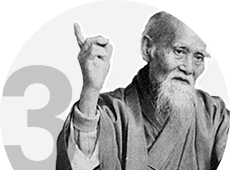
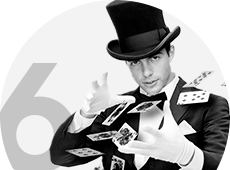
Freedom and Risk: Rebel, Hero and Magician;
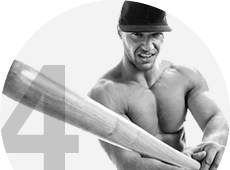

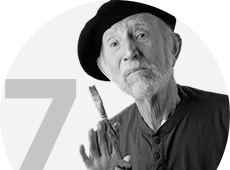
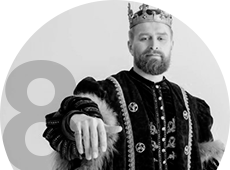
Stability and Control: Creator, Ruler and Caregiver;

Social Connection: Nice Guy, Lover and Jester.



For example, the Ruler archetype is suitable for IT specialists who offer a long-term warranty on their products. The Hero archetype is often used to present innovative products. The Sage archetype is suitable if you promote yourself as a specialist with years of experience in the market, and your qualifications are confirmed by certificates. Examples of brands of this archetype include Harvard, Intel, HP, and The Wall Street Journal.
The Magician archetype is considered optimal for implementation in technology sectors where the emphasis is on ease of use: a clear interface, easy-to-change settings, and so on. Brands such as Apple, Sony, and Mastercard correspond to this archetype.
Insight from WeLoveBrands experts: use a combination of multiple archetypes when building your personal brand. This will help create a more comprehensive and engaging image. Choose a dominant archetype and a few additional ones. We don't recommend using the Lover or Jester archetypes.
You can be a skilled programmer with strong case studies and a solid portfolio, but if you can't communicate your experience in a compelling way, it's of little use. So, embrace storytelling. Incidentally, it can be applied everywhere: in advertising, people management, politics, and education.
There's a simple storytelling technique called SUCCESs (Simple, Unexpected, Concrete, Credentialed, Emotional story). For your story to be remembered, it must be simple, unexpected, concrete, credible, and emotional:
Explain as if to a child.
Surprise your audience by giving them more than they expect.
Tell stories without fluff.
Talk about what you know or what you have encountered personally.
“Push” on the emotions that motivate you to take the desired action.
When telling stories, use specific details. Each target audience has objects and words that resonate with them. Using such details in storytelling demonstrates that you understand your audience and are committed to connecting with them. For example, for young parents, the image of a stroller that doesn't fit in the trunk of a car might be a trigger. For people born in the 1980s, the mention of a music player might evoke strong associations and motivate them to take action.

When describing case studies, use the STAR (situation, task, action, result) framework. First, describe the situation and the problem you faced, and the specific task you were given. Next, describe how you solved it and what the result was. Eliminate fluff. Consider your reader's needs and save their time—don't write unnecessary things. Don't be afraid to use expressions and tone of voice that you often use in everyday conversations.
Stories build trust and increase levels of the "happiness hormone" oxytocin. We also remember stories better than dry information and facts. So, use them to achieve your goals.
WeLoveBrands expert advice: For more on the art of storytelling, read "Storytelling That Moves" by Kindra Hall, president of the consulting firm Steller Collective.
LinkedIn is the new Upwork. The social network is growing, and it will soon offer the opportunity to apply for freelance work. Candidates' profiles, not their experience, will play a major role in choosing a specialist. Therefore, it's important to understand the platform now. Then, expand your networking activities, accept inquiries, and update your profile.
Even if you're involved in creating content for the company you work for, add personal stories and case studies to your page. For example, as a team lead for a development team, you were recently hiring people and were having a hard time choosing a candidate, which was nerve-wracking. Write about it—sincerity resonates with more people. Post something personal—if that doesn't work, try other stories or content formats.
Ultimately, it's wrong to consider LinkedIn a lead generation platform exclusively for the US. Companies serving the Ukrainian market and growing on the platform are achieving high results because no one has done so before.

Changed careers? Planning to launch your own project? Want to go freelance? Order comprehensive personal brand creation and promotion from WeLoveBrands! Three reasons to choose us:
At the beginning of the project, our specialists analyze the market and competitors. The next step is target audience analysis. This will help us understand your potential client's lifestyle, how to reach them, and how to offer them greater benefits than their main competitors.
We define who your services are intended for and what problem they solve. To ensure a sustainable market positioning, WeLoveBrands specialists formulate key messages and define the rational and emotional values of the product.
Our team develops a brand identity: name, slogan, and corporate identity. We also identify appropriate communication channels and establish KPIs to evaluate the effectiveness of decisions. A well-designed strategy allows us to create and launch effective advertising campaigns.
Personal branding is more than just a logo. Its effectiveness is influenced by: creative branding, naming, taglines, corporate identity, ToV (tone of voice), and idea evaluation. To learn more and receive a detailed consultation on your project, contact us via the online form on our website or by phone. Find ways to effectively present yourself and sell your services for a higher price with the specialists at WeLoveBrands!