Receive a presentation of services and expert advice
The best people in the industry oversee your brand development process
→ Need branding, design, or creative solutions? Call us at +48 505 648 022 or message us on WhatsApp.
 WeLoveBrands.pptx

The best people in the industry oversee your brand development process
If you've decided to start a dietetics business but want to do more than just provide consultations, but rather be truly helpful to people, change the world for the better, become famous, and earn a good living while retaining the right to choose your clients, work hours, etc., you need a personal nutritionist brand.
A personal brand is a recognizable name and image that people conjure up when they hear it. It can reflect a professional's skills, strengths, and even personal qualities.
Style is a specific type or variety of something, expressed through distinctive characteristics and artistic design. It can also be a method or set of techniques for a particular work or activity.
Fashion is a change in clothing patterns and forms that occurs within relatively short periods of time.
Image is an image created by a person in order to create a certain impression of oneself in other people.
Buta personal brand is a much broader concept. It encompasses not only a person's skills, abilities, style, and lifestyle, but also their values, mission, what they live by, what's important to them, and how they can contribute to the world.
If you want to attract clients who share your values and appreciate your work, it's best to be honest with the world and yourself. This way, you'll truly live your life, not someone else's. And to stand out from the competition and increase your brand recognition, you need to create a compelling image that evokes emotions and positive associations in consumers.
For people to want to book a consultation with you, it's not enough just to know about your services. Trust and a good reputation are essential. A personal brand helps achieve these goals by creating an impeccable image and increasing customer loyalty.
With a personal brand, you can attract clients, build trust with your audience, and demonstrate your expertise.
In addition, a personal brand allows you to :
improve yourself and develop your business;
expand the customer base;
strengthen your position in the niche;
stand out from the competition;
increase recognition;
increase the demand for their services;
promote your business on various platforms.
That is, creating a personal brand will allow you to retain the attention of your audience, influence their choices, and also establish useful connections for developing your business.

Goals of personal branding :
 Developing a business is easy and enjoyable, doing what you love and making money come to you.
 Specifics of broadcasting your messages on Instagram for sales purposes.
 Attracting the ideal audience, engaging them through magnetic meanings.
 Finding and demonstrating your own uniqueness.
 Building a strong inner core.
 Increasing audience trust.
A nutritionist's personal brand can be developed by both newcomers and established industry experts. It will help the former establish themselves and attract clients, while for the latter, it will be an effective tool for expanding their business and showcasing their experience and knowledge.
Disadvantages of personal branding :
Personal brands suffer greater losses than companies if they fail, as their reputation, the foundation of everything, suffers. To avoid failure, every step must be carefully considered, and brand building is best left to professionals.
A lot of time is spent on development, and the first results will be seen in about a year. Of this time, six months are spent on planning and creation, i.e., the technical part.
Brand positioning must be well thought out so that you don’t have to change it in a year or two, thereby alienating customers.
Remember, if you have a social media page, you're already a brand. People are watching you, evaluating you, and forming opinions about you. And then it's up to you to decide whether to let things slide or to seriously promote your services.
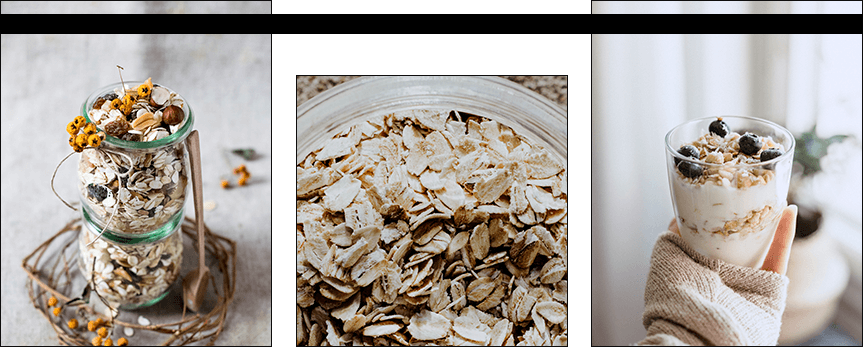
When first encountering a brand, consumers only need 30 seconds to evaluate it. This impression is formed spontaneously, on a subconscious level. People typically respond to a visual image and notice the unique qualities of a professional. Therefore, it's important to showcase your individuality, highlight your strengths, and evoke emotions in your audience.
To create a specific image, you can choose different items of clothing, wear them in different ways, create an individual color scheme, change shoes and accessories.
When it comes to your body, everything is important: your face, your hairstyle, your facial expressions, your speech, your gestures, your posture, your gait.
You also need to come up with a pseudonym (if you don’t want to use your own name), a credo (slogan), develop a website, a logo, business cards, and set up accounts on social networks.
To influence people's impressions, you need to :
# 1 Don't be afraid of criticism and negative feedback . Let people speak freely, and respond to positive comments with gratitude and calmly address negativity, identify the cause, and resolve the issue.
# 2 Build your network . You probably have friends, family, and acquaintances who would be happy to share information about your services and recommend you to others.
# 3 Post unique, useful, and engaging content . This means that in addition to posts about yourself, you should tell consumers about something useful, share your experiences and life hacks, and also run various contests and quizzes.
# 4 Demonstrate your expertise . Talk about your achievements, certificates, courses you've completed, etc.
By following these recommendations, you can build a strong personal brand as a nutritionist that will inspire trust. People will listen to you, read your work, and ultimately, schedule consultations with you.

Promoting products online and offline requires the use of various attributes. These include:
Speech, gait, gestures.
Logo, coat of arms, signature.
Totem, animal, idol.
Perfume.
Motto, credo.
Handwriting.
Nickname, name.
Style, appearance.
Additionally, factors such as expertise, reputation, and popularity should be used to develop a brand. A combination of knowledge, experience, unique traits, and strengths will help build a strong personal brand.
A brand code is your internal image, what sets you apart from others, your unique qualities. They help you establish your positioning, develop a brand promotion strategy, and a customer acquisition plan.
Brand code components :
benefit – what you can do to help your audience;
mission – what you strive for, what you want to achieve;
style – how others see you and how you see yourself;
vision – what will happen in the future;
Values are emotional and spiritual qualities that are consistent with the rules of life of potential clients.
All these components help you understand yourself, making positioning easier. Focusing on the needs of your target audience while simultaneously emphasizing your strengths is an effective way to attract customers and differentiate yourself from competitors.
The formation of one's own self, which is communicated to the world, occurs through self-knowledge. Experts speak of 12 key archetypes, according to Emily Bennett's classification.
Understanding behavior patterns will allow you to find unexpected marketing solutions and infuse new emotional imagery into routine communications.
4 main groups of archetypes
 Order and stability
The "Ruler" requires special attention. We all know the saying that it's the retinue that makes the king. Therefore, special attention should be paid to the entourage, emphasizing status and exclusivity.
"Caring" is closely associated with the image of a mother. Just as a mother cares for her child, brands of this archetype surround their customers with warmth and attention. This also implies safety.
"The Creative One" embodies the image of the Creator, who strives to make the world perfect. He awakens creativity in people. The realization of one's ideas and self-expression are considered important.
 Striving for the ideal
An "expert" is a sage or scholar, a keeper of the secrets of our world, obsessed with the idea of knowledge. However, they can become detached from the real world, immersed in their own ideas, which are incomprehensible to ordinary people.
"Simple-minded." A dream of the lost world of childhood, when happiness lay in the simplest details. The archetype appeals to the inner child.
"Explorer." A world for explorers who despise routine and are obsessed with adventure.
 The desire to leave your mark on the world
The "Rebel" is a noble outlaw who challenges society. He refuses to follow the rules, breaks the mold, and pushes boundaries.
"The Magician." He possesses hidden powers inaccessible to others. The archetype is closely connected to nature.
"Hero." Strong-willed individuals tend to pursue this career path. They lead the world to a better place. "Heroes" never give up; victory awaits them in the next battle.
 Connection with others
"Lover." The consumer is an object of love, exalted. Such brands truly know how to seduce! They aren't necessarily feminine and aren't always expensive, as the ideas of pleasure and hedonism are relatable to many.
"The Jester" is a merry fellow who defies boredom. He can say whatever he wants to anyone.
The "Everyman" is unremarkable, like everyone else. They know everything about consumer problems and their solutions. Their hallmarks are honesty and simplicity. The archetype's ideal is quiet happiness and the joy of everyday life.
Demonstrating individuality occurs through a combination of several archetypes. Typically, these are two distinct approaches. If you have too many components, choose those that resonate with you and your audience.
For a nutritionist, a good option would be to use archetypes such as the Sage, the Magician, the Caregiver, or the Explorer. But this doesn't mean you should be fixated on these behavioral models—you should choose something that resonates with you and attracts your customers.

To build a personal brand that evokes positive emotions and trust, it is necessary to build on the nutritionist's strong personal qualities and professionalism.
Remember that a brand should benefit people, so put consumers at the center of the universe at every stage of its creation.
Building a personal brand step by step :
 A strategy is how you plan to develop your brand. It should be comprehensive and well-thought-out. Determine where you're going, what your goals are, and what you want to give people.
 Positioning is the presentation of your services, highlighting unique qualities and advantages, and what consumers think about your activities.
 Packaging is the visual and verbal presentation of an offer to attract as many people as possible. At this stage, you can consult a stylist to create an attractive look and add a stylish accessory that will accompany you everywhere, becoming your calling card and making you recognizable.
 Promotion —in other words, advertising—is essential. Everyone should know about your product or service! Therefore, use every possible platform and method—social media, a YouTube channel, a website, collaborations with well-known bloggers, participation in niche events, webinars, publishing books, etc.
 Communication – how you plan to interact with clients and engage them. To generate interest and increase engagement on your social media pages, you need to publish unique content, share your opinions on various topics, tell stories from your life and work, highlight your achievements and failures, offer advice and recommendations, conduct contests, quizzes, surveys, and more.
A well-designed content plan, high-quality, atmospheric photography, and your knowledge will do the trick – engaging your audience and encouraging them to book consultations with you.
 The idea that your personal online reputation is not about you.
 Pretending to be more experienced than you actually are is an extreme form of pretense.
 Forgetting your USP and ignoring the needs of your target audience.
 Underestimating the complexity of brand development.
 Ignoring influencers who can provide you with good traffic and help draw attention to your person.
 Publishing someone else's content.
 Display of a small amount of materials.
 Focusing solely on the number of subscribers, without considering whether they will be useful to you.
Henri Chenot, Paul Bragg, Pierre Dukan, Michel Montignac, Robert Atkins, and Jean-Claude Houdré are successful nutritionists with acclaimed diets. Each of them managed to become a unique figure, attracting tens and hundreds of followers.
 Henri Chenot advocated reducing coffee consumption, eating fruit and green tea for breakfast, salad and pasta for lunch, and soup for dinner.
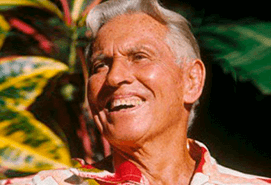 Paul Bragg advised giving up food chemicals, giving preference to everything natural, and fasting for exactly 24 hours every week to cleanse the body of waste and toxins.
 Pierre Dukan proposed a diet consisting of four stages. In the first, a person loses up to 3 kg per week; in the second, they optimize their weight; in the third, they avoid regaining the extra kilos; and in the fourth, they are allowed to eat anything, but only under certain conditions.
 Michel Montignac decided to control the glycemic index. In the first phase, carbohydrates are eliminated from the diet, as, according to the nutritionist, they raise blood sugar levels. In the second phase, weight is stabilized. Nuts, soy, vegetables, fish, and seafood are recommended. Spices, salt, and sweets are excluded. Dark chocolate is allowed occasionally. It is recommended to eat 4-5 meals a day, minimizing tea and coffee, but drinking plenty of water, about 2.5 liters.
 Robert Atkins suggested consuming more protein but cutting out carbohydrates.
 Jean-Claude Houdré advocated resetting eating habits with a high-protein diet and special substances that suppress hunger. He recommended controlling the stress hormone cortisol. He offered a choice of steamed chicken or fish.
If you want to build a strong personal brand as a nutritionist, you can consult relevant literature. Popular books describe the basic concepts of branding, effective techniques for creating a flawless image, and interesting tips for developing and increasing your income. You can find relevant literature through a Google search.
What books can you read :
Victor Eliseev "How to Make Money on Your Name".
Scott Herf, "How to Build a Product People Love."
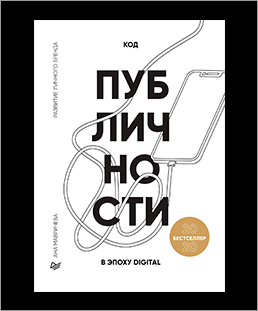
Ana Mavricheva, "Publicity Code 2020: Personal Brand Development in the Digital Age."


If you're looking to develop a recognizable personal brand as a nutritionist, contact our studio. By ordering a service from us, you'll be able to:
stand out from the competition;
present your services in a new light;
highlight strengths and demonstrate expertise;
effectively use all means of visual communication: catalogs, business cards, logos and corporate elements, website design, Instagram and Facebook design.
Our services include working with corporate identity, including character development if necessary.
Our specialists create a style that remains relevant for years to come. First, they become familiar with your business idea, product, or company. They analyze the business environment, including consumers, competitors, job seekers, and their needs. Next, visual identities are developed based on the client's goals and the results of the research. Standards and guidelines for the application of visual identity elements are established, and support is offered throughout the corporate identity implementation phase.
For a consultation, clarification of details, and pricing, please contact us by phone, via instant messaging, or by submitting a request on our website.