Receive a presentation of services and expert advice
The best people in the industry oversee your brand development process
→ Need branding, design, or creative solutions? Call us at +48 505 648 022 or message us on WhatsApp.
 WeLoveBrands.pptx

The best people in the industry oversee your brand development process
You can be the first of your kind, an innovator in any style of painting, or even create your own direction, but what's the point if no one ever hears about you?
It would seem like the 21st century is just around the corner. Making a name for yourself has become easier than ever! Now you don't have to go through any complicated steps just to get your paintings seen. Simply upload your masterpieces online—and you're done! Or is it?
Unfortunately, the easier the process becomes, the less likely it is to achieve a positive outcome. This applies to everything from making money (think casinos, lotteries, and sports betting) to fame (making a name for yourself is easy, but standing out from the crowd is not). Therefore, to be seen as a professional in a crowd of amateurs, it's crucial to develop an artist's personal brand.
All the associations, images, and emotions you evoke in people are your personal brand. Simply put, it's the perception of you and your work, and the aura that your clients (or so they think) form around you.
In fact, people's opinions of you depend only on how well you've developed your own positioning tactics and whether you're even doing it.
The second important point follows from this – image, i.e. self-presentation.
This concept is based on :
archetypes (unconscious universal patterns of behavior);
character traits (whether real or not is not important, the main thing is that they are conveyed);
features of appearance (pleasant and not so pleasant);
cultural and social factors (and reactions to them);
style (individuality and uniqueness of a person);
fashion (a hodgepodge of habits, tastes and modern trends).
By using all these components, you will be able to create a bright, vibrant image that will attract connoisseurs of beauty.
And because receiving recognition after death is no longer fashionable.
Factors such as the enormous competition in this industry, personal tastes, and the devaluation of creative work in general in the CIS countries simply require the creation of a powerful, authoritative name that will sell your paintings in the future for fees with an endless number of zeros.
Moreover, the lack of a compelling visual component in a profession such as an artist is 99% likely to turn off potential buyers.
You know that there are no better masters in the whole wide world than you, but it’s important to make this clear to the consumer, right?
A personal brand can do many things, including:
increasing recognition;
audience attraction;
building trust;
development of activities;
increasing the client base;
price increase;
the ability to navigate through projects;
filtering out competitors;
improving reputation;
the emergence of regular customers.
You need a personal brand if your goals include:

create and maintain a certain image;
take your business to the next level;
gain recognition;
increase the cost of services;
reduce promotion costs.
In other words, the main goal of branding is to prove, reinforce, and communicate your expertise and value. You'll agree, it's much easier to pay a premium for a Chanel lipstick and be confident in its quality than to order the same lipstick on AliExpress for 20 kopecks and expect some kind of catch.
For aspiring artists, a personal brand is a way to loudly declare themselves and their incredible abilities.
But let's not pull the wool over your eyes; things aren't quite so simple and sweet. After all, every magic pill has its side effects.
 It takes time . Nothing good happens overnight. You won't wake up like Van Gogh the next day, even if you try hard. After all, statistics show that the first tangible results of brand development can only be seen after a year.
 Resources are needed . Let's face the harsh truth – you can't just hire someone and continue living life as before. If you're not prepared to sleep with your brand and wake up 24/7, investing significant amounts of money and practically all your free time, then this really isn't for you.
 You need to stay on course . That's why it's crucial to carefully consider all aspects before launching a personal brand, preferably with a professional. You can't change the color of your logo just because you don't like it. And you can't choose a different public stance if it suddenly changes. After all, by changing any attributes, you alienate a certain segment of your audience that was attracted to you precisely because of those factors. And to attract a new audience, you'll need to practically start all over again. Therefore, to avoid drowning, you need to stay on course.
 You need to assess the risks . You'll get results no matter what. Whether it's positive or negative depends entirely on your tactics.
 You need to maintain your reputation , because the chances of recovering it after failure are close to zero.
Almost everyone spends their lives constantly trying to appear better than they are. So here's the question: how do you become someone people envy and emulate?
Knowing certain psychology tricks can easily influence your audience's opinion. For example, it only takes 30 seconds to create a first impression. This means your profile picture and signature should scream out what a great artist you are.
The emotions you evoke in a person from the very first second play a key role in whether they become your subscriber or client.
How expert does your profile or website currently appear? Are you sharing useful information with your audience? Or are you not engaging with them at all? Are your visuals truly colorful and aesthetically pleasing? After all, what says more about an artist than their aesthetic perception of images and the right color palette for their feed?
Ask yourself these questions often, and they will help you begin to position yourself as a human brand.
Strive to be better . Not just on social media, but in life as well. This is a trait that can truly help you lead people.
Create your own story . This doesn't mean a made-up tale about your victories, but rather a proper presentation of your achievements. Your personal story will help you find like-minded people and significantly increase audience loyalty.
Criticism will always be there ! Just accept it . Ignore the unconstructive criticism, and work through the constructive one. Most importantly, don't make excuses or engage in demagoguery on social media because of one unpleasant comment. This makes you vulnerable and weak in people's eyes.
Tell stories . A well-crafted narrative can do wonders for reach and views. Plus, you'll come across as an engaging, open-minded person with a quick wit.
Surround yourself with the right people . After all, the right connections serve as independent and effective advertising, while the wrong ones can ruin your reputation.
The main thing is to remember your individuality and avoid creating false images. Then, if you follow these steps carefully, you'll achieve good results.
A quality artist's personal brand is a complex structure, each attribute of which will not produce the desired results without the right strategy.
A strong personal brand structure should have the following components:
Target audience . These are people who are naturally interested in your services or the information you provide. Defining this audience is a fundamental step in developing effective branding.
Emotional connection is the highest level of influence on an audience. To be remembered, it's not enough to convey dry information. The associations your name evokes in people play a key role.
Trust . It's important to always meet your audience's expectations, even when it's not to your advantage. And if we're talking about trusting working relationships, certifications, a portfolio of completed projects, and positive reviews can help build them.

Important components of a personal brand:
1. Current identity – the position you currently hold with your target audience. That is, who you currently represent.
2. Target identity – the desired position, that is, what you want to become and what audience you want to work for.
3. Promotion tools that help you move from your current to your target identity.
The main attributes of a personal brand include name/pseudonym, logo, slogan, website, social media accounts, handwriting, style, appearance, etc.
It's important to understand that creating a compelling brand identity goes far beyond a website and logo. Without a well-developed marketing strategy, your success may remain a pipe dream.
Clearly defined goals, well-chosen promotion platforms, and established values—all this will help you achieve the proud title of expert in your field.
A brand code is a set of factors that distinguish you from your competitors and prove your uniqueness.
It helps you define your own style, surround yourself with the right audience, and connect with projects that you'll be interested in working on.
What does a brand code consist of:
1. Positioning is a clear image that is formed in the mind of your audience and consists of uniqueness, value for money, and benefits.
2. Mission – the purpose of your personal brand’s existence (besides your own benefit, of course).
3. Vision is a strategy for developing oneself and the world.
4. Values – worldviews and a set of principles that a potential audience supports.
5. Identity is a unified visual image that includes design and corporate style.
6. Reason to believe – convincing evidence in your favor, unity of the values communicated and real ones.
Developing and implementing a brand code promises a securely formed brand, built purely on individual principles and communication style.
An archetype (from the ancient Greek ἀρχέτυπον: "prototype") is a primordial model. These are universal images or symbols contained in the collective unconscious that predispose an individual to experience certain feelings or think in a certain way regarding an object or situation.
For centuries, we've inherited and implemented certain collective instincts and behavioral programs. External stimuli trigger these "programs," stimulating us to act according to a specific scenario.
Having a good understanding of how archetypes operate in society, we can and should use this when building a competent marketing strategy.
There are a total of 12 archetypes that can be grouped into a system of 4 basic life strategies.
1. Strategy of INDIVIDUALISM. Element Air .

This is a strategy by which a person dedicates his life to endless self-knowledge and improvement on the path to God and teaching.
Such people are often plagued by doubt, loneliness, self-criticism, and constant searching. This strategy is characteristic of individuals who genuinely desire to gain and share knowledge. Archetypes such as the Sage (who values experience above all else), the Seeker (who prioritizes creating something new), and the Innocent (who values loved ones above all else).
2. Strategy of CHANGE. Element of Fire .

A willingness to take risks, sacrifice, and achieve. These are the key characteristics of people with this strategy. It's important to be cautious, as ambition and a thirst for glory can lead to either unqualified victory or complete defeat or disgrace.
This element includes archetypes such as the Rebel (against patterns and standards), the Hero (there are no difficulties!) and the Magician (comfort above all else).
3. Strategy of BELONGING. Element Water .

People who belong to this strategy prioritize society and self-fulfillment within it, from family relationships to building strong connections in any group. This includes the Jester archetype (an impression that you produce - the key to success), Lover (love is the main resource of a person) and the Philistine (availability and everyday life are the fundamental attributes of happiness).
4. Strategy of STABILITY. Element Earth .

This strategy is suitable for people who value stability and security. They try to ensure it by any means necessary, even if it means a lack of development. After all, the worst thing for them is losing control and power over the situation.
Here, archetypes such as the Creator (success is impossible without creativity), the Ruler (power and influence are more important than everything else), and the Caring One (if others are happy, then you are happy too) are distinguished.
To choose the right archetype for your personal brand, it's important to consider your target audience strategy. If done well, you can not only gain their loyalty but also determine a profile and website design that will attract potential customers.
To build a brand that works for you, it's important to define the ideology you'll communicate to the masses. Properly communicating the benefits of you and your business will overcome customer objections and eliminate half the unnecessary questions during collaboration.
Before you begin creating your personal identity, it's important to ensure you've completed all the necessary steps. Specifically, identify your goal, motivation, target audience, and benefits.
 1. Strategy and positioning
Positioning is a properly structured strategic process that consists of several stages.
To develop a successful strategy for achieving the desired audience position, it's important to analyze the current market situation and your competitors. After all, you'll agree that if a professional artist charges 1,000 conventional units for their work, and you ask for 1,500 without a proper portfolio and quality of work, your chances of finding clients will rapidly decrease.
Therefore, it's essential to study your competitors' pricing and compare it to their experience before setting your own pricing. There are many such points—we've only covered the most basic one.
You can create a lasting positive response from your audience by following a specific sequence of actions.
Step 1 : Find out your current position.
Step 2. Find direct competitors.
Step 3 : Analyze the positioning of artists who work in your style.
Step 4. Define your brand's features.
Step 5 : Formulate a clear message for your audience.
Don't forget about the use of archetypes. For an artist, it's optimal to use the behaviors of the Seeker, the Hero, the Rebel, the Sage, and the Creator in constructing an image.
 2. Packaging
You are seen as you present yourself. Therefore, to ensure people recognize you as a professional, it's important to appear visually indistinguishable from one.
Here are a few tips to help you develop your personal brand:
A signature gesture. Develop a phrase, a pose, or even a style for your paintings. Something that will be memorable to the viewer and subsequently associated exclusively with you.
Case Studies and Testimonials . Prove your expertise by making your best work and client testimonials publicly available.
Communication style . This point can be related to the first one, adding a certain twist to your communication with the audience. But the main thing you should remember is that conveying respect to the audience begins with your speech.
Visual design . Again, visuals are crucial for an artist. Show off your skills with color by creating unique outer packaging. After all, there are many brands that can boast that half the world's population associates a certain color combination with their company.
It's worth noting that brand packaging typically consists of both internal and external design. Internal design refers to your story, mission, and the triggers that will remind people of you in the future.
And the external is what you convey directly: image, style, name, logo, motto, speech, gestures, etc.
By combining these tools in the right proportions and sequence, you'll create a potion that will keep your target audience hooked for the long haul.
 3. Promotion and communication
This is all well and good, but what's the point of working so hard on branding if no one will see it? To capture as much of your target audience as possible, you need to masterfully navigate social media and other communication channels.
The most popular platforms for promotion today :
social networks – Facebook, Instagram, Twitter, TikTok, etc.;
YouTube channel;
Pinterest is a great choice for artists, as it's quickly catching up with Instagram in terms of visual content;
messenger applications – Telegram, Viber, WhatsApp, etc.;
bloggers and opinion leaders;
industry events, conferences;
webinars;
blog;
creative website;
publications in the media.
Test different methods and analyze what works best for you: where audience response is highest, where traffic is cheaper, and where your target audience hangs out.
But the most important focus should be on creating high-quality content. After all, no amount of money invested in targeted advertising will help attract subscribers to a site where there's nothing to see.
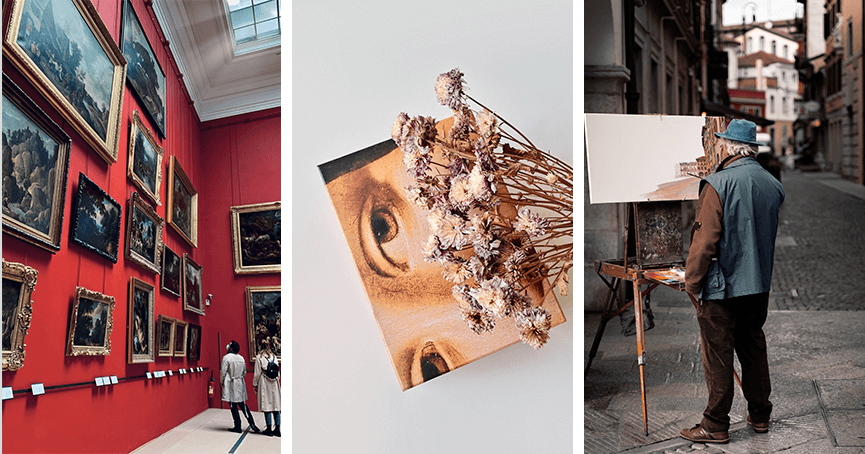
An arsenal of content that is at your disposal :
stories (something from life, successes, failures, interesting projects);
professional publications (opinions, reviews, news);
behind the scenes (working moments);
cases (completed projects, how we helped the customer realize his dream, etc.);
training (tips, recommendations, secrets);
motivation (what books do you read, how do you improve your skills, how do you keep yourself in good shape, etc.);
personal (hobbies, interests, travel, habits, etc.);
interactive (games, contests, puzzles, surveys).
Another important point is promotion. It's a labor-intensive process that requires a lot of financial and other resources. But it's essential, because without it, no one might even hear about you.
targeted advertising;
SFS (mutual PR);
guest posts in other communities;
activity in professional communities;
direct activity with the target client;
SEO promotion;
interviews with celebrities.
Yes, there's a lot of work to be done. But the key is to remember that well-designed social media and an effective promotion strategy are an excellent investment in the future of a renowned artist.
1. Post Stories on a schedule .
Don't focus on tactical matters instead of strategic ones. If your content is truly engaging, your audience will see it regardless of when you publish it.

2. The main thing is to launch advertising correctly .
This is important, but it doesn't guarantee success. As we discussed in the previous section, it's crucial to focus on what exactly you're advertising. Only then will it yield good results.
3. Not communicating with your audience .
Be sure to respond to comments and messages. This will increase your audience's empathy, trust, and loyalty.
4. Proclaiming yourself an expert without being one .
It's important to be realistic about where you are now, without giving in to impostor syndrome or inflated self-esteem.

5. Starting without a content plan .
Publishing something haphazardly is a bad idea. Formulate at least some rough outlines of the topics you'd like to cover and analyze what resonates most with your audience.
6. Fear of hate .
The presence of criticism simply shows that you're not standing still. It's important to pay attention to its percentage and, if it's too much, address the mistakes promptly.

7. In your personal brand, do only what you want .
It's worth paying attention to your audience's preferences as well as your own, and looking for a happy medium.
1. Daniel Arsham is an American artist and sculptor. His works feature many whites and grays, with almost no bright colors. This can be explained by Arsham's color blindness. He works extensively with plaster, creating "trompe l'oeil" sculptures. He is also known for his "crumbling" plaster and concrete works: clothing with holes in it, cars with holes in them.
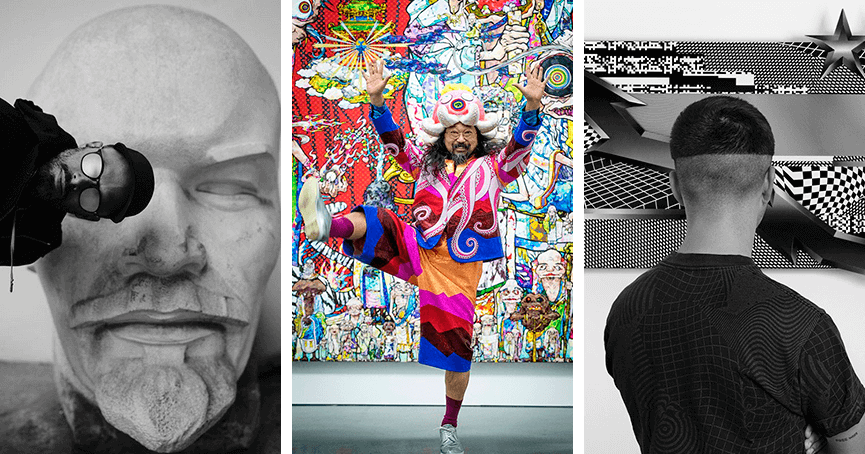
2. Takashi Murakami is a Japanese artist. His arsenal encompasses virtually everything: painting, animation, fashion, design, graffiti, ceramics, and more. Murakami's works are distinguished by their vibrant colors and often simple geometric shapes. Murakami devotes considerable time to comics and traditional Japanese techniques like silkscreen printing, employing a "super-flat" style of depiction, depicting body parts with deep burns, and so on.
3. Felipe Pantone is an Argentine-Spanish artist who became famous for not allowing his face to be photographed, citing a desire "for people to focus on his art, not his appearance." Felipe's work is characterized by a combination of bright colors and jagged geometric lines, a popular motif in personal computer advertisements at the dawn of their popularity. The Village Belarus previously reported that Felipe Pantone designed the label for a limited-edition bottle of Hennessy in 2019.
4. Ai Weiwei is a Chinese artist and architect known not only for his work but also for his repeated persecution by the authorities. He creates urban sculptures and installations that can be seen in cities around the world, and one of the largest works he was involved with is Beijing's "Bird's Nest" National Stadium. Weiwei's profile features not only his own works and numerous selfies, but also footage of street protests and police crackdowns.


5. Elena Sheidlina is a model and artist. She creates images in the spirit of Alice Carroll, who has fallen into the future. Each photo is the result of boundless imagination and extensive work. Lena's talent is reflected in her 4 million followers and hundreds of visitors to her solo exhibition in St. Petersburg.
If you're inspired to create your own personal brand, you might want to check out the selection of books we've listed below.
Food for thought:
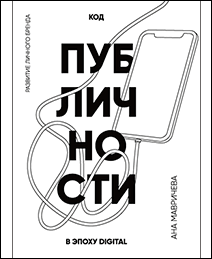
Ana Mavricheva, "The Code of Publicity: Developing a Personal Brand in the Digital Age."
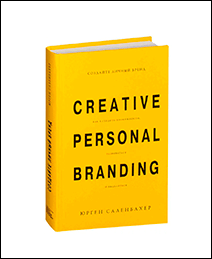
Jürgen Salenbacher, "Create a Personal Brand: How to Find Opportunities, Grow, and Stand Out."
Hubert K. Rampersad, "Authentic Personal Branding: Selling Yourself When No One Is Buying."
Sam Horn, "How to Make Your Brand Stand Out from the Crowd."

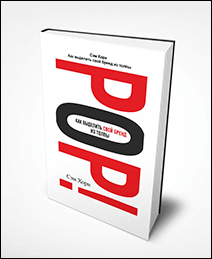
To effectively manage such a powerful tool as branding, you'll need to sift through a huge amount of information to find what's most relevant to you. But despite this labor-intensive process, the results will be worth the effort.
If you're ready to work on your personal brand and you really want to, we'd be happy to help you!
As you've already realized, promoting and developing your personality is a very labor-intensive and complex process. To avoid rapid burnout and budget drain, it's best to delegate this important responsibility to true professionals.
Our team will develop an effective strategy for you that will highlight your strengths and uniqueness, create a strong connection with your audience, and dramatically increase the value of your work.
We immerse ourselves fully in your project, carefully examining all possible aspects and pitfalls.
We analyze the market, competitors, and target audience at the molecular level.
We develop an effective brand strategy and positioning.
We channel our creativity into the multi-layered visual component of your future brand (website design, documentation, business cards, souvenirs, as well as a logo, corporate identity, branded fonts, and social media design).
We create a loud nickname, slogan, legend.
We are developing a brand book (brand description – mission, values, goals, philosophy).
We are engaged in promoting personal brands.
Have we piqued your interest? Now's the time to discuss all the terms!
For a consultation and to clarify the cost of your order, please call us or submit an online request. You can also ask a question via the chat on the website.
Entrust your personal brand to us and save yourself from numerous mistakes!