
Receive a presentation of services and expert advice
The best people in the industry oversee your brand development process
→ Need branding, design, or creative solutions? Call us at +48 505 648 022 or message us on WhatsApp.
 WeLoveBrands.pptx

The best people in the industry oversee your brand development process
Many believe that the business card has become redundant as an advertising tool. After all, once it no longer serves the purpose of introducing a company or product, it's no longer necessary. But that's not true. Today, a business card is more than just a 90x50 mm sheet of paper with information about a specialist and a way to exchange contact information. It's part of a company's image, a reflection of the individuality and character of the business. And for psychologists, it's also a way to emphasize their status and professionalism.
Therefore, a psychologist's business card is an effective tool for promoting services, regardless of the size of the business or the number of clients. It can help establish the image of a reliable, stable company, create a positive impression, and increase awareness and trust among the audience.
To emphasize professionalism and create a recognizable visual image that evokes positive associations, it's worth using psychologist business cards. They not only help establish partnerships and introduce potential clients to the company or a specific specialist, but also shape the overall impression and influence how clients perceive services.
The main goal of a "soul healer" business card is to inspire confidence in the results and loyalty to the specialist. How can this be achieved? Consider a number of nuances.
Veracity of information . It's important to highlight your actual knowledge, experience, and accomplishments. Don't write "Dnipro's best psychologist" on your business card if you don't have any evidence to back it up.
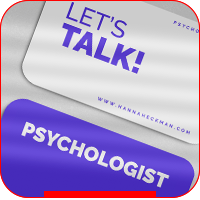
Material Quality . Make sure the material you use for your business cards also works to attract customers. Instead of standard coated paper, consider using Touche Cover, for example, with a silky, comfortable surface. While these cards will cost more, they'll also attract tactile customers who value kinesthetic sensations.

A unique logo . Instead of the standard human brain logo or its interpretations, which are most commonly used by psychologists, design your own unique logo. Let it fully reflect your professional approach to treatment, highlighting your unique features and personality. Such a logo will stand out from the competition and attract your target audience.

The right color scheme . The design doesn't rule out dark tones, but white is a risky color for a psychologist's business card. Such a design won't inspire confidence in someone with a mental illness. Therefore, if you do decide to use it, make sure it's not the primary color.

A mini-storyline . This adds a unique twist to the design, which is important for a business card whose purpose is to engage consumers in your services, increase brand recognition, and build trust in the professional. Play with the text, choose unusual images, tell a short story using visual elements, or include a quiz or riddle. This will make the card more engaging and, therefore, more effective.

Balance text and space . The amount of information on a business card should be optimal: not too much and not too little, so that the reader understands what is being discussed and what benefit they will receive, but at the same time, so as not to overload the card.

Contact information . If you don't have the funds to develop a website, create business accounts on social media and place links to them on your business card. You can also add an email address, messaging apps, or a QR code that takes the customer to the desired page with one click and allows you to quickly save the contact to your phone.
By considering all these nuances, you can create an attractive psychologist business card that will attract attention, stand out from the competition, and generate trust and interest in your services.
When designing a business card, text—or rather, its quantity—is crucial. Avoid including too much information, as this can distract the client and create a sense of pressure. However, too little information is also bad. It can make the client unsure who the specialist is and why they should contact them. To achieve a harmonious layout, it's important to remember the purpose of the business card and provide only the information that will help achieve that purpose.
In general, a business card should contain basic information about the company/specialist.
 first and last name;
 main specialization, information about education;
 a telephone number to call to make an appointment for a consultation and the address of your office;
 additional contact information – e-mail (your name and paid domain), social networks, instant messengers;
 mission or goal of the company.
It's inappropriate to mention promotions or discounts on a psychologist's business card, unless it's a limited edition for an event, such as a webinar on a specific topic where every fifth person who registers will receive a discount. However, a business card can also serve as an invitation to a free consultation, a ticket to a drawing, or a bonus flyer.
You can supplement the text with a subtle call to action that will encourage your audience to take the desired action. A catchy saying or personal slogan would also work.
The information on a psychologist's business card should be clear, understandable, and useful so that people can see what area of work is being discussed and how they can benefit.
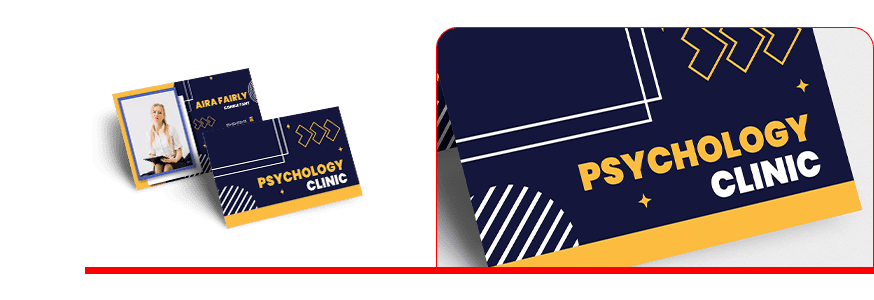
All text must be legible. To achieve this, it's recommended to use a beautiful, legible font, or, better yet, develop a unique, branded one. If you have your own logo, be sure to include it as well. It's an important branding element. If not, contact the WeLoveBrands agency to develop your corporate identity or individual elements.
Psychology is a profession focused on clients, their needs, pain points, and desires. To increase demand for your services, you should subtly remind them of your presence, including with a business card.
To attract attention, a psychologist's business card design should not only be attractive but also informative. Therefore, it's a good idea to choose images that convey the type of work they do (for example, child specialist, family psychologist, sexologist, or personal growth coach).
The design should be simple and minimalist. Creative approaches are encouraged, but be careful not to overdo it. After all, it's important for a psychologist to emphasize professionalism, project a serious, reliable image, and reflect their values.
 symbols of harmony;
 images showing the work of thought;
 abstract figures;
 photos of happy people;
 Schematic drawings of the attributes of a psychologist's activities.
But avoid trivial symbolism. It's better if the image tells a short story, conveying an idea.
Avoid using formulaic solutions. On the one hand, it can be depressing, on the other, it won't stand out from the crowd, and on the third, it will make you look unconcerned about the impression you make.
As for the image, it should convey some meaning, not be just there for show. If you have a large blank space, you can include your photo there to build communication and increase trust. This will give the person holding the business card an idea of who they'll be communicating with.
When choosing a shape and size, stick to classic designs. A rectangle measuring 90 x 50 mm is the best option. Of course, you can soften the corners a bit by using an oval or circle, but avoid business cards that use a construction set or transformable shapes. People who come to a psychologist want to solve a specific problem, so they don't need another "puzzle."
The color scheme of your business card directly affects how a potential client perceives you as a specialist even before they schedule an appointment. Color also influences whether or not a meeting will take place. This is because people pay attention to the visual image first, not the text, and because each color evokes specific emotions and associations. This happens on a subconscious level. That's why color is so important.
By choosing the right color combinations for your psychologist's business card, you can achieve your goals—attract attention, generate interest in your services, stand out from the competition, motivate people to take a targeted action, and more.
A psychologist's business card should be designed in subdued, soft tones. This is because a calm palette inspires trust, enhances loyalty, and conveys poise and serenity.
For the background, you can choose subdued shadesof green, purple, blue, yellow, or crimson. However, darker, more saturated colors like gray, brown, or even black are also suitable, if they are diluted with, for example, white.
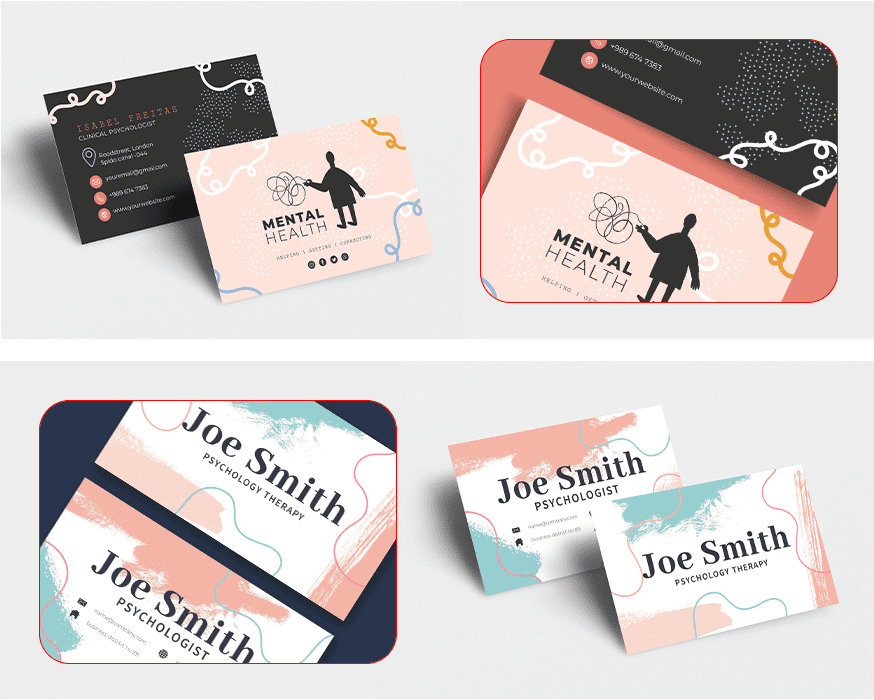
Avoid bright and flashy designs. Loud colors can be irritating and unwelcome, which is unacceptable for a psychologist's business card. Furthermore, such a color palette distracts from the information displayed.
At the same time, don't go to extremes by using white as the primary color. It can evoke associations in the client's mind with doctors' rooms and hospitals, rather than professional help in setting personal boundaries, working through relationships, and a number of other psychological issues.
When designing a business card for a psychologist, don't skimp on materials, as both tactile sensation and aesthetics are important. If the business card is attractive, stylishly designed, and pleasant to the touch, it will create a positive impression, increasing the chances of interest in your services.
So, you don't have to use standard coated paper. You can choose a different material, such as designer Touch Cover paper. The double-sided latex coating creates a rose petal-like sensation. The matte, rubberized texture of the business card creates a luxurious and elegant look. Furthermore, the soft, silky surface is resistant to mechanical damage and stains.
Choose your business card material carefully, as it plays a significant role in forming impressions of the psychologist. The more pleasant the paper is to the touch and the more aesthetically pleasing it is, the more positive the potential client's attitude toward the specialist will be.
In addition, you can use various modern printing technologies to highlight important details of your business card.
Among them:
 selective varnishing;
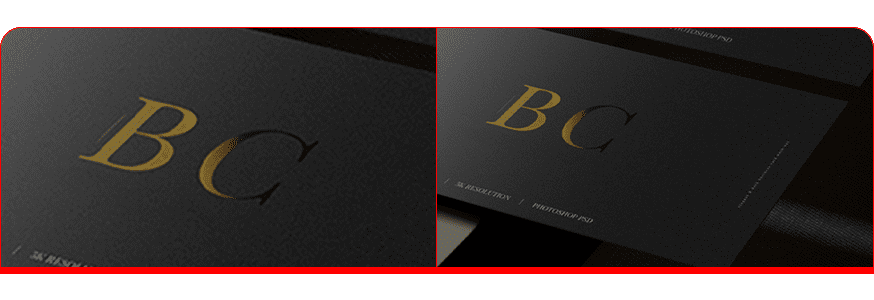
 3D varnishing;
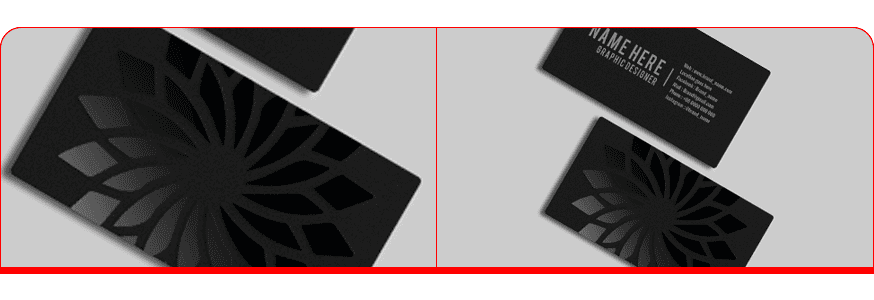
 foiling;
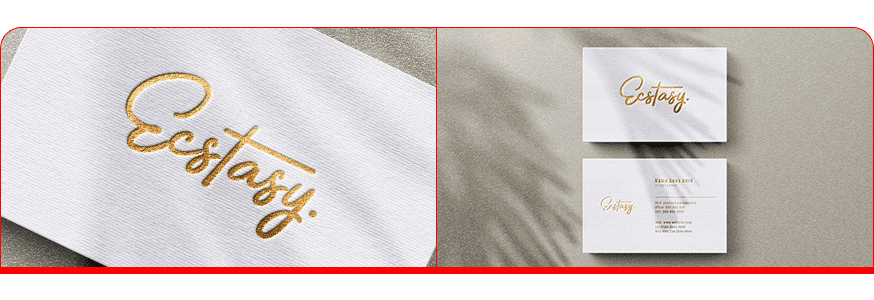
 soft touch coating;
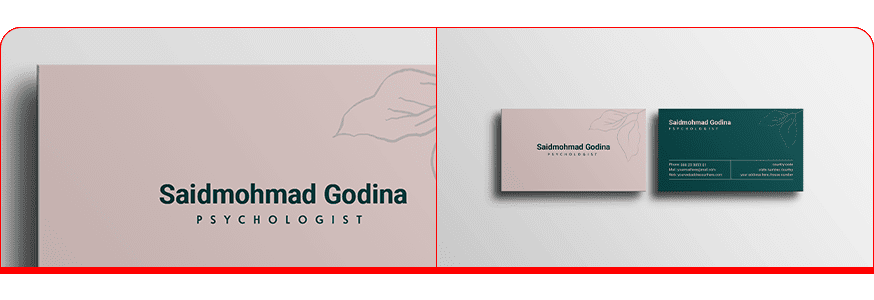
 twin spot varnishing, etc.
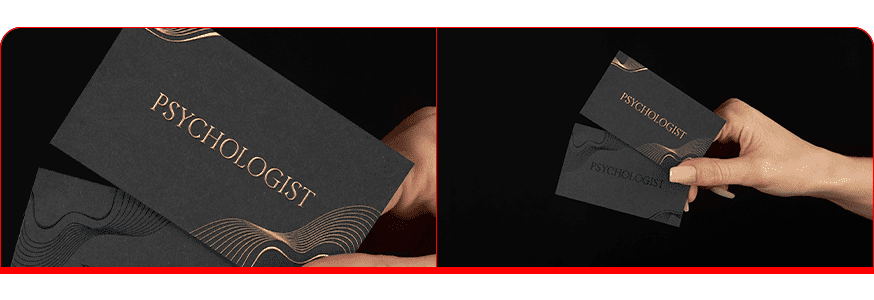
Using modern materials and printing methods, you can create a stylish, attractive psychologist business card that will enhance recognition, differentiate you from competitors, and generate interest in your services. But remember, it's important to choose not just the most expensive and exquisite paper, but a material that matches your specific needs and reflects your status, character, and values.
To gain inspiration and borrow some effective techniques, you can study the work of different designers and analyze the business cards of other psychologists. Look at the colors, shapes, styles, and symbols they use, pay attention to the materials and printing methods, and evaluate what you like and dislike about their business cards. This will help you understand the direction you should take and what design elements to incorporate.
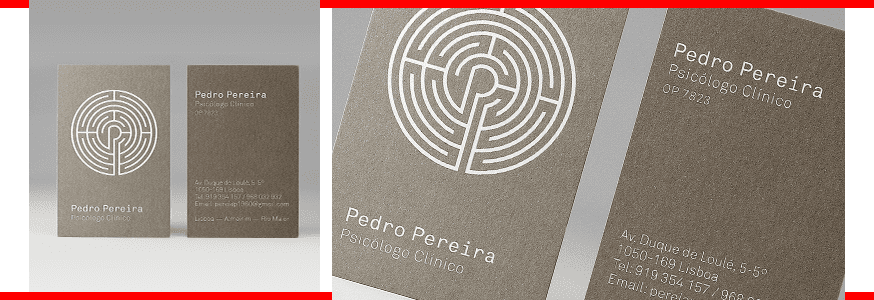
Pedro Pereira's business card, a specialist at a psychology clinic, is made of tactilely pleasing and visually appealing paper in a soft gray shade. Text and an image are printed on both sides using foil. The latter is shaped like a labyrinth, suggesting a confused person.
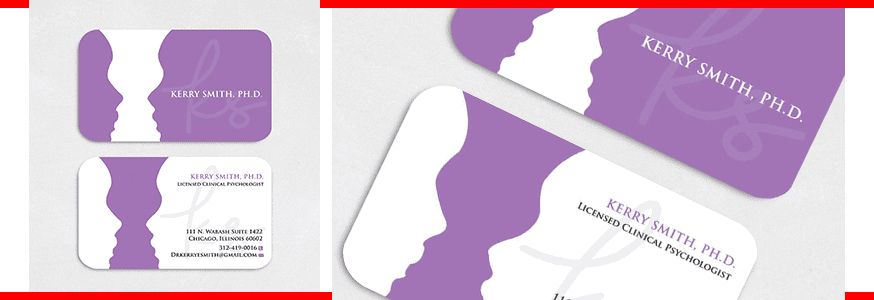
To create a sense of intimacy, licensed psychologist Carey Smith used silhouettes of two people conversing closely on her business card. The palette consists of white and soft purple, and the text is printed in black.
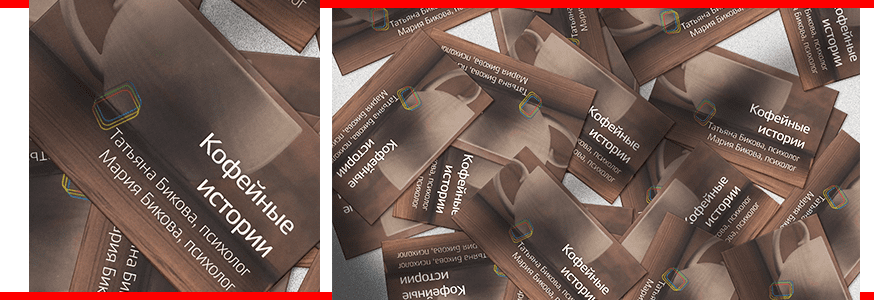
"Coffee Stories" is the name of the practice of two psychologists, Tatyana and Maria Bykov . The business card depicts a cup of coffee on a pleasant brown wooden table. This card conveys an atmosphere of comfort and trust.
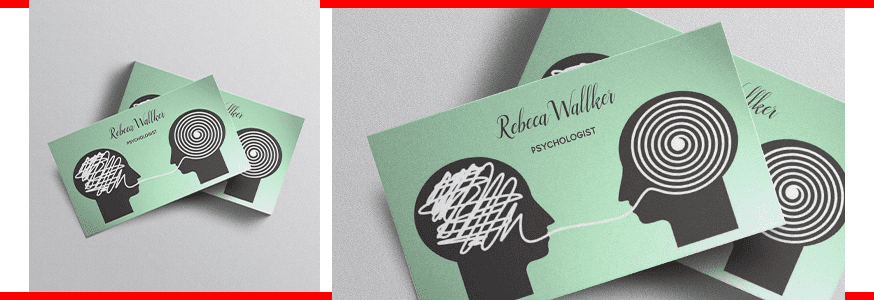
To illustrate the psychologist's ability to organize thoughts, Rebecca Walker's business card featured two human heads (one with a chaotic design inside, and the other, where thoughts take shape through communication). The background was a soft turquoise, while the design itself was dark gray and white.
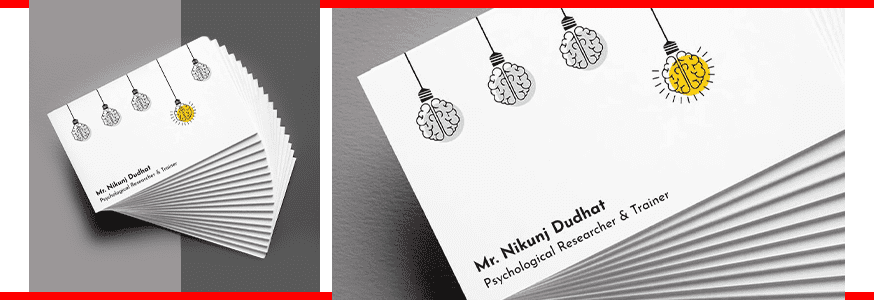
On the business card of research psychologist and trainer Nikunj Dudhat, the human brain is depicted as gray light bulbs. But one of them glows yellow.
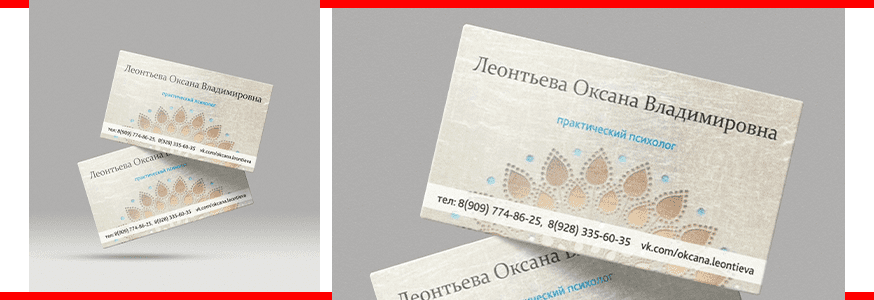
Spiritual practices coach Oksana Leontieva used an image of a blossoming flower with foil-printed petals for her business card. The card has a pleasant texture and a warm gray-beige background.
You can use similar techniques or choose something unique. In any case, the design is driven by the idea and a specific message to the audience. Consumers should not only understand the services a specialist offers, but also remember them and want to schedule a consultation. This goal can be achieved through carefully selected design elements that reflect your personality.
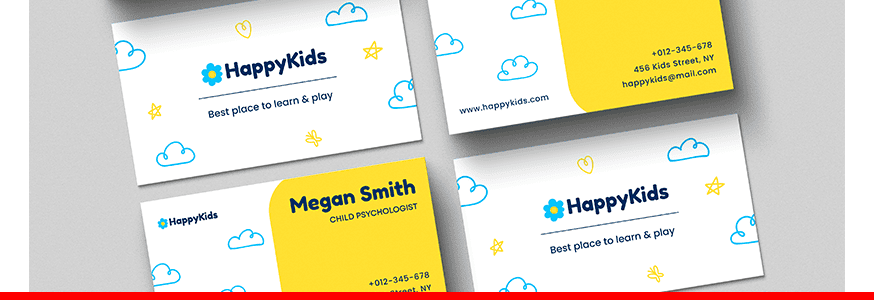
The business card of a psychologist who works with children differs from that of specialists who treat other types of patients. The main difference is color. Brighter tones are acceptable, such as orange and yellow, or a combination of different saturated shades. Cartoon characters or images that look as if they were drawn by a child are also often used. This could include an image of the therapist conducting therapy with a child while playing, happy children, animals, etc.
Business cards for family psychologists specializing in therapy with families or couples should contain relevant information and images (family idyll, a warm, homely atmosphere, an umbrella under which a family gathers, fingers embracing each other, silhouettes of people communicating, etc.). It's good if such business cards reflect comfort, happiness, and love.
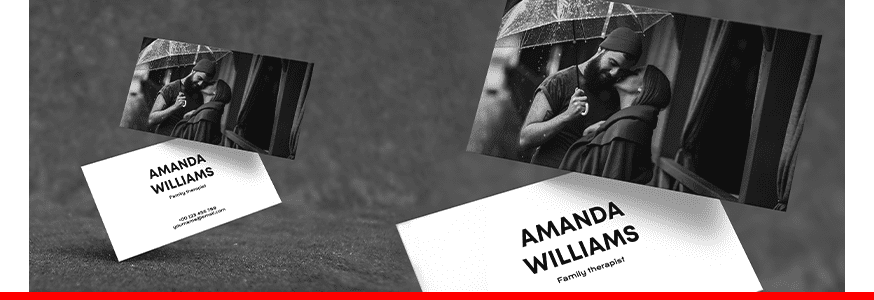
A business card for a psychologist specializing in sexual issues must clearly indicate their specialization. The design can include silhouettes of lovers, images of a couple on a date, two crossed fingers forming a single heart, graphic symbols of a man (arrow) and a woman (plus sign), and so on. It's also acceptable to include, for example, a compatibility test game on one side of the card.

A personal growth coach's business card should communicate their specialization—Eastern spiritual practices, business consulting, neurocoaching services, etc. A different design would be appropriate for each specialization. For example, a spiritual practitioner might choose a bright palette and intricate patterns, a business coach might use an image of a staircase, steps, or abstract symbols, and a neurocoach might choose a brain illustration, depicting thought processes in different colors. An uplifting quote on the card would also enhance the impression.
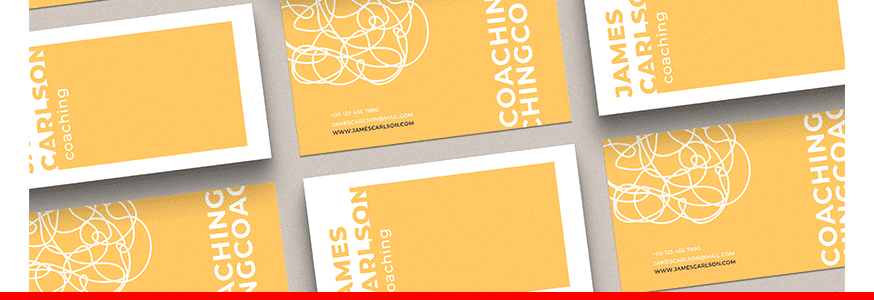
If you're looking for a business card for a psychologist in various fields—child psychologist, family relationship specialist, sexologist, or personal growth coach—contact the WeLoveBrands branding agency. Our designers will help you create a business card that perfectly matches your image, showcases your unique professional qualities, and attracts potential clients.
If you want to make the best impression by leaving a reminder of yourself in the form of a business card, order a design from our professionals. To do this, contact our managers in any way convenient for you – by phone, via messenger, or through the callback form on the website. For more detailed information about the process and service costs, follow the link .