Receive a presentation of services and expert advice
The best experts in the industry will oversee your brand development process.
→ Need branding, design, or creative solutions? Call us at +48 505 648 022 or message us on WhatsApp.
 WeLoveBrands.pptx

The best experts in the industry will oversee your brand development process.
As a bulk food product, flour is a grocery product intended for a wide range of consumers. Given its near-everyday use, its packaging design must be as versatile as possible.
Flour producers need to remember that their packaging must meet a list of requirements:
|
|
Protect the contents. To reliably protect the dry mixture inside and prevent punctures during loading/unloading and transportation, bags are made with multiple layers. |
|
|
|
Be convenient. Since flour bags often weigh close to a kilogram or more, the heavy packaging shouldn't slip out of your hands. And if the design includes handles, choose a durable material for them. An added bonus is if the bag can be resealed after opening. |
|
|
|
Be safe. The packaging must not contain materials that react chemically with food products. |
|
|
|
Developing a positive image. To promote flour sales (and other products), it's always important to consider the visual impact and consumer perception of the packaging. A well-chosen style, color scheme, and overall product benefits will help create a positive image of the product in the minds of the target consumer. |
While the first three conditions can be met at the stage of direct production of flour packaging, the effectiveness of the image function becomes apparent only after some time from the moment the product goes on sale.
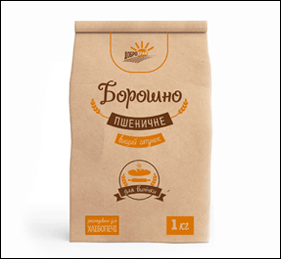
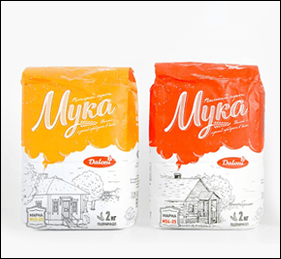
Flour packaging varies not only in size and shape but also in the material it's made from. Flexible flour packaging is the most common type found on the shelves of Ukrainian supermarkets. It's made of paper, polyethylene, and plastic film and is hermetically sealed. Some manufacturers use fabric, burlap, and other less common materials.
The generous size of the flour bags allows for all design elements to be compactly displayed on the packaging surface. The product name, manufacturer, weight, ingredients, manufacturing date, expiration date, and other information are all included. The color scheme can be either exclusively muted tones (beige, sand) or punctuated with vibrant accents (red, orange).
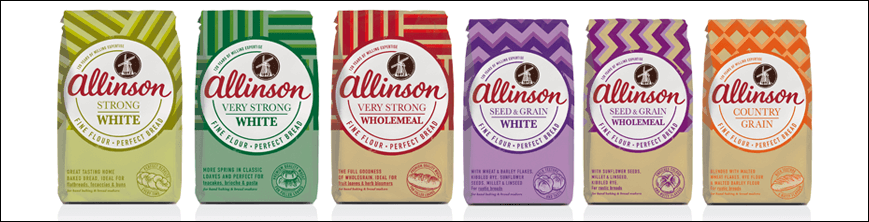
Less common, but also used for packaging flour, are cardboard or plastic boxes with flexible packaging inside. In this case, it's important to place all product information on the outer packaging so it's readily accessible to consumers. This design is more typical for premium grocery products.
 |
 |
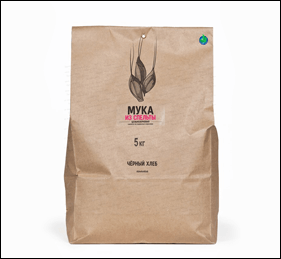 |
If it is necessary to highlight the eco-friendliness of a particular brand of flour, then this task is achieved by using natural materials for the packaging and placing special stickers/markers on it, indicating the product's organic origin.
If you're interested in high sales and the prosperity of your business, take your flour packaging design seriously. To avoid wasting time, contact the experienced designers at WeLoveBrands studio right away!