Receive a presentation of services and expert advice
The best experts in the industry will oversee your brand development process.
→ Need branding, design, or creative solutions? Call us at +48 505 648 022 or message us on WhatsApp.
 WeLoveBrands.pptx

The best experts in the industry will oversee your brand development process.
The success of a new medication on the market depends largely on a good name. It's the first step in building a brand; it's what consumers first notice. And if the name is easy to pronounce, easy to remember, and evokes positive associations, it will improve perception and recognition of the product.
This will increase sales. Therefore, the drug's name must convey such an emotional message that it will entice the buyer to purchase it.
Viagra is considered one of the most successful drug names. Although it's a single medication, it has come to be used to refer to a whole group of medications aimed at treating erectile dysfunction in men.
It follows that if the name of a drug is chosen correctly, it will ensure commercial success for the product and multi-million dollar profits for the manufacturing company.
Every new medical drug has two names: INN and TN. INN is the international nonproprietary name, and TN is the trade name. They differ in the technology used to formulate them.
 Prescription drugs
They should be easy to remember, first and foremost, by pharmacists and doctors, since they are the ones who recommend medications to patients. Therefore, euphony and originality take a back seat. Names are typically based on the active ingredient associated with the disease. Therefore, drugs are often assigned INNs, which are understood only by a select group of medical specialists.
For doctors and pharmacists, the key criterion for a successful name is the inclusion of clinical terminology. However, for the uninitiated, it may seem confusing and difficult to pronounce. For example, Isocarboxazid, Escitalopram, Fluoxetine, Chlorpromazine, Doxycycline, etc.
Furthermore, the manufacturer of the medication is important to doctors. Patients, however, will either buy what the specialist prescribed or a similar medication with the same active ingredient that the pharmacist recommends at the pharmacy.
 Over-the-counter drugs
For over-the-counter medications that consumers choose for themselves, memorability, clarity, and conciseness are important. Therefore, easy-to-pronounce and catchy brand names are developed for such medications. These are recognizable and avoid misleading consumers (Gerpevir, Vial, Nurofen, Noxprey, Magnikum, Fervex, etc.).
A successful name is one that is familiar and recognizable to almost everyone.
For example, the international nonproprietary name "sildenafil citrate" is the aforementioned "Viagra." The drug's name was created by combining two words: "strength" and "Niagara." A strong association has made the product famous worldwide. This is the work of professionals. Therefore, naming agencies that work with medical products are often tasked with coming up with names for new pharmaceuticals.
Creating a trade name for a medication requires considering many factors, so a professional approach is essential. Competition in the medical market and the intended use of the drug play a significant role. However, this wasn't always the case.
Until 1961, drug names were complex Latin words derived from their chemical formulas. These were assigned to new medications by the International Union of Pure and Applied Chemistry. For example, the familiar "Analgin" was named "sodium 2,3-dimethyl-1-phenyl-4-methylaminopyrazolone-5-N-methanesulfonate hydrate." While this complex chemical formula was understandable to chemists, it was confusing to doctors. To say nothing of patients. So a solution was found. US physicians proposed creating a special council to help transform the drug's complex name into a concise, memorable, and easy-to-pronounce formula.
It's no surprise that promoting drugs under their official names is becoming ineffective these days. Medical drugs require catchy names, just like most familiar products.
Advertising costs for pharmaceuticals are already rising. And if they have difficult-to-pronounce names, this can delay the entry of quality drugs into the market and cause significant damage to the manufacturer. Therefore, the pharmaceutical industry enlists the help of professionals to develop names for new products.
Every year, new medications emerge. These include vitamins, antibiotics, dietary supplements, antivirals, ointments, and more. Each product has a complex chemical composition and a specific purpose. People often have trouble remembering the active ingredient, so companies have to come up with simple and clear names that hint at the problem and its solution (Sonmil, Visoptic, Vitrum, Angilex, Traumeel, etc.).
How do you create an attractive, recognizable name for a medication that's easy to market and sell? Make sure it meets a number of criteria.
 brevity – the name should consist of no more than 8-10 letters;
 reproducibility – avoid complex consonant combinations so that the word is easy to pronounce and then easier to remember;
 clarity – there should be no ambiguity so that the name does not confuse doctors and patients;
 memorability - people pay attention to what is bright, unusual, interesting, so they easily remember such names (for example, the words "pshik", "jazz", "eden", "torch", "tsunami" are not related to pharmaceuticals, but they evoke certain associations and stand out from other similar ones);
 Relevance – it will be a plus if the name indicates the area of application of the drug, but without trendy words;
 uniqueness – the name should not copy others or be consonant or similar to those already registered.
A medication's name is an important branding element. Its effectiveness determines the success of its promotion.
You can find out how successful your chosen options are by evaluating them according to several criteria.
To do this, answer the following questions :
 Does the drug name evoke predictable associations?
Is it protectable?
What emotions does it evoke?
Does the name have a negative interpretation in foreign languages?
Is the name of the medication attractive and understandable?
Is it possible to add graphic elements to the written name of the drug?
By answering these questions, you'll weed out ineffective or half-baked names and retain the most effective ones. From there, you'll select those that best convey the brand's message and are most memorable to your audience.
Latin and Greek words or parts of them are often used to create trade names for pharmaceuticals. These words are familiar to most patients, and even more so to doctors—for example, derma, pharma, forte, phobia, and others. This allows for a name that reflects the product's purpose and alludes to the solution to a specific problem.
Skin treatment medications typically have their names derived from the Greek word " derma ," which translates as "skin." For example:
 Dermazole is a drug for the treatment of hair and scalp;
 Dermasan is a liquid for eliminating dry and cracked skin on the hands;
 Dermaleks Atopic is a drug for the treatment of atopic dermatitis;
 Dermacos Anti-Spot – cream that prevents the formation of age spots;
 LactoDerm is a remedy for eliminating inflammatory skin diseases.
The root " enteron " in the name of the drug indicates the treatment of intestinal diseases:
 Enterogermina – to restore intestinal microflora;
 Enterol is a medicine for diarrhea and colitis;
 Enteronorm – for dysbacteriosis;
 Enterolax – to facilitate defecation;
 Enteroclin – for detoxification.
The particle " gaster " refers to medications for the stomach:
 Combispasm gastrocomfort – treatment of gastritis;
 Gastrostop is a drug for ulcers, nausea, gas, high acidity and other conditions;
 Gastrotop – complex therapy of stomach diseases;
 Gastrofit-Tab is a medicine for gastritis, stomach ulcers and duodenal ulcers;
 Gastrofarm is a supplement for normalizing the functioning of the digestive organs.
The use of the Latin word " cor " in the name means that the drug is intended for the treatment of cardiovascular diseases:
 Valocordin – neuroses, sleep disorders, irritability, functional disorders of the cardiovascular system;
 Corvalol - tachycardia, coronary vascular spasm, hypertension, vegetative-vascular dystonia, etc.
 Cordarone – tachycardia, ventricular fibrillation;
 Corvalment - angina pectoris, seasickness, hysteria;
 Corvazan - heart failure.
The particle " algos " in the name of drugs is translated from ancient Greek as "pain", therefore it denotes a group of pain-relieving drugs:
 Analgin – to relieve pain of various origins;
 Spazmalgon – pain relief from soft tissue spasms.
The word " esthesis " (meaning feeling) is also used in the names of painkillers:
 Bellastezin – for spasms;
 Novostesin – for local anesthesia.
The particle " caine " (derived from the narcotic substance cocaine, which has an analgesic effect) is present in the names of drugs of the same group:
 Lidocaine is a solution for local anesthesia;
 Novocaine is an anesthetic for local, infiltration anesthesia and therapeutic blockade.
If the name contains the particle "chole" or its derivatives, then it is a drug for the treatment of the gallbladder (hepatoprotector): Holix, Holiver, Holenorm, Holosal Plus, Holivia, etc.
The names of medications that lower blood pressure may include the syllable "rau" (for example, Raunatin). It comes from the word "rauwolfia," a tropical plant known for its medicinal properties. However, the vast majority of names in this group of medications are associated with the active metabolite enalapril: Enalapril, Anaprilin-Zdorovye, Noliprel Arginine Forte, Captopril, Berlipril, and so on.
 Antipyretics - may contain the word "pyr", which means "fire" (Aspirin, Anopyrin, Bupirole), but this is not necessary for a memorable name (here are other examples in this group - Ibuprofen, Voltaren, Panadol).
 Anti-inflammatory drugs – Sulfacyl, Nimesil, Ortofen, Nise, Diclofenac, etc.
 Antibiotics – Azimed, Ziomycin, Azitsin, Sumamed, Novox, Ciprinol, etc.
 Antiviral drugs – Amiksin, Novirin, Flavovir, Groprim, Lipster, Viraxa, Acic.
 Dietary supplements – here the name of the main substance is most often used or the action it performs is indicated: Fish oil, Echinacea, Biotin, Immustat, Multigrip Phyto, etc.
 Hormonal – Progesterone, Tyrozol, Klayra, L-Thyroxine, Letero, Divigel.
 Psychotropic drugs – Adagio, Abizol, Azapine, Betamax, Olasin, Solex, Strezam, Frame, etc.
All of these names are short, easy to pronounce, and memorable. To create a strong connection with your product, you don't necessarily need to mention the main active ingredient, as this could lead to the name becoming similar to competitors'. To create a recognizable, original name, it's worth trying to use words that are unusual in the medical field. However, this will require a well-thought-out marketing strategy to create associations with the drug and shape the desired image in the minds of your audience.
Naming a drug is the first step in promoting a product on the market. Who develops and tests it, and analyzes the target audience's response? Read on to find out.

At first glance, it seems that drug naming should be the responsibility of the manufacturing company's employees or executives. They know the development history, the formula, and the specifics of the molecular compound. Therefore, it's believed they are better suited to this task than outsiders.
However, pharmaceutical developers lack expertise in naming. This is a serious matter that requires a professional approach. Market analysis, assessment of competitors and target audience needs, development of a corporate identity and packaging design are required before name generation can begin. Consequently, manufacturers often turn to agencies and studios that specialize in creating names and brands from scratch. A successful drug name ensures the competitiveness of a new product, increases its recognition, and, as a result, generates profits for the company.
WeLoveBrands, a branding agency, specializes in naming. Our specialists offer a full range of services for brand name creation, from market research, competitor analysis, and target audience analysis to subsequent brand promotion.
Naming is a complex and multifaceted process of developing a name. At our studio, naming a new medical product begins with preparing the technical specifications. The client completes a pharmaceutical naming brief and selects a suitable option based on price.
 name for a regional pharmaceutical product – $210;
 Trademark name of a medicine for registration in Ukraine – $350;
 Name of the medicine for registration in the European Union and post-Soviet countries (except the Russian Federation and Belarus) – $630.
Once the brief is completed and the details are agreed upon, specialists begin creating the name. This is a step-by-step process.
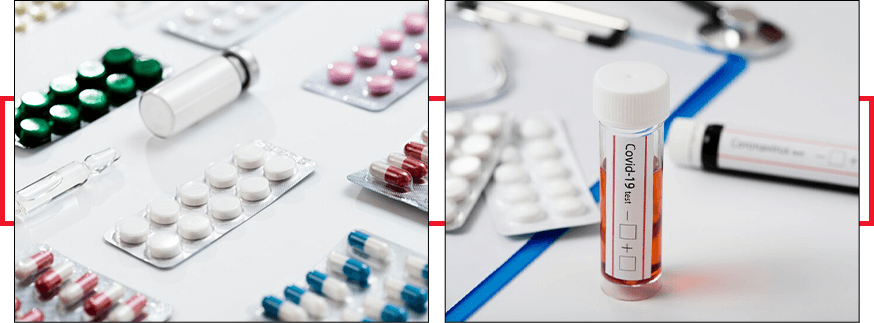
 Research . Developing a name for a new drug begins with analysis. It's necessary to research the target market and develop a profile of the potential customer, understanding their preferences and product requirements. This will help clarify how to position the drug. Competitors' names are also reviewed to avoid duplication and understand how to differentiate themselves, as well as identify naming trends.
 Pharmaceutical product analysis . The drug is analyzed for its pharmacological and chemical properties, indications, contraindications, methods of administration, interactions with other medications, and effects on the human body. It is necessary to determine what feelings and associations the name should evoke in the target consumer.
 Concept development . The brand's core idea—its image—is created. This will serve as the foundation for the brand's name, logo, and corporate identity.
 Name search . Based on the collected data and the client's requirements, an "association tree" is created and options are selected, differing in style and presentation.
 Selection . Based on the listed properties that a medicinal product name must possess, all identified variants are screened.
 Approval . The selected titles are sent to the client for approval. The reasons for the selection, as well as any hidden messages and meanings, are listed under each option.
Once the client has chosen a desired name, it must be registered with the State Department of Intellectual Property and its affiliated agency, Ukrpatent. The cost of registering a name is approximately $130.
For more information about naming, development stages, and pricing plans, visit the official WeLoveBrands agency website at this link . To create a memorable drug name and a unique, recognizable brand identity, call us or message us via messaging.