Receive a presentation of services and expert advice
The best experts in the industry will oversee your brand development process.
→ Need branding, design, or creative solutions? Call us at +48 505 648 022 or message us on WhatsApp.
 WeLoveBrands.pptx

The best experts in the industry will oversee your brand development process.
Almost everyone has heard of exquisite Swiss watches and delicious Swiss chocolate. This article will discuss a concept less familiar to a wider circle: "Swiss design." For nearly 100 years, it has remained relevant and today enables successful implementation of modern business objectives.
Swiss (international) style is rightfully considered the king of precision and simplicity among all other graphic styles. It prioritizes functionality and the purpose of the design, relegating decorativeness to the background. According to the philosophy of Swiss style, a designer should be first and foremost an artisan, not an artist.
This style incorporated elements of Russian Constructivism, photography, Arts and Crafts, the Bauhaus school, and the De Stijl group. As demonstrated by the works of Armin Hofmann, Ernst Keller, and other pioneers of the Swiss Style, it is characterized by a lack of decorative elements and a commitment to objectivity and clear communication.
The pragmatic and thoughtful Swiss style, with its characteristic attention to detail and high-quality printing, has influenced graphics and graphic design, as well as painting, architecture and sculpture.
Advantages of the Swiss style in design:
 emphasizes the organized structure of the brand;
 creates a laconic and clear image;
 promotes brand recognition.
Swiss style, one of the main trends of the modernist movement, emerged in Switzerland in the 1920s. The founder of the Swiss school of graphic design is considered to be the German typographer and designer Jan Tschichold.
The rapid development of Swiss graphic art worldwide began in the post-war period (in the 1960s), when, following the recovery of European industry, its products began to be offered on international markets. Swiss style was ideal for attracting the attention of a multinational consumer.
Swiss style is based on simple geometric shapes and abstractions. Therefore, its key characteristics are structure and order, making it a suitable choice for graphic design for a brand with an emphasis on structure.
One of the greatest achievements of the Swiss style was the development of a modular (mathematical) grid for use in grid design. This element significantly simplifies the creation of a content hierarchy and simultaneously organizes space.
The main distinguishing features of the Swiss style:
simplicity and conciseness;
precision and functionality;
readability;
free space;
modular grids;
sans serif fonts;
asymmetry in the arrangement of blocks;
use of photographs.
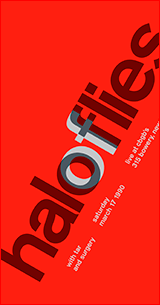

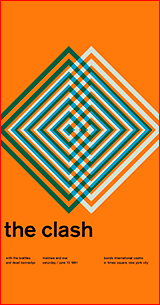
Swiss style was initially particularly popular in the pharmaceutical and mechanical engineering industries. Among the renowned graphic designers whose services were sought by major pharmaceutical and mechanical engineering manufacturers were Karl Gerstner, Jörg Hamburger, Gérard Ifer, Andreas His, and others.
If you want to highlight your business's qualities such as attention to detail, integrity, honesty and openness, a focus on quality results, and maximum customer protection, then the precise Swiss style is ideal. However, brands with an elegant, sophisticated, luxurious, or feminine image, as well as businesses targeting children, should avoid the Swiss style.
Design work in the Swiss style is characterized byvibrant , often dynamic , eloquent compositions , as well as clear typography . Another distinctive feature of this style is bold headlines .
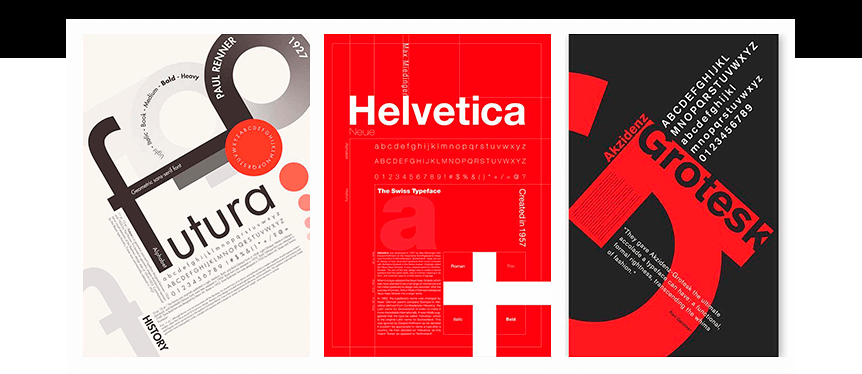
Representatives of the Swiss school of typography developed simple, versatile, and easy-to-readsans-serif typefaces : Transit, Saskia, Zeus, Sabon, and Uhertype Grotesk. In the 1970s, they could be seen on New York City subway signs. A neutral typeface helps emphasize the content of the text rather than the letterforms. The most popular Swiss-style typeface is the familiar Helvetica.
In its early days, the Swiss style found widespread expression in industrial design, particularly in the visual design of advertising materials such as posters, postcards, stamps, book covers, magazines, and so on.
In today's world, the Swiss style is in demand in graphic design for posters, labels, print advertising, and print media layout. In all illustrations executed in this style, the main information is the first thing to catch the eye, and then everything else. Moreover, when it becomes necessary to use illustrations, photographs are preferred over drawings.
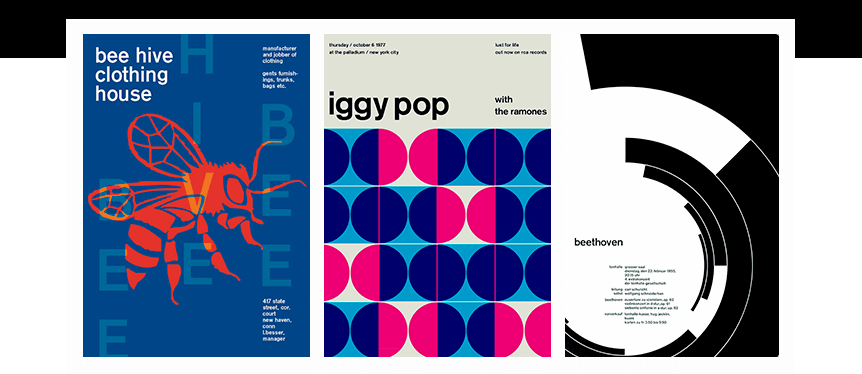
Swiss style is widely used in the creation of typography for corporate identities, as all elements must be clearly structured, visually tangible, and accessible to the user.
In logos and other elements of the corporate identity , it is clearly evident that order prevails over art, and a modular grid helps achieve complete harmony in the composition.
When you order a Swiss-style logo, you can be sure you'll receive a logo that's as simple and uncluttered as possible.
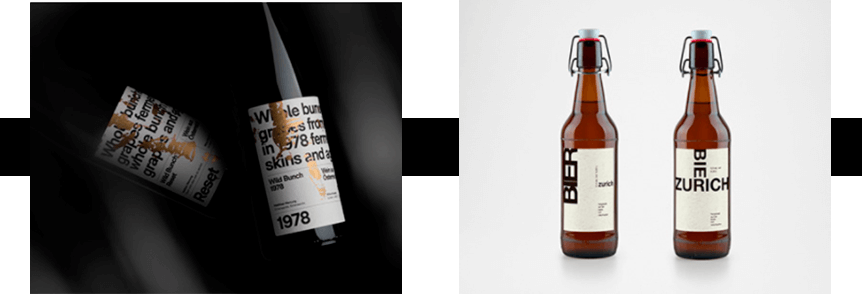
Swiss style has been and continues to be widely used in pharmaceutical packaging design. Its use of white space allows for the best possible communication of the message.
Advertising copy on Swiss-style packaging is highly eye-catching, improving communication with the viewer and increasing the chances of the copy being read.
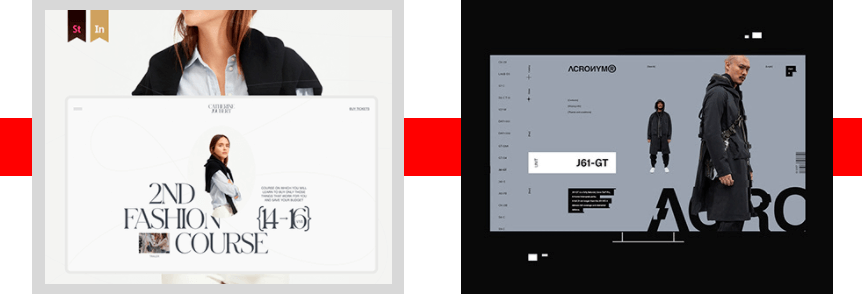
In the 21st century, Swiss-style design can be seen not only in advertising but also in web design and user interface development for modern gadgets. The emergence of the latter gave impetus to the emergence of modern Flat design from the Swiss style, with its characteristic simplicity, open spaces, and readability.
In web design, Swiss style involves using a grid for design, complemented by an asymmetrical layout.
Swiss-style graphic design is well received by Ukrainian consumers, making it popular today for logos and other identities. The precision of each line and letter creates an organized, consistent brand structure.
Many designers study the characteristics of the Swiss style and use its principles when developing unconventional websites, as well as original printed materials that attract the attention of the client's potential clients.
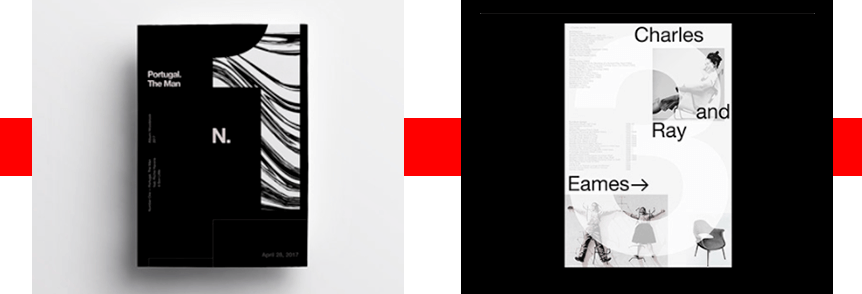
The Swiss style attracts many graphic designers worldwide. One of the most famous is Ralph Schraivogel, three -time winner of the prestigious Chaumont International Poster competition (1996, 2010, and 2017). The designer has created book covers and developed styles, but is best known for his posters.
New York designer Mike Joyce is also a devoted admirer of Swiss modernism. His work includesrock concert posters, which can be seen on his website swissed.com.
Another typical representative of Swiss contemporary design is Niklaus Troxler. He specializes in architectural projects and event design concepts.
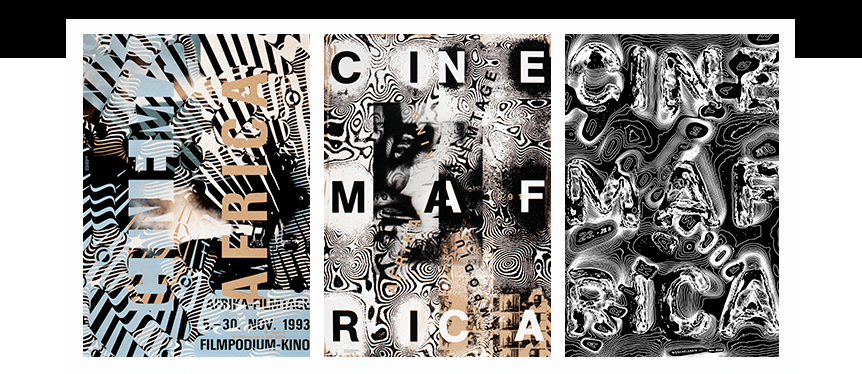
If you need a Swiss style design, you can order it:
from a freelancer at a lower price, but without a guarantee that he will do the work on time and in the best possible way;
In a web studio , the service will cost you more, but you will receive a higher-quality result in accordance with your requirements within the timeframe specified in the official contract.
When ordering a Swiss-style design, WeLoveBrands studio offers several pricing plans, varying in terms of delivery time and the number of options provided. Our team of professional designers works on the design, ensuring you receive a result that fully meets your requirements and helps you achieve your future business goals.
Depending on the type, volume and complexity of the work, the cost of developing a design in the Swiss style is: from $20 - printing , from $130 - corporate identity, from $150 - logo .
To clarify details and find out the exact cost of your order, leave a message in the online chat on this page or call us .