
Receive a presentation of services and expert advice
The best people in the industry oversee your brand development process
→ Need branding, design, or creative solutions? Call us at +48 505 648 022 or message us on WhatsApp.
 WeLoveBrands.pptx

The best people in the industry oversee your brand development process
Every business needs advertising. It's used for promotion by small local coffee shops, startups with teams of up to ten people, and global giants. According to eMarketer, global spending on online advertising will reach $375 billion by the end of 2021. Therefore, the demand for qualified targeting specialists is only growing.
How can you find a high-paying job, gain the freedom to choose your own projects, and avoid living paycheck to paycheck? How can you stand out from your competitors, attract more clients, and increase the value of your services? Develop your personal brand . The experts at WeLoveBrands shared how to get started.
The advantages of working as a targeting specialist include no need to go to the office every day, the opportunity to work a flexible schedule, or go freelance. Furthermore, targeting is a highly sought-after and well-paid field. According to the career portal Work.ua, the average salary of a targeting specialist in Ukraine is 330 $. In Kyiv, employers are willing to pay specialists around 440 $.
There are also vacancies with salaries exceeding 1100 $. Currently, 380 companies are searching for targeting specialists on the website, with salaries reaching 2640 $ for specialists working at international companies. Higher-paying positions require additional skills, such as contextual advertising, managing a targeting department, and more.
Personal brandingallows you to increase your marketability, earn more with a lower workload, or establish your own agency.
A "personal brand" is the image you project within your professional community. It can include associations with a particular company, completed projects, orthe imageof a professional. Prominent examples of a strong personal brand include Richard Branson, Steve Jobs, Oprah Winfrey, and Kim Kardashian.
Do you work in a highly competitive field? Are your services priced higher than the average targeting specialist? Then you should developa personal brand. In the service industry, people are accustomed to relying on a specialist's name and expertise. Malevich's "Black Square" is worth millions of dollars because it was created by Malevich. It's unlikely that anyone would buy a similar piece of art if you painted the square. And a visit to a popular doctor or lawyer will cost people much more than to a specialist few know. Equally important, people are willing to pay for a name—trust, expertise, and reputation are valuable.

Every specialist has distinctive features. In branding, these are called "attributes." These include: nationality, name or nickname, slogan, appearance, personality, experience, skills, achievements, and hobbies. Only two or three attributes make you unique among other targeters. The brand manager's job is to identify these attributes and then make them more visible to the audience through the specialist's promotional channels .
For example, you set up targeted advertising for companies, which increased their website traffic by 60%. Or you achieved the lowest possible cost per click for an ad. You also held a targeting position at a Big Four company. You have over 10 years of experience in targeting, including five as the head of the targeting department. These are important and unique attributes. You're also a three-time ski champion—this isn't as important for future clients, but it makes you unique.
Find important and unique attributes that will enhance your value to future employers and clients and help you stand out from the competition. Your family status, education, and beliefs won't make your personal brand unique. However, experience and career achievements will help you achieve the wow factor.
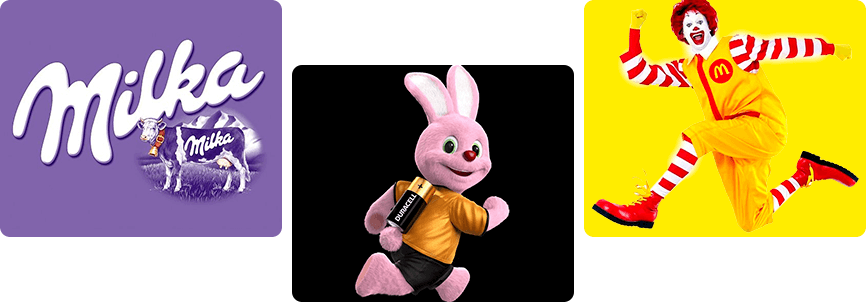
Among thousands of images, we recognize the Milka cow, the Duracell bunny, and the McDonald's clown. Brands have turned them into true heroes: they've fully developed their image, communication style, and even humor. To be remembered, it's important to "grow" your character from the ground up. Or to match the character of one of the 12 archetypes, as conceptualized by psychologist Carl Jung. This concept is actively used in marketing and branding.
In the future, the archetype will correspond to the Tone of Voice (brand voice) and even the topics of posts or articles. Each of the 12 archetypes corresponds to a driving need and mission. For example, if you are motivated by the prospect of changing people's lives for the better, your dominant archetype is the Hero.
When creating a personal brand, you need to start by analyzing: what image do you want to project in society? What associations should your name evoke? What ideas do you want to convey? What will be the focus of your content on social media?
Don't start promoting yourself without a well-thought-out image. This is the foundation of personal branding. If it's weak, the rest of your PR and promotion efforts can collapse at any moment. After developing your personal image, work on your reach and reputation. To do this:
develop your website or landing page;
create social media profiles;
share useful and expert content;
publish articles on industry resources;
write books about targeting or launch a training course;
Speak at conferences and forums, and make useful connections at professional events.
Start building your personal brand withpositioningand strategy. Choose an archetype to which your brand will correspond. Define your mission, values, and unique competencies. How do you differentiate yourself from your competitors? What ideas will you communicate to your audience?
For example, in 2019, the Planeta Kino movie theater chain launched a newpositioning:"Tse ShchÖS!" This "ShchÖS" was formed by the brand's components: crispy popcorn, the cinema's technological advancements, and the emotions the chain delivers. Planeta Kino is a movie theater where you can escape reality and immerse yourself in a fantastical world of films—about friends, with laughter, tears, and popcorn. It's a world that's both relatable and, at times, not so relatable. "Tse ShchÖS!"
The chain's Marketing Director, Max Belov, shared, "SHCHÖS' is what our employees do for our viewers—from ticket takers, projectionists, and controllers to marketers and cinema directors, raising the bar for quality every day." As part of the newpositioning,they developed a series of promotional videos about Planeta Kino: "This is art-house cinema," "This is comedy cinema," and "This is Hollywood cinema."
The next stage is the external and internal brand packaging. This includes the brand legend, core message, pyramid of promises, as well as corporateidentityand photo shoots. The final stage of personal branddevelopment is promotionand communication: an audit of communication channels, and the development of a strategy and content plan for each social network.
A personal brand isn't what you say about yourself. It's what others think of you. A lack of understanding of the principles of building a personal brand and insufficient competence can lead to wasted budgets. The most common mistakes made by beginners and unqualified professionals when building a personal brand are:
Lack of a personal brand as such .Experts often believe that a personal brand is only necessary for show business stars, athletes, politicians, and journalists. In reality, today, simply doing a good job is not enough to be a sought-after and "valuable" professional. A personal brand is essential for anyone whose potential clients use the internet.
Misunderstanding the concept of "personal brand."Many people think a brand is what a professional says about themselves, what their favorite TV channel broadcasts, or what they write about you in a paid media publication. A personal brand is the associations you have with yourself, the vivid image attached to your figure, and what others say about you.
Lack of communication with social media users . It's important to engage with your audience, respond to comments, thank them for positive feedback, and process negative messages. If you receive negative feedback, try to understand what prompted the user's reaction and whether their attitude toward you as a specialist can be improved. Constructive criticism is helpful to a target marketer, so try to get the most out of a conversation with someone who speaks to the point.
Personalpromotionisn't about getting thousands of likes on your breakfast posts. Promoting your image isn't about telling the world, "Look, I'm cool, but you're not so cool." A personal brand is a long-term investment, a guarantee of a steady stream of clients, a high income, and online recognition.

Negative feedback is often an indicator of service quality. If you receive negative reviews, it's worth examining them and addressing the most common issues. If a client is disappointed with your services, prevent them from publicly damaging your reputation. In most cases, it's best to offer a refund for targeting or a partial refund. Learn to recognize and heed constructive criticism among reviews—it will help you improve.
But there's also a flip side to this: fake negative reviews. These are paid reviews of competitors' products and services, written by PR agencies, SEO firms, freelancers, or business owners in your niche. According to CNN, approximately one in seven reviews on TripAdvisor is fake. According to a study by The Washington Post, 61% of Amazon product reviews are false.
How should you respond to negative criticism—whether genuine or fake—sent by a competitor? Respond to the review as quickly as possible, preferably within 24 hours of receiving it. Avoid emotional responses and confrontations, but also avoid making excuses. Make sure you understand the commenter's words correctly. Ask for more details if the user didn't provide all the details or if something in the comment was unclear.
Apologize for the negative experience. It's important to emphasize that every review, whether positive or negative, is important to you because it helps your business grow. If you'd like to learn more from the customer or explore their issue further, include their email address in your response to the review, asking them to contact you. Use criticism as an opportunity to improve your business. If the review is fake, contact Google Support.

Developing a personal brand is impossible without constantdevelopment—both in branding, in your field, and in marketing in general. This collection of books will teach you how to become a Steve Jobs or Elon Musk in digital marketing and create a strong personal brand. Study and implement best practices.
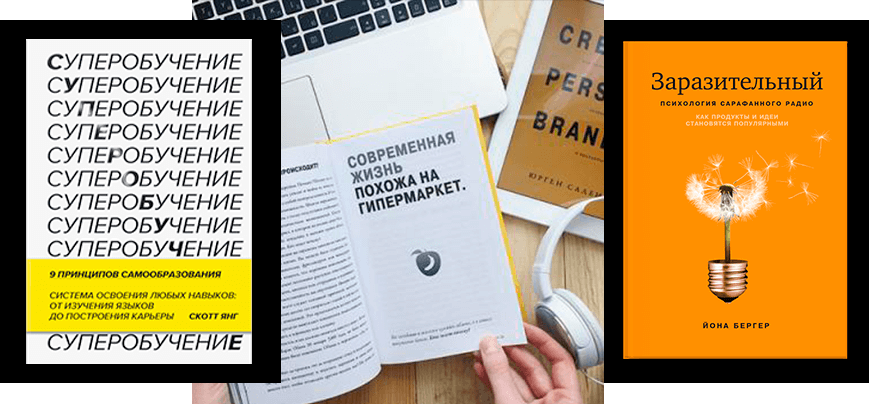
Today, self-education and lifelong learning are not a whim or an optional extracurricular, but a pressing necessity. In his book, Canadian author Scott Young shares nine principles for accelerating the learning process. He gained popularity thanks to his unusual self-study projects. He tests these programs on himself—for example, he completed a four-year Computer Science course at MIT in a year, and also learned four foreign languages in the same period.
An author with teaching experience in Barcelona (IED), Lucerne (HSLU), and Stockholm (Hyper Island), Jürgen Salenbacher helps professionals and teams identify motivation, improve their career paths, and develop their personalities. In his book, he explains how to develop creative thinking, awaken inventive abilities, and come up with compelling business ideas. The publication also teaches how to develop a personal branding strategyandeffectively leverage audience feedback.
Jonah Berger is a professor of marketing at the Wharton School of the University of Pennsylvania, a business expert, and the author of articles in leading academic journals. His book explores what makes things popular, or "contagious." Why do we talk about certain products and ideas more than others? Why do some stories spread faster than others? And what makes online content go viral? The author conducts research and provides compelling real-life examples. For example, why expensive steaks have become more popular than their more modest counterparts, or why anti-drug campaigns have fueled increased drug use.
David Ogilvy is the "father of advertising," the world's most prominent copywriter, and the founder of major advertising agencies Ogilvy & Mather and Ógilvy PR. Time magazine called Ogilvy "the most authoritative advertising expert." His agencies' clients include Adidas, Coca-Cola, Ford, Gillette, Kodak, Nestlé, Siemens, The New York Times, and Vodafone.
Ogilvy also consulted for major companies—watch brand Omega paid him $25,000 for four days of consulting on improving their advertising image. In his book, the expert explains how to create advertising that sells, how to attract and retain customers, and offers advice on managing an advertising agency.
How to conquer deadlines and get more done? How to stop feeling like a driven horse? How to find time for truly important tasks? Donald Ros, typographer, lecturer at the Royal Netherlands Academy of Arts, and creator of the smartphone app ToDon'tList, offers his signature "to-do list" method.

By learning to say "no" to one task, you'll free up time for another. It turns out that successful time management doesn't require detailed planning for the upcoming week. Simply identify your overall goals and use them to make choices about what you'll do and what you'll forego.
A personal brand is an investment that will work for you in the long term. It's a tool for finding new partners and clients. It's your safety net against difficult times and unforeseen situations. At the beginning of the 2020 lockdown, the Planeta Kino cinema chain declared a critical situation and launched the "Save the Planet!" campaign. Employees began selling tickets for the "post-quarantine" period. Tickets were sold as discounted certificates, and the brand's anti-crisis communications were enthusiastically embraced by customers. The company also won three of the most prestigious Effie marketing communications awards—two silver and one gold.
Looking to find like-minded people, future partners, investors, and just plain cool people? Contact the specialists at WeLoveBrands branding agency for a free consultation about your project and to discuss the details of a future collaboration!
We create a logo, brandidentity, and develop a selling proposition. We develop a strategy and content plan for Instagram, Facebook, Pinterest, and YouTube. We rebrand existing businesses. We meticulously craftyour imageand research your target audience. We deliver better and more impactful results than your competitors. Find new clients through your uniquepersonalitywith WeLoveBrands !