Receive a presentation of services and expert advice
The best experts in the industry will oversee your brand development process.
→ Need branding, design, or creative solutions? Call us at +48 505 648 022 or message us on WhatsApp.
 WeLoveBrands.pptx

The best experts in the industry will oversee your brand development process.
What's every restaurant owner's greatest fear? A lack of customers, of course. A restaurant may have the most talented chef and the food may be super delicious, but people still don't want to come back. What's the reason for this? Often, it stems from a simple lack of character, a distinct style and direction, and the establishment's lack of a distinct identity. Another reason is insufficient or inappropriate advertising. In this article, we'll discuss how to create a unique restaurant style and ensure it's memorable and desirable.
A restaurant's corporate identity is a fusion of graphic, stylistic, and conceptual solutions. This is expressed through verbal and nonverbal communication (fonts, illustrations, graphics, interior, and exterior).
A corporate identity has one goal: to create a specific atmosphere that customers will sense at every point of contact with the brand, from the exterior and entrance area to the smallest interior details. Taken together, all these nuances and details are intended to convey the establishment's individuality, character, and worldview.
 |
create a single recognizable image; | |
 |
improve the perception and memorability of the establishment among the target audience; | |
 |
to form the correct associative series in clients; | |
 |
to show the uniqueness and originality of the establishment; | |
 |
create a certain image. |
Considering all these challenges, it is important to create a well-thought-out, detailed, unique corporate identity and fill it with individual content.
On the one hand, developing a restaurant's corporate identity is a complex and comprehensive task, requiring extensive experience and knowledge. On the other hand, the process of bringing the idea to life is quite simple and straightforward. The most challenging aspect of developing a corporate identity is, perhaps, conceiving and honing the restaurant's core concept, its philosophy. Of course, this concept must be original, captivating, intriguing, and sometimes even outrageous. Once the restaurant concept is fully thought out down to the last detail, all that remains is to bring it to life.
Where should the process of opening a new restaurant begin? No, not with developing a menu or finding a chef. And not even with selecting staff and premises. This process should begin with developing a corporate identity. Because it is the starting point for a new establishment. Because the first thing a customer notices when looking at a restaurant is the sign, the interior colors, and the bar decor. Only then do the food and drinks come into view.
In terms of perception by the target audience, the corporate identity of a restaurant is much more important than for any brand in the service sector (a cosmetology office, for example, or a beauty salon).
A well-thought-out corporate identity involves no random elements, objects, or decisions. Every detail and every (seemingly) insignificant detail must be imbued with the designers' intended idea, supporting it and communicating it to customers. From the establishment's signage to the waiters' uniforms and the fonts on the menu, everything must be harmonious and unified.
Want your restaurant to have just such a unique corporate identity? Order branding and corporate identity development from WeLoveBrands.
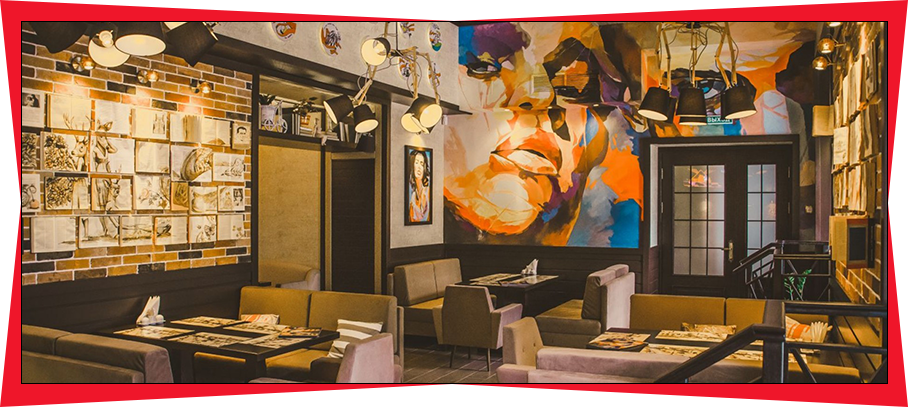
After developing the restaurant concept and defining its positioning and core concept, the most interesting part begins: the implementation phase. At this stage, it's important to explore all unconventional ideas and creative solutions to find the one and only embodiment that will form the basis of the restaurant's signature style.
Come up with it at the very beginning. And only then, based on the existing name, build the entire stylistic line. In this case, the name acts as the foundation for the entire corporate identity.
Come up with it last. In this case, the name acts as the crowning achievement and brings the entire image together.
Each person chooses their own method. But in any case, the name should clearly reflect the restaurant's style and positioning, so that visitors understand what awaits them inside.
 |
location – this can be either the actual location of the establishment or any place on the map that can reflect the spirit of the restaurant; | |
 |
famous people who lived near the establishment - if there are any, their names can be safely used in the restaurant naming; | |
 |
a signature dish served in a restaurant; | |
 |
atmosphere, association, emotion – you can use words that convey the character of the establishment through an associative series. |
A logo reflects the name and format of the establishment, combining color, graphic, and typographic elements. Developing a restaurant logo is crucial, as it mirrors the entire corporate identity. While a simple sign without a logo is certainly possible, this is impractical for future advertising. Displaying a logo on advertising media is much easier than displaying the façade or signage each time. A restaurant logo can be placed on tableware, napkins, employee uniforms, menus, business cards, takeout packaging, a website, a social media cover photo, and more. Using a unique logo will only enhance brand recognition.
Order logo design from WeLoveBrands to give your restaurant a distinctive, distinctive mark and a recognizable business card in the form of a cool, memorable logo.
Descriptor. Also known as a subscript. A descriptor is often an integral part of a logo, so its proper stylistic design is no less important. A subscript is needed to indicate the type and format of the establishment, serving as an additional channel of communication with the audience.
Interior. This is perhaps the most powerful non-verbal channel for communicating brand positioning. Of all the components of a brand's identity, the interior is usually the most memorable, along with the name. Therefore, it's important to make it detailed and unique. After all, the interior reflects the establishment's personality, creates a unique atmosphere, and evokes a positive emotional response from visitors.
Exterior. The restaurant's façade and entrance design are just as important to how customers perceive it as the interior. And it's not just the sign and door color. Everything is important: window treatments, the presence or absence of an awning, the design of the terrace (if any), floral arrangements, wall decorations, and so on.
Why is it important for a restaurant owner to focus not on their own tastes, but on the perceptions of their target audience when creating a restaurant? Because ignoring a well-thought-out corporate identity, clear positioning, and target audience analysis usually leads to customers ignoring the establishment. After all, the perceptions of the restaurant owner and their customers can be radically different.
Lately, owners are increasingly turning to professional designers, decorators, namers, and branding specialists. And this is a very smart decision. After all, a professionally developed corporate identity can make a restaurant unique, recognizable, and attractive to customers. Ultimately, it can become its own advertisement.
 |
creates the necessary atmosphere; | |
 |
attracts new and regular visitors; | |
 |
increases competitiveness; | |
 |
increases brand awareness. |
Regarding the third point, this is especially important if you plan to develop a single location into a chain. Residents of other cities will recognize this as "the restaurant" because they recognize its signature style. Therefore, a smart approach to developing a signature style can help increase a restaurant's profits.
Although the primary elements of a brand's identity are visual, visitors' other senses shouldn't be forgotten either. The overall experience is built from small pieces, like a puzzle. This puzzle includes not only what a person sees, but also what they hear, feel tactilely, smell, and so on.
A well-designedaudio experiencecan enhance a restaurant's atmosphere and its unique features. However, the auditory impact is always localized—it ends the moment a person leaves the restaurant. The style of music, the selection of songs and performers, even the volume level—all must be precisely calibrated to ensure the sound environment conveys the right atmosphere.
Kinestheticsare no less important for the overall perception of a restaurant. Therefore, the quality and texture of all finishing materials are paramount. Even furniture upholstery should be chosen with the restaurant's signature style in mind. Not to mention the furniture and decor materials themselves. Metal, plastic, glass, or wood—all are selected with the desired character and style in mind.
 |
menu , bill folder; | |
 |
club and discount cards ; | |
 |
napkins and tablecloths; | |
 |
matchboxes and lighters; | |
 |
paintings, posters, photographs; | |
 |
packaging (bags, containers, paper cups, etc.); | |
 |
serving elements (spice sets, ashtray, etc.); | |
 |
signs and pointers inside the premises. |
Want a well-designed and cohesive brand identity for your restaurant? Order your brand identity development from WeLoveBrands. Our professionals will create a vibrant, unique image for your establishment that your customers will surely fall in love with.

1. Develop a name. This involves thorough research of the target audience, particularly their needs, and an analysis of competitors in the niche. This is necessary to avoid name duplication, ambiguous associations, and negative emotions.

2. Logo development and font selection. Based on the chosen concept, a unique logo is developed that reflects the restaurant's style. Fonts are carefully selected for the same purpose.

3. Color selection. The color scheme for a restaurant's corporate identity is created taking into account the impact of color on patrons' mood and appetite, as well as the character of the establishment itself.
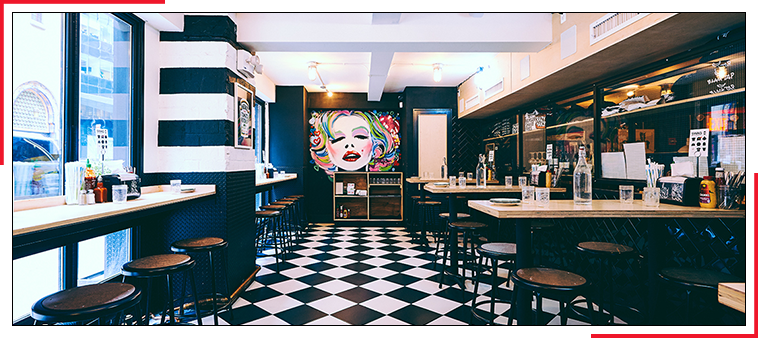
4. Interior and exterior design. The restaurant's interior and exterior are designed in a unified style using recurring color schemes. Decor and furnishings should be perfectly coordinated and match the color of the walls, floor, ceiling, and other surfaces.
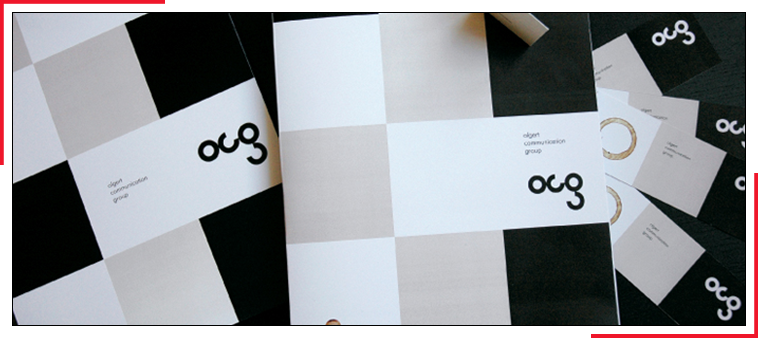
5. Design of the remaining elements of the corporate identity. All elements of the restaurant's corporate identity listed above must be designed in accordance with the chosen stylistic concept.

6. Developing a brand book. A sound approach to developing a corporate identity requires the creation of a brand book . This guide will subsequently help you adhere to the chosen stylistic direction and avoid mishaps and errors in the use of corporate symbols.
Do you want your restaurant to be vibrant and memorable, attracting customers with its appearance alone? Do you want your establishment's character, concept, and style to be recognized throughout the neighborhood and even in other cities? Then order your restaurant's corporate identity from WeLoveBrands.