Receive a presentation of services and expert advice
The best people in the industry oversee your brand development process
→ Need branding, design, or creative solutions? Call us at +48 505 648 022 or message us on WhatsApp.
 WeLoveBrands.pptx

The best people in the industry oversee your brand development process
Pastry chefs interact directly with customers and create confectionery masterpieces for them. But to increase orders, it's not enough to simply talk about your business and advertise your services. Creating a favorable first impression and inspiring trust is essential.
To attract customers, strengthen your reputation, and remind existing clients of your business, a pastry chef's business card is an essential business attribute. Proper design plays a vital role in building a personal brand, differentiating yourself from competitors, and increasing revenue. In this article, we'll explain how to create an effective pastry chef business card.
A pastry chef's business card should serve several purposes: introduce the cardholder, communicate their activities, enhance their image, and promote their business. To ensure it fulfills these functions, it must be designed correctly. To do this, follow these basic guidelines.
 First and foremost, a business card for a "sweetheart" should entice potential customers to try your desserts and baked goods. Use high-quality photos of the sweets you prepare, appetizing colors, and bakery paraphernalia.
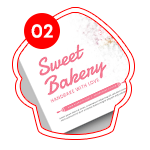 You can also attract customers with interesting text – a slogan, a saying, the name of your bakery, or a list of your signature dishes.
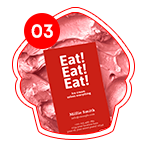 You can present your business card as a discount coupon or bonus card, or include a meme, a short quiz, or a riddle on it.
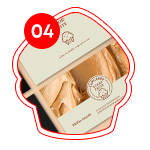 A business card is the face of a culinary master, so make sure the material you use is high-quality, pleasant to the touch, and durable.
 A pastry chef's business card shouldn't be boring or bland. A little creativity and artistic spelling are allowed. The key is to ensure the font is clear and legible, and the image doesn't confuse the audience or distract from the important content.
 In the confectionery business, both colorful, vibrant business cards and discreet, sober ones are equally effective. Therefore, the design of the card depends on the baker.
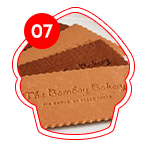 Unusual business cards in the form of sweets are welcome. It's just important that they match your specialization.
To create a stylish and appetizing pastry chef business card, you first need to research your competitors and target audience. What techniques are other culinary professionals using? What is your potential client's lifestyle, what do they like, and what are their concerns? Understanding consumer needs will allow you to create a business card that is appealing and interesting to them, while studying your competitors' strengths and weaknesses will allow you to achieve greater effectiveness through visual and verbal elements.
The amount of information on a pastry chef's business card depends on the style you choose for its design. For example, for a minimalist business card, it's enough to include:
 baker's name and surname/name of the bakery;
 specialization;
 contacts.
If you're not a fan of brevity and want to provide your audience with more information about your business, in addition to the basic information, include a slogan or key phrase that defines your business, reflects your values (for example, "I'll make your life sweeter"), a list of the sweets you prepare, and the benefits of ordering desserts from you.
This type of business card is often double-sided, while a minimalist style card can be single-sided.
Proper placement of the card's structural elements is equally important. It's important to use the space on the front and back sides wisely to attract customers and convey the desired message, without overloading the card with too many elements.
Place your logo in the upper left corner. This is the first thing people will see on your business card.
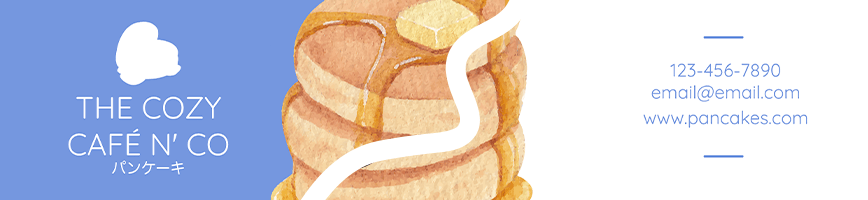
Write a short phrase about what you do (for example, custom-made cakes).
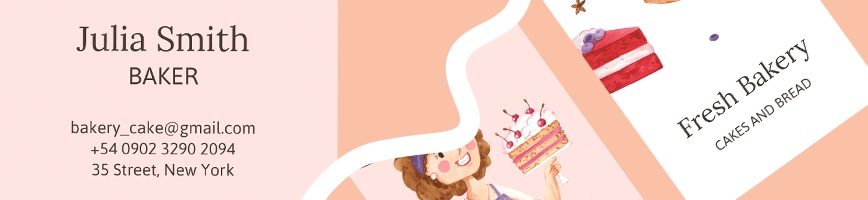
First write the pastry chef's first name, then his last name; there is no need to use his patronymic.
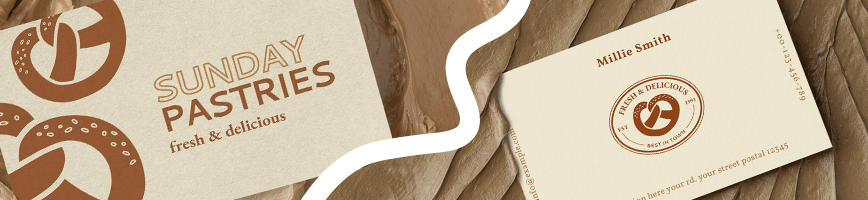
Please indicate your profession (chief pastry chef, baker-pastry chef).
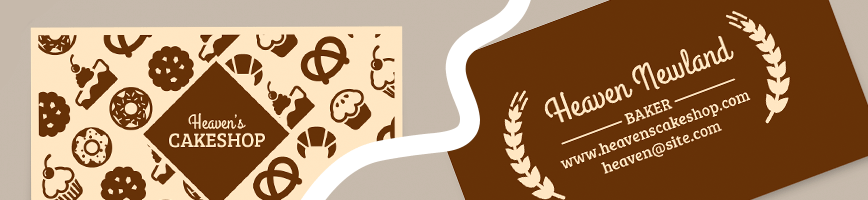
Write your contact information in this order: address, phone number (one), website, social media or messaging accounts, and email address. Use a catchphrase: call, write, come visit.
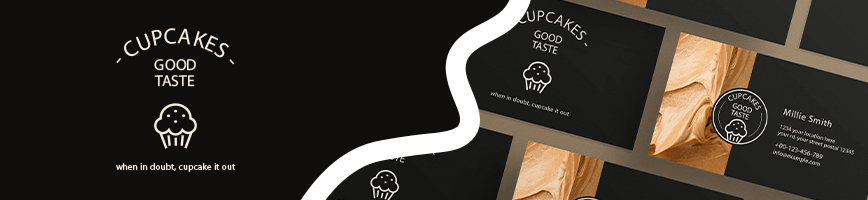
When formatting text, it is recommended to use no more than 3 types of fonts and leave free space between blocks and elements.
If the business card is double-sided, the back should feature a unique selling proposition—promotional information that will encourage your potential client to place an order. These often include discounts, promotions, and special loyalty programs. The pastry chef's menu and benefits are also included here (in text or visual form).
All elements on a pastry chef's business card should be clear, legible, and easy to understand. This will allow the audience to easily access the information and form their own opinion about the business.
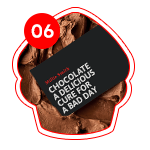
A pastry chef's business card should be interesting. Therefore, when creating it, it's important to break away from established rules and add creative elements. Specifically, you can come up with any shape other than the standard rectangular one, but one that reflects your specialty. For example, if you bake cakes for special events, make a business card in the shape of a cake. If you make chocolate desserts, a chocolate bar or candy bar would be a good choice. You can also use pancakes, eclairs, various candies and cookies, macarons, or cupcakes.
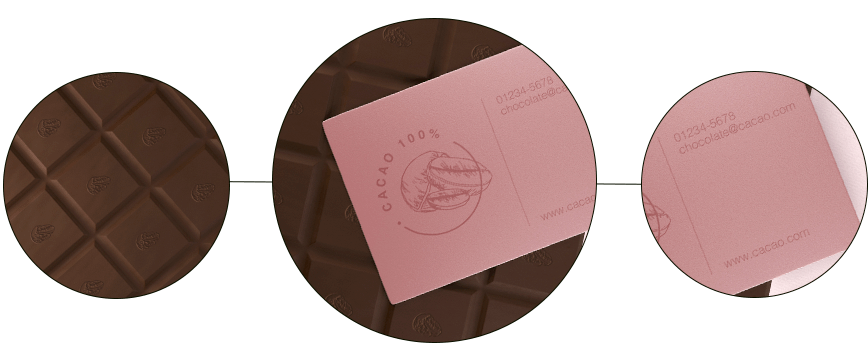
The form should reflect the essence of the business, which means the emphasis should be on the specifics of the activity.
A cartoonish take on a standard business card is acceptable, featuring the same sweets, a chalkboard, or a pastry counter. Images of pastry ingredients, kitchen utensils, chef's uniforms, and candy decorations are also appropriate.
If you use photos, they should be high resolution so that every detail can be seen.
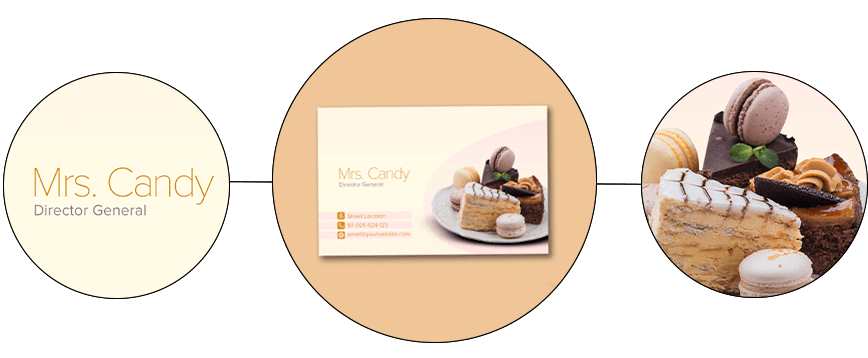
Don't forget that minimalism also works well for pastry business cards. Simple cards are distinguished either by the absence of images, focusing on text and unique fonts, or by the presence of graphic elements and a subdued color scheme. For example, black letters on beige paper with a cardboard-like appearance, a uniform background with scattered sprinkles or flour, white business cards with yellow fonts, and other options.
Text can be overlaid on an image or a special color background to whet the appetite. Use red and orange palettes in all their shades. However, if you have signature colors, it's best to use them to enhance brand recognition.
A black background should not be used for pastry chef business cards. An exception is the image of a dark gray chalkboard used for the menu.
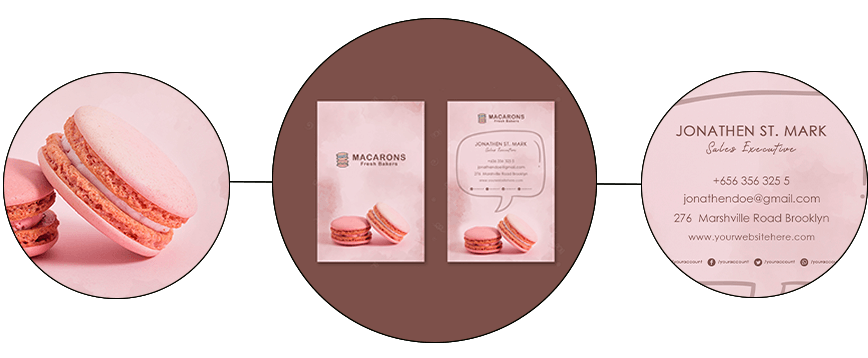
To add an elite and premium touch to your printed product, you can use various printing technologies, including varnishing, embossing, thermal lifting, laser or plotter cutting, embossing, silkscreen printing, etc.
If you want to create a unique and attractive business card, consider designer paper with various thematic patterns: sweets, cups, saucers, and spoons. These will enhance the effect and communicate your business.
Pastry chefs can use a wide variety of business cards, from simple and concise to unconventional and creative. The point is that the culinary industry allows for bold ideas. So, if you want to stand out and be remembered by your audience, don't be afraid of unexpected imagery. Study your competitors, monitor trends, use interesting techniques, and you'll be able to capture customers' attention.
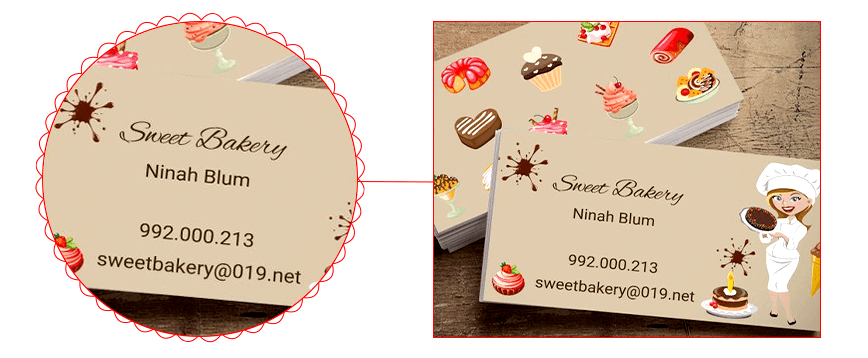
This double-sided business card for "Sweet Bakery" by pastry chef Nina Bloom is designed in a cartoon style. On one side, a smiling woman in a chef's uniform holds a cake. Next to her are drawings of ice cream, a pastry, a tiered cake with a candle, and chocolate blobs. Information about the pastry chef and her contact information are also provided. The reverse side of the business card features cartoon-style images of various sweets Nina Bloom makes. The drawings and text are set against a beige-brown background. The letters and numbers are a dark brown shade, imitating the color of chocolate.
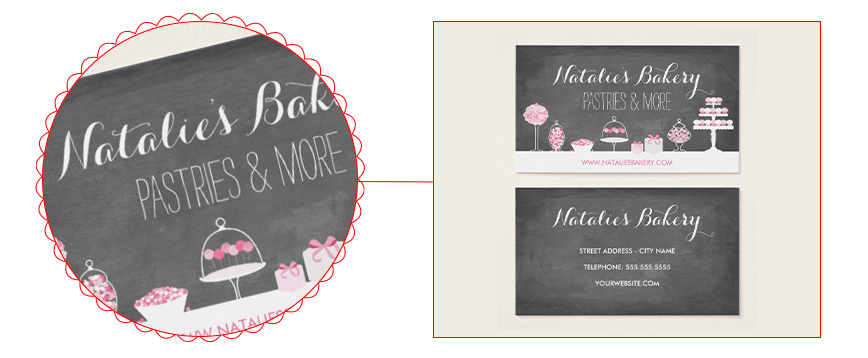
The business card for "Natalie's Confectionery" is designed like a chalkboard. On one side, the name of the establishment, which offers baked goods and more, is printed, along with a row of various cartoon-style pink sweets. On the reverse, against the same chalkboard background, are contact information: address, phone number, and website. The color scheme is white, pink, and gray.
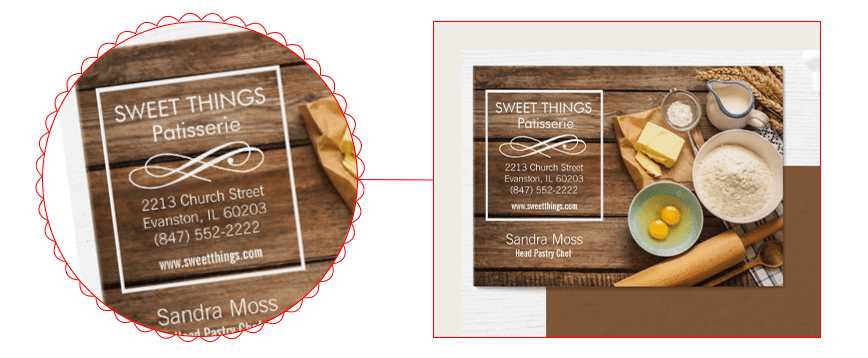
Sandra Moss's business card for head pastry chef at Sweet Things is single-sided. A photograph is featured in the background. Ingredients and kitchen tools for baking are displayed on a wooden table. All information is written in white ink, and the bakery's name, logo, and contact information are framed in white.
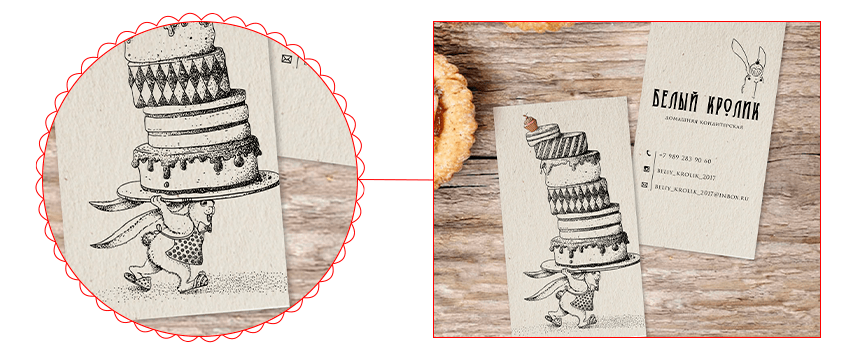
The home-based bakery "White Rabbit" uses business cards designed in a minimalist style. On recycled gray paper, a black image of a rabbit carrying a tall, multi-tiered cake on a tray is painted. A cupcake at the very top, painted in shades of brown, green, pink, and red, provides a striking accent. The reverse side features the rabbit's face, holding the same cupcake, along with the bakery's name and contact information.
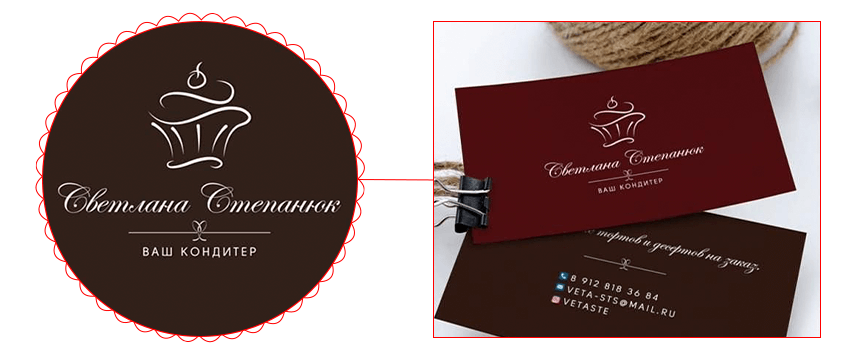
Svetlana Stepanyuk's single-sided business card offers custom cakes and desserts. The logo is printed in white ink on a chocolate-colored background, along with the pastry chef's name and contact information (phone number, email address, and Instagram account) in a unique handwritten font.
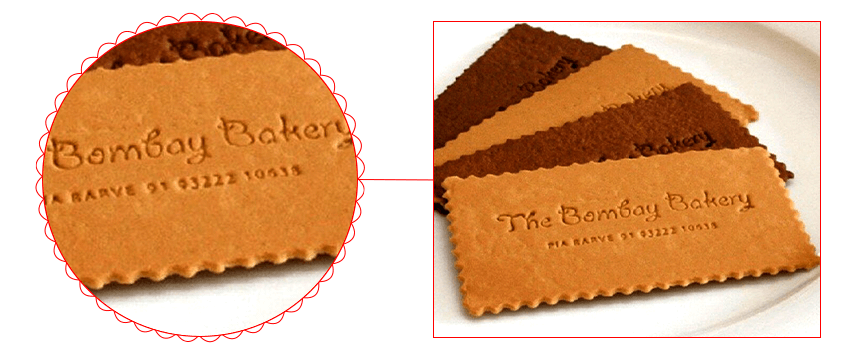
The Bombay Bakery created an edible business card shaped like a cookie. It features the bakery's name, address, and phone number. It's unlikely to last long, but it's a great idea as a company gift.
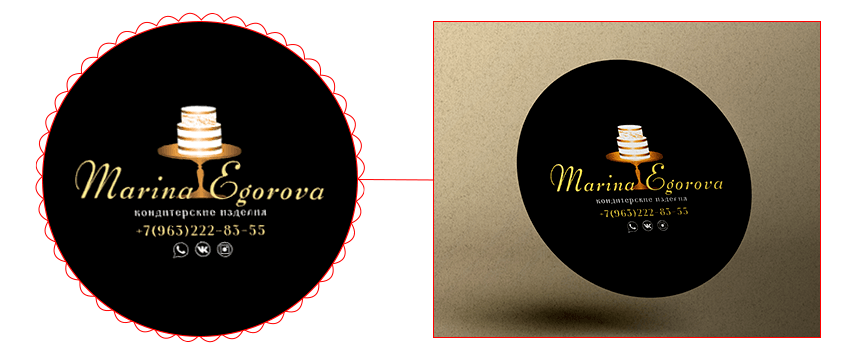
Marina Egorova is a pastry chef who decided to create round business cards. Unlike traditional bright colors, this one uses a black background and gold ink for the text and cake-shaped logo. This card is also convenient because it can be used as a coaster.
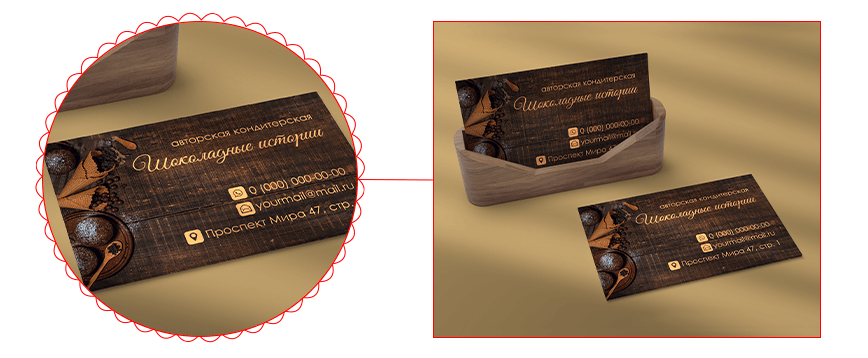
The signature confectionery shop "Chocolate Stories" designed its business card in a brown color scheme. The background features a photograph of a wooden table laden with baked goods, desserts, and coffee beans—all in the color of chocolate. The shop's name is written in its signature font, and the entire text is in light beige ink.
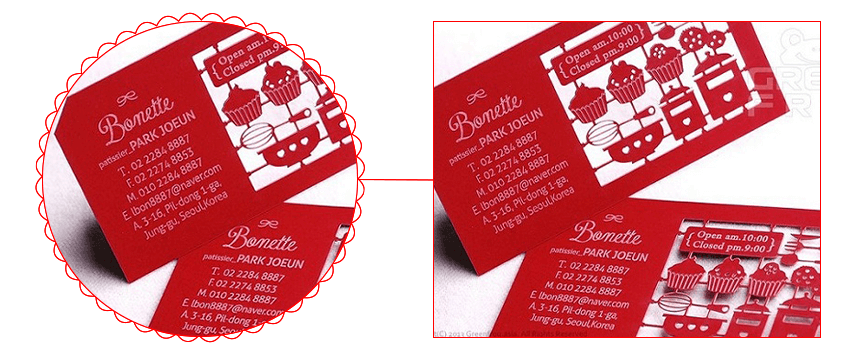
Korean pastry chef Park Joon's business card is red, with images of the sweets he makes carved into the right side. It simultaneously advertises the chef and the Bonette pastry shop itself, including its address and opening hours. The letters and outlines of the images are a light pink, a color that stimulates appetites.
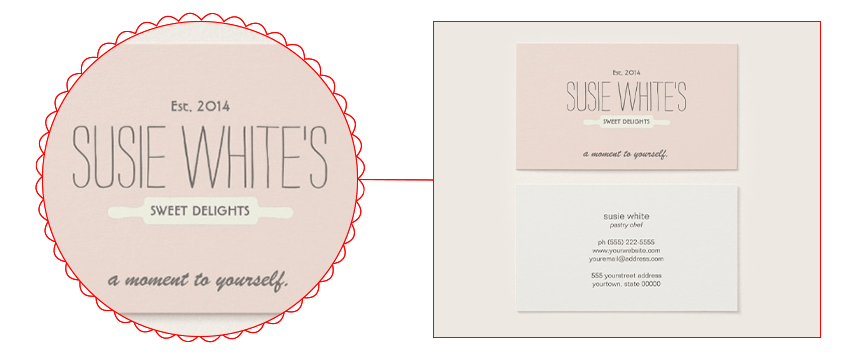
Pastry chef Susie White's personal business card is designed in pastel pink. It's devoid of any sweets, but it does feature the slogan, "A Moment for Yourself." The bakery is called "Sweet Delights," and the name is inscribed on a rolling pin. On one side of the card is the pastry chef's name and the business name with the slogan, while on the other side is Susie White's specialty, phone number, website, email, and address.
These and other pastry chef business card designs will help you understand what you'd like to use for your business, what direction to take, and what design tricks to use to stand out from the competition, increase brand awareness, and engage customers.
Modern printing technology allows you to create stylish and original business cards that attract attention and spark interest. Various printing methods can be used on unique materials. The classic option is thick cardboard or coated paper. But other options also exist: wood, textiles, plastic, and rubber. An edible option is a bold choice. However, it is made in a bakery, not a printing house.
To make your business card feel pleasant to hold, order a small batch oftouche cover paper. The latex coating creates the feeling of touching a silky surface. Your potential clients will surely appreciate it.
You can also use designer paper - matte or pearlescent, with various patterns such as twin-spot, which gives it relief.
To create an interesting accent, highlight what's important, and emphasize your status, you should use modern post-printing technologies when producing pastry chef business cards.
For example:
 varnishing;
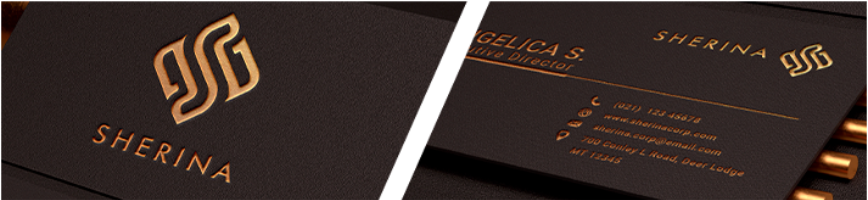
 embossing;
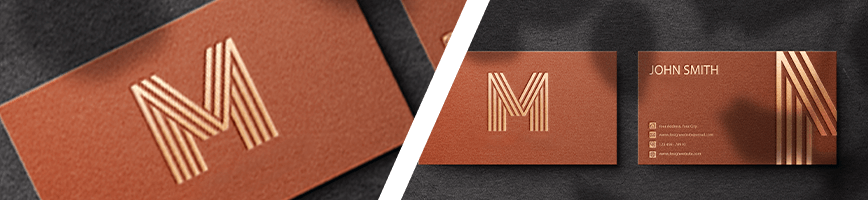
 foiling;
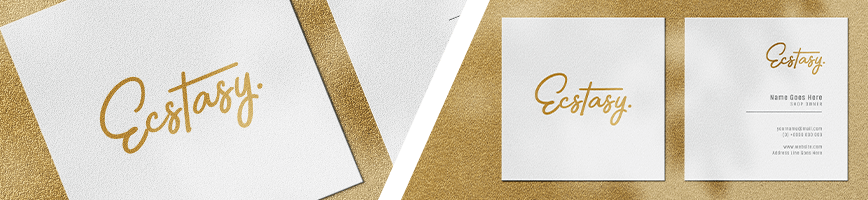
 embossing;
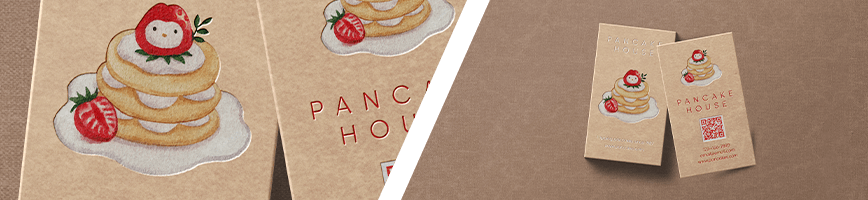
 felling;
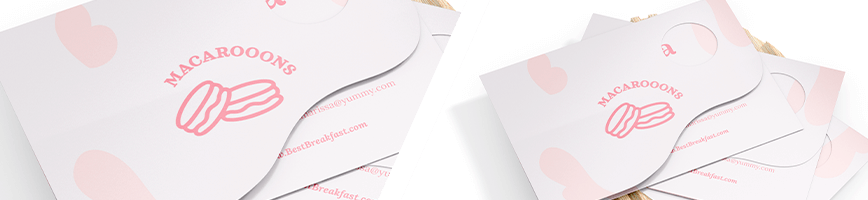
 painting the ends.
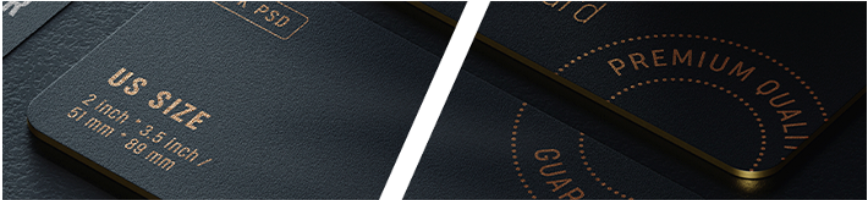
When choosing a processing method and material for your business card, consider your line of business, objectives, and budget. Choose the option that best suits your business and meets the expectations of your target audience.
If you've decided to create business cards for your pastry business, trust the professionals at WeLoveBrands . Our qualified designers will create a layout tailored to your wishes, business objectives, and target audience needs. Your pastry business card will match your brand style, contain all the necessary information, and boast a compelling design. Learn more about the development stages, deadlines, and payment by following this link . For more details and a quote, please call us or message us via messaging.