Receive a presentation of services and expert advice
The best people in the industry oversee your brand development process
→ Need branding, design, or creative solutions? Call us at +48 505 648 022 or message us on WhatsApp.
 WeLoveBrands.pptx

The best people in the industry oversee your brand development process
How to become a successful, highly paid, and popular psychologist? Create your personal brand as clearly, consistently, and effectively as possible. Why do you need it?
Because personal branding helps shape the desired image in your audience's mind. How this image is perceived will determine what people think of you and your services, whether they will trust your expertise, and whether they can trust you.
This is what others (clients, colleagues, competitors) say about you, how well-known you are in your niche and what emotions/associations you evoke in people.
Psychologists already have a personal brand, even if they don't work on it. After all, when faced with certain difficulties and issues, people want professional help, so they seek a reliable specialist who will be worth their time and money. This is where your image, reputation, and the image that evokes in consumers' minds when they hear your name or view your website or social media profile come into play.
To make people want to turn to you for help and to ensure your level of qualifications is beyond doubt, you need to work hard and create a strong personal brand as a psychologist, rather than letting things slide.
Personal branding helps create a memorable image, increase audience loyalty and trust, and monetize the brand.
 allows you to set prices above the market average;
 increases recognition;
 helps to obtain support and establish new useful connections;
 creates its own microsystem of interaction with the audience;
 facilitates the promotion of services.
As a result, people trust you and want to buy your consultation, and your name is already working for you!
It's not about having a Brioni suit or a mink coat. But appearance and style shape your image. And even if you're a genius, looking like Katya Pushkareva won't bring you any clients, and therefore no income.
Appropriate appearance, personal taste, and common sense—these are what a professional should rely on when developing an image. Remember, however, that fashion is fickle, and style is a way of life.
Image is a separate, major chapter in building a personal brand. And this is no coincidence. A person's image can be compared to the packaging of a product. It's a kind of brand, a system of images, symbols, and associations capable of attracting a receptive target audience.
To stand out from the competition and be remembered more quickly by consumers, you can add an accessory to your look, making it a consistent feature of your style. Over time, it will become a kind of "calling card."

A brand is not a "blogger's" thing or a pretentious label of a person who is obliged to be popular due to the publicity of his profession; it is a serious material asset of a professional in his field.
To create a personal brand as a psychologist, it's important to understand where you're going, what you can offer people, what values you communicate, and what problems you can help solve. It's also important to study your competitors, identify their weaknesses, and identify your own strengths, which you can then highlight to gain an edge.
Actually, no. Branding is a complex process that requires knowledge and time. It's not like changing your winter tires to summer ones and driving off, looking beautiful and polished.
To get your personal brand off the ground, you'll have to work hard. First, "a student works for his grade book, and therefore the grade book is for the student."☺After all, the start will involve a strategy session, defining your target audience, proper positioning, creating social media accounts and your own website, working on a content plan, and building a photo library.
Yes, it's a resource-intensive topic, but without this investment, developing a personal brand is quite problematic. Your content, thoughts, and opinions you convey are now being read by your potential clients, which means you need to be extremely careful.
Your brand is your reputation, and it is a very fragile thing!
First impressions are always powerful emotions. People often intuitively decide whether they're "my specialist" or not.
And here, both the values you convey and the external image that a potential client encounters face to face are very important.
Smile, show an open gaze, raise an eyebrow slightly, find common ground, tap into the client's pain points, and connect with them. Listen and engage—it's inviting.

A brand is the image that comes to mind when someone hears your name. It's when people who haven't even been your client recommend you because they already have a trail of associations, emotions, and characteristics about you and your services.
At the same time, a brand is merely the packaging for a real product. It should be colorful, eye-catching, and unique, but the real value lies in the content, in the essence. Only high-quality services can ensure stability and future prospects.
A strong brand is when people know you, talk about you, and talk about you over and over again. Creating a personal brand is a way to establish yourself as a professional and successful individual, and to take your rightful place in society.
And you can tell it in these ways :
Social networks – be active.
Website or blog – post unique and competent information.
Media articles – communicate with journalists and act as an expert.
YouTube channel – talk about things that matter to people.
Participate in conferences, seminars, and forums—establish yourself as a competent expert who is up-to-date on everything that's happening in your field.
So, how do you build a psychologist brand that will inspire trust and encourage people to book consultations with you? Let's take a closer look.
You must be an expert! Overcome your impostor syndrome.Display your diplomas, certificates, and awards on your website. A relevant education, solid experience in various projects, and professional content saturating your social media pages will help you earn trust. After all, clients want to resolve their problems with a professional. Your job is to reassure them and clearly demonstrate your expertise.
Media coverage is one of the most successful communication channels. Therefore, become a trusted expert for journalists from all media outlets in your region, be flexible, and be ready to speak on any topic at a time convenient for the publications.
Reputation – the quality of your services should inspire trust and admiration. Sincerity and a wealth of positive examples are the most telling stories that shape your image.
Publish client feedback, testimonials, and testimonials. Share real-life stories of your patients and how your therapy has transformed their lives. For example, psychologist Gennady Mustafae's posts about women who left abusive relationships and dramatically changed their lives were incredibly popular. And after each heartfelt story he shared on his Facebook page, he attracted a new client.

Popularity (or reach) – this is crystal clear. Native advertising, carefully crafted content, a well-segmented target audience, clearly defined pain points, and direct targeting all work. Your posts are read, saved, and reposted. This means your circle of fans, and therefore potential customers, is expanding.
It's your expertise in a specific area and clear specialization that defines your strategy and positioning as a specialist. For example, you may be an excellent family therapist or crisis coach for adolescents, but you don't work with addictions—meaning your audience is segmented.
You communicate specific messages and provide expert opinions on topics that are uniquely YOUR. This is how you engage your audience on social media and gain popularity in the digital space.
the benefit you bring to people;
clear positioning – expertise in certain topics and areas;
image – who you really are and how society perceives you;
mission – what you bring to the world;
Vision is your strategy for bringing value to your customers' lives;
Values are the unshakable beliefs and attitudes that resonate with the audience you are targeting.
Identifying your uniqueness will help you build effective communication with your audience, present yourself favorably, and increase your conversion rate.

An archetype is a specific personality type. A psychologist must clearly understand which archetype each client, as well as themselves, fits. When developing your personal brand, it's essential to understand the audience that gravitates toward you and needs your support, who share specific pain points and complex issues. Your clients must resonate with your values. Only then will they be able to appreciate your work.
Archetypes help you create customer experience management in a precise and consistent manner.
There are 12 archetypes in total, which can be grouped into four main life strategies. Let's take a closer look at them.
Individualism strategy – a person dedicates themselves to self-knowledge, spirituality, and self-improvement. They strive to acquire new knowledge and share it with others. This category includes the Sage, the Seeker, and the Innocent.
Change Strategy – people with this position enjoy taking risks, achieving something new, and making sacrifices. This includes the Rebel, the Magician, and the Hero.
Belongingness strategy – here, society, family, and relationships are priorities. Archetypes of this group are: Lover, Jester, and Philistine.
Stability Strategy – for these people, stability and security are important. Here, a distinction is made between the Creator, the Ruler, and the Caregiver.
Each archetype has specific traits and characteristics that influence a person's life and how others perceive them. To understand which archetype is yours, take a special test. To create an image that resonates with the hearts and minds of consumers, develop a brand based on the characteristics of your target audience.
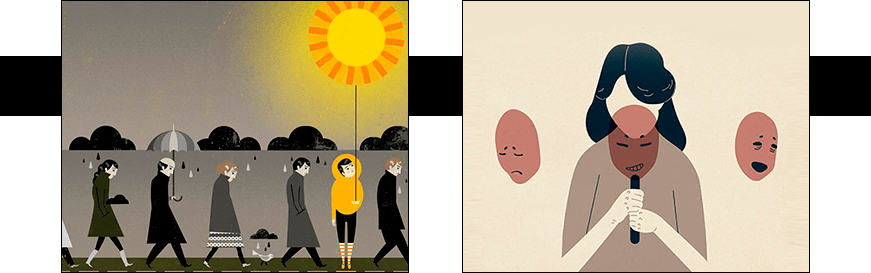
Thinking this doesn't apply to you . Your online reputation is important. Word of mouth is good, but what the internet reveals about you is incredibly important!
Pretending to be someone you're not . Don't lose yourself in pursuit of perfection. If working with victims of violence isn't your thing, decline the relevant conference.
Wait until something bad happens . It's better to control your online presence now than to deal with negativity later.
Don't ask yourself questions . What is your unique value proposition for your target audience? Is it clearly articulated and will it address the customer's pain points? These and other questions are worth asking yourself to achieve the results you're hoping for.
Ignoring others during brand development . Seek advice and learn to listen to the feedback you receive from family, colleagues, and friends. After all, you're not building a brand to impress yourself.
Underestimate the complexity of brand development . A personal brand is something that sets you apart from your competitors and makes you memorable. What value do you bring to your customers? How can they hear and recognize you amidst the digital noise?
Ignoring influencers . Engage opinion leaders and influential media personalities to spread the word about you. Go on TV, collaborate with bloggers, and appear on reality shows as an expert. Be consistent with those you already know.
Publishing other people's content . No plagiarism! Develop your own voice, formulate your thoughts, and create unique content.
Publish minimal content . Don't spam, but also keep a consistent content plan. Regularity and consistency on social media are key to building a habit of reading your content.
Followers for the sake of followers . Building followers for the sake of numbers is a common mistake for newbies. After all, their value lies in their actual activity. If they comment and discuss your posts, it means your audience is real and alive, and therefore potentially profitable. Word of mouth, both offline and online, can also be effective among them.
Mikhail Labkovsky, Dmitry Karpachov, Elena Lyubchenko, and Egor Topolov are well-known, often cited, and generally considered true gurus of relationships and their profession. The mechanics of their popularity are quite simple and understandable: these individuals have become brands. Their reputations build their image, and their popularity and strong word of mouth pay dividends in the form of clients who follow their name and are willing to pay substantial fees to these specialists.



Self-education is still essential. And immersing yourself in the context of the issue is very useful. Even if you hire an entire PR team, understanding how to build a personal brand and how to avoid ruining all your efforts with an awkward gesture of inconsistency is very important. Therefore, here are some useful books to read:
Victor Eliseev, "How to Make Money from Your Name: Secrets of Creating a Personal Brand."
Igor Mann "Number 1: How to Become the Best at What You Do."
Ekaterina Kononova "Personal Brand from Scratch"
Jurgen Salenbacher "Create a Personal Brand".
WeLoveBrands agency specialists are ready to support each client in developing their personal brand. We know how to make a psychologist's personal brand uniquely meaningful and recognizable.
Before developing a brand, specialists study the market, competitors, business (service) specifics, and the expectations and needs of the target audience. They then develop a concept and attributes (pseudonym, slogan, logo, website, social media design, etc.).
If you want a stylish, recognizable look that inspires confidence, call us or submit a request on our website. To ask a question, please contact us using the method most convenient for you.